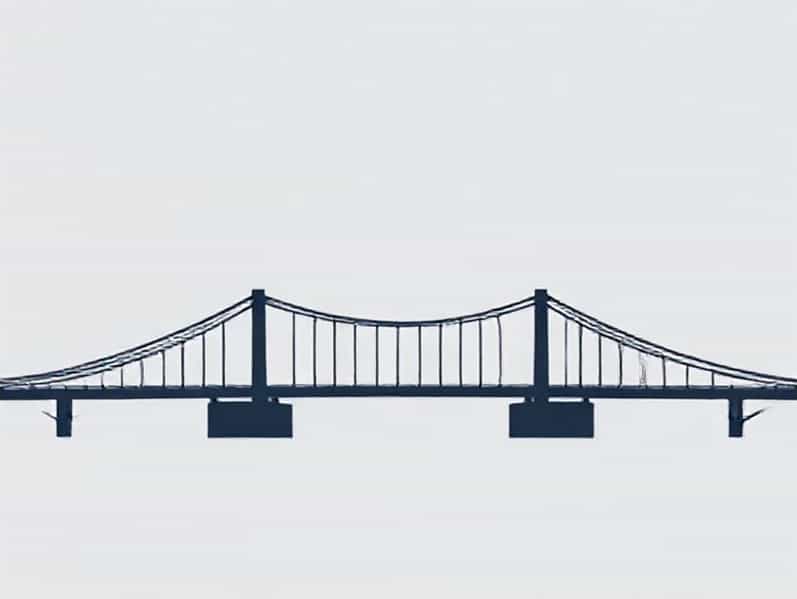
Hidden in the quiet city of Potsdam, Germany, stands a bridge that once symbolized the height of Cold War tension and diplomacy the Glienicke Bridge, famously known as the Bridge of Spies. This historic structure gained worldwide fame for being the site where the United States and the Soviet Union exchanged captured spies during some of the most critical moments of the 20th century. The bridge, which connects Potsdam and West Berlin across the Havel River, represents a unique blend of espionage, political intrigue, and human drama that shaped modern history.
The History of the Glienicke Bridge
The Glienicke Bridge predates the Cold War by centuries. It was originally constructed in 1907 to connect the royal city of Potsdam with Berlin. However, after World War II, the bridge took on a new role as the border crossing between East Germany and West Berlin. It quickly became a heavily guarded checkpoint, closed to ordinary citizens and accessible only to authorized military and diplomatic personnel.
As tensions between the Soviet Union and the United States escalated after the war, the Glienicke Bridge’s strategic position made it the perfect location for secret prisoner exchanges. The first exchange that earned it the nickname Bridge of Spies took place in 1962, during one of the most dangerous periods of the Cold War.
The Famous Spy Exchanges
The First Exchange Abel and Powers
The most famous event associated with the Bridge of Spies occurred on February 10, 1962. On that cold morning, American U-2 pilot Francis Gary Powers, who had been shot down over Soviet airspace in 1960, was exchanged for Soviet intelligence officer Rudolf Abel, who had been captured and convicted of espionage in the United States. The negotiations leading up to the exchange were complex and delicate, handled by American lawyer James B. Donovan, whose efforts were later immortalized in the 2015 filmBridge of Spies.
This exchange marked the first time that the two superpowers directly negotiated a swap of high-profile prisoners. The meeting at the Glienicke Bridge took place under heavy security and secrecy. The two men walked from opposite ends of the bridge, symbolizing the physical and ideological divide between East and West.
Subsequent Exchanges
The 1962 swap set a precedent for future exchanges between the U.S. and the USSR. Over the next two decades, several more prisoner swaps occurred at the bridge. In 1985, the last and largest exchange took place, involving 23 Western agents being traded for several Eastern Bloc spies. Each of these events reinforced the bridge’s reputation as a neutral ground between two world powers locked in a global standoff.
The Symbolism of the Bridge
The Bridge of Spies holds more than just historical importance it stands as a symbol of diplomacy, negotiation, and the fragile balance of power that defined the Cold War era. It embodies the tension between two opposing ideologies and the willingness of both sides to engage in dialogue, even when direct communication seemed impossible.
Unlike battlefields or political summits, the Glienicke Bridge served as a quiet, neutral zone where human lives were exchanged rather than taken. The simple act of crossing the bridge became a metaphor for moving between two worlds the capitalist West and the communist East. It remains a powerful reminder that even in times of deep mistrust, diplomacy could prevail over hostility.
Architecture and Setting
The bridge itself is an elegant structure made of steel, stretching 128 meters across the Havel River. It combines engineering strength with understated beauty, reflecting early 20th-century German design. During the Cold War, its midsection served as the exact border between the American and Soviet sectors, with painted white lines marking where one world ended and another began.
On one side lay West Berlin, filled with modernity and Western influence. On the other stood East Germany, controlled by the Soviet regime. The contrast between the two was stark, and the bridge physically represented that division more clearly than almost any other landmark in Europe at the time.
The Bridge in Popular Culture
The story of the Glienicke Bridge captured the public imagination long before the release of Steven Spielberg’s 2015 filmBridge of Spies, starring Tom Hanks as James B. Donovan. The film dramatized the events leading up to the 1962 exchange and introduced the story to a new generation, emphasizing themes of courage, ethics, and international negotiation. Through this portrayal, the bridge became more than just a piece of history it became a symbol of the human cost of political conflict.
In addition to the film, the bridge has been featured in documentaries, books, and even spy novels. Writers and historians often refer to it as a silent witness to the drama of the Cold War. Its quiet, misty setting in Potsdam adds to its mysterious allure, drawing tourists and history enthusiasts from around the world.
Visiting the Bridge Today
Today, the Glienicke Bridge or the Bridge of Spies is open to the public and serves as a peaceful reminder of its storied past. Visitors can walk freely across the bridge that was once closed to ordinary citizens and guarded by armed soldiers. There are small plaques and historical markers that explain its significance and recount the spy exchanges that took place there.
The surrounding area is equally captivating. On one side lies Berlin’s Wannsee district, known for its lakes and villas, while on the other is Potsdam, a UNESCO World Heritage site filled with royal palaces and gardens. This beautiful landscape contrasts sharply with the bridge’s dark Cold War history, creating a powerful sense of reflection for visitors.
Lessons from the Bridge of Spies
Beyond its role in history, the Bridge of Spies teaches important lessons about diplomacy and human connection. The negotiations that led to the exchanges were built on trust, persistence, and a willingness to understand the other side. Figures like James Donovan demonstrated that even in times of ideological hostility, moral conviction and dialogue could achieve meaningful results.
In today’s world, where international tensions and misunderstandings still arise, the story of the Glienicke Bridge remains relevant. It serves as a testament to the idea that communication, however difficult, is often the only path toward resolution and peace.
Historical Context and Political Significance
During the height of the Cold War, the division between East and West Berlin was a physical representation of the global ideological struggle between communism and capitalism. The Glienicke Bridge sat at the edge of this divide, playing a role that was both symbolic and practical. It was one of the few places where the two sides could directly interact without military confrontation.
For intelligence agencies, it became a safe ground for delicate operations. For historians, it represents a rare example of successful Cold War diplomacy. And for those who lived through that era, it remains a haunting reminder of the fear, secrecy, and hope that defined their time.
Legacy of the Bridge of Spies
Today, the Glienicke Bridge stands not as a symbol of division but of reconciliation. After the fall of the Berlin Wall in 1989 and the reunification of Germany, the bridge once again became a symbol of unity. It now connects two thriving parts of the same country and welcomes visitors from around the world who come to learn about its role in history.
The bridge’s transformation from a restricted military zone to a peaceful pedestrian crossing mirrors the broader journey of Europe from division to unity, from mistrust to cooperation. Every person who walks across it today participates in a quiet act of remembrance, acknowledging both the pain and the progress of the past century.
The Bridge of Spies, officially known as the Glienicke Bridge, remains one of the most significant landmarks of the Cold War. It represents a time when the world stood on the edge of nuclear conflict, yet still found ways to communicate and negotiate. Through spy exchanges, diplomacy, and courage, this modest steel bridge became a symbol of hope amid hostility. Today, it stands as a reminder that even in the darkest times of history, understanding and cooperation can build bridges both literal and symbolic that lead to peace.