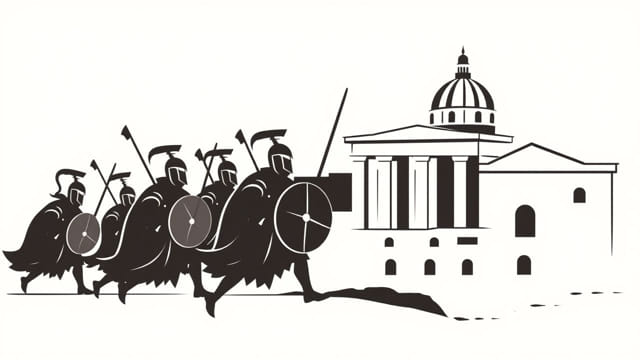
In the early fifth century, the Western Roman Empire was teetering on the edge of collapse. Political instability, economic struggles, and growing pressure from outside tribes were rapidly eroding its strength. Among the groups pressing against Rome’s borders, the Visigoths one of the Germanic tribes emerged as a key force. Their dramatic entry into Roman history culminated in a shocking and historic event: the sack of Rome in 410 CE. This event marked a turning point in the decline of the Western Roman Empire and left a lasting impact on European history.
The Rise of the Visigoths
Origins of the Visigoths
The Visigoths originated as a branch of the larger Gothic people, who lived north of the Danube River. Pushed westward by the advancing Huns, they sought refuge within the Roman Empire. In 376 CE, they were allowed to cross into Roman territory, but mistreatment by Roman officials quickly led to rebellion.
Battle of Adrianople
One of the most significant early confrontations between the Visigoths and the Romans was the Battle of Adrianople in 378 CE. The Roman Emperor Valens was defeated and killed, marking a devastating blow to Roman military prestige. This victory established the Visigoths as a formidable power within the empire’s borders.
Relations Between the Visigoths and Rome
From Foes to Federates
After Adrianople, the Visigoths were eventually settled as federates (foederati) within the Roman Empire. They were given land in exchange for military service. However, relations remained strained, with the Visigoths continuing to push for greater autonomy and recognition.
Rise of Alaric
Alaric I emerged as a leader of the Visigoths around the year 395 CE. A skilled military commander and former Roman officer, Alaric felt betrayed by the empire’s refusal to grant his people fair treatment and high military positions. His grievances would fuel a series of military campaigns against Rome itself.
Events Leading to the Sack of Rome
March on Italy
Alaric led several incursions into Italy during the early 5th century. Although initially repelled, he gained leverage as the Roman Empire descended into chaos, with multiple emperors claiming power and civil war weakening internal defenses.
Siege of Rome
By 408 CE, Alaric had encircled Rome and laid siege to the city. The emperor Honorius, safe in the fortified city of Ravenna, refused to negotiate meaningfully with the Visigoths. Despite ransom payments and offers of peace, talks consistently broke down.
The Final Assault
On August 24, 410 CE, the Visigoths entered Rome through the Salarian Gate, reportedly opened by sympathetic slaves or citizens. For three days, the city was subjected to looting and destruction. Although not as brutal as some later sacks, the psychological impact was immense. Rome had not fallen to a foreign enemy in nearly 800 years.
Impact of the Sack
Shockwaves Across the Roman World
The sack of Rome sent tremors through the ancient world. Rome, long viewed as the invincible heart of a mighty empire, had fallen to a barbarian force. This marked a symbolic end to Rome’s supremacy and shocked citizens and rulers alike throughout the empire.
Decline of Roman Authority
Though the sack itself did not immediately destroy the empire, it severely undermined the authority and prestige of the Roman state. The idea of Rome as an eternal city was shattered. Many Romans began to doubt the effectiveness of their leadership and institutions.
Migration and Settlement
After the sack, the Visigoths did not remain in Rome. Instead, they moved on to settle in southern Gaul and eventually into Hispania (modern-day Spain), where they established a powerful kingdom that would endure for centuries. The sack was part of a broader pattern of Germanic settlement within Roman lands.
Religious and Cultural Interpretations
Christian Reactions
The sack of Rome had a profound religious dimension. Some pagans claimed that the abandonment of traditional Roman gods in favor of Christianity had angered the divine powers. In response, Saint Augustine wroteThe City of God, defending Christianity and arguing that the fall of Rome was part of a larger divine plan.
Symbolism of the Event
Historically, the sack of Rome by the Visigoths has come to symbolize the decline of classical civilization and the beginning of the so-called ‘Dark Ages.’ It is often used as a historical marker separating the ancient world from the medieval one.
Comparisons with Other Sacks
Later Sacks of Rome
The 410 sack was not the only time Rome would fall to foreign armies. The city was sacked again by the Vandals in 455 CE and by Gothic forces under Totila in the 6th century. Each of these events chipped away at the remnants of Roman power.
Different Nature of the Visigothic Sack
Unlike some of the later invaders, the Visigoths under Alaric maintained a certain level of discipline. Churches were largely spared, and there was no wholesale slaughter of civilians. Alaric, though a conqueror, was also a Christian who sought legitimacy and negotiation rather than total destruction.
Legacy of the Visigoths
Creation of the Visigothic Kingdom
Following their movements through the Western Roman territories, the Visigoths eventually established the Visigothic Kingdom with its capital at Toulouse and later Toledo. This kingdom would become a major force in the post-Roman world and play a significant role in shaping early medieval Europe.
Influence on Medieval Europe
The Visigoths helped to transmit Roman culture and administrative practices into the medieval period. Their legal codes, particularly theVisigothic Code, reflect a blend of Roman and Germanic traditions. Christianity also remained central to their rule, aiding the spread of the faith across Western Europe.
Yes, the Visigoths did sack Rome in 410 CE under the leadership of Alaric I. This event marked a dramatic and symbolic moment in the long decline of the Western Roman Empire. Though not the empire’s final collapse, the sack highlighted its vulnerabilities and diminished its aura of invincibility. The Visigoths, once outsiders and enemies of Rome, became a key force in shaping the post-Roman world. Their actions echoed through history, reminding future generations of the impermanence of even the greatest empires. The sack of Rome by the Visigoths remains one of the defining moments of late antiquity and a stark turning point in the history of Western civilization.