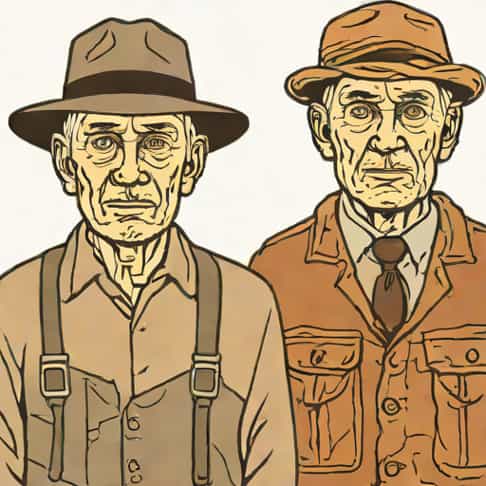
Ed Gein and Elmer Wayne Henley are two infamous figures in American criminal history, known for their shocking and violent acts. Despite living in different times and committing different types of crimes, both men have left a lasting impression on the public imagination, influencing media, true crime studies, and popular culture. Examining their backgrounds, crimes, and the psychological factors involved provides insight into how these individuals became notorious and why their cases continue to fascinate criminologists and the general public alike.
Ed Gein The Butcher of Plainfield
Edward Theodore Gein, commonly known as Ed Gein, was born on August 27, 1906, in La Crosse County, Wisconsin. He grew up in a strict and isolated household, dominated by his mother, Augusta Gein, who instilled in him extreme religious beliefs and a deep mistrust of women. His father, George Gein, died when Ed was 12 years old, and his brother also died shortly after, leaving Ed to live under his mother’s oppressive control until her death in 1945.
Crimes and Discovery
Ed Gein gained national notoriety after police discovered that he had exhumed bodies from local cemeteries and used their skin and bones to create various household items and clothing. His crimes were uncovered following the disappearance of a local hardware store owner, Bernice Worden, in 1957. Authorities found her remains in Gein’s home along with gruesome artifacts, including masks, chairs upholstered with human skin, and a belt made from human nipples.
Psychological Profile
Gein was diagnosed with schizophrenia and found legally insane, leading to his confinement in a psychiatric institution rather than a traditional prison. His case is often cited in studies of necrophilia, compulsive grave robbing, and the influence of childhood trauma on adult criminal behavior. Gein’s crimes also inspired numerous fictional characters in horror films, including Norman Bates from Psycho and Leatherface from The Texas Chainsaw Massacre.
Elmer Wayne Henley The Houston Mass Murders
Elmer Wayne Henley, Jr. was born on August 9, 1956, in Houston, Texas. Unlike Ed Gein, Henley became infamous as an accomplice in a series of murders orchestrated by Dean Corll, known as the Houston Mass Murders. Henley was a teenager when he became involved with Corll, who used manipulation, gifts, and threats to coerce young men into participating in criminal activities, including abductions and murders.
Crimes and Arrest
Between 1970 and 1973, Corll, with Henley and another accomplice, David Brooks, kidnapped, sexually assaulted, and murdered at least 28 boys and young men in Houston. Henley eventually turned against Corll when he realized he could no longer participate without risking his life. In 1973, Henley shot and killed Corll in self-defense after being ordered to abduct another victim. This act led authorities to uncover the full extent of the Houston Mass Murders.
Psychological Profile
Henley’s involvement in the murders has been analyzed extensively in criminology. As a minor influenced by a manipulative adult, Henley’s psychological state was shaped by coercion, fear, and the dynamics of control and power. While he was convicted and sentenced to multiple life terms, psychologists have examined his role as both a victim and participant, highlighting the complexities of criminal responsibility when minors are involved in adult-led crimes.
Comparison of Ed Gein and Elmer Wayne Henley
While Ed Gein and Elmer Wayne Henley committed crimes of a different nature, there are some notable points of comparison
- Both were involved in extreme acts that shocked communities and captured national attention.
- Gein acted alone, driven by psychological disorders and childhood trauma, while Henley was part of a group and influenced by an older manipulative figure.
- Gein’s crimes focused on exhumation and body mutilation, whereas Henley participated in active abductions and murders.
- Both cases have been studied for insights into criminal psychology, particularly regarding the effects of upbringing, social isolation, and manipulation.
Impact on Media and Popular Culture
Ed Gein’s crimes have had a lasting influence on horror fiction, inspiring numerous films, novels, and television series. His case represents a blend of real-world horror and psychological fascination, often serving as a basis for fictional killers who exhibit macabre behaviors. Henley’s involvement in the Houston Mass Murders, while less commonly fictionalized, has appeared in documentaries, true crime books, and podcasts that explore serial murder, cult-like dynamics, and the psychology of accomplices.
Legal Outcomes and Sentencing
Ed Gein was found legally insane and spent the remainder of his life in the Mendota Mental Health Institute in Madison, Wisconsin. He died on July 26, 1984, at the age of 77. His case raised questions about mental illness, criminal responsibility, and the intersection of psychology and law.
Elmer Wayne Henley, convicted of six counts of murder, received multiple life sentences. He remains incarcerated in Texas, and his case continues to be examined as a cautionary tale about the influence of manipulative adults on vulnerable teenagers, the psychology of accomplices, and the legal considerations surrounding juvenile involvement in serious crimes.
Psychological Insights
Both Ed Gein and Elmer Wayne Henley provide case studies for understanding the human mind under extreme conditions. Gein’s actions reflect how severe social isolation and trauma can contribute to deviant behavior, whereas Henley’s involvement highlights the impact of coercion, fear, and manipulation. These cases demonstrate that while motivations and circumstances may differ, extreme criminal behavior often involves complex interactions between personality, environment, and psychological factors.
Educational and Criminological Lessons
- Gein’s case is used in forensic psychology courses to study the effects of trauma and psychosis on criminal actions.
- Henley’s case is analyzed in criminal justice programs to explore the dynamics of accomplice behavior and juvenile coercion.
- Both cases emphasize the importance of understanding context, mental health, and social influence when evaluating criminal behavior.
- These cases serve as reminders of the societal impact of violent crime and the need for preventive interventions and support systems.
Ed Gein and Elmer Wayne Henley remain two of the most notorious figures in American criminal history. Despite differences in their crimes and backgrounds, both cases illustrate the extremes of human behavior and the various psychological, social, and environmental factors that can contribute to violent acts. Gein’s solitary, psychologically-driven crimes and Henley’s coerced involvement in group murders provide contrasting yet instructive examples of criminality. Studying these cases continues to provide valuable insights for law enforcement, psychologists, and criminologists while reminding the public of the enduring fascination and horror these figures evoke in American culture.