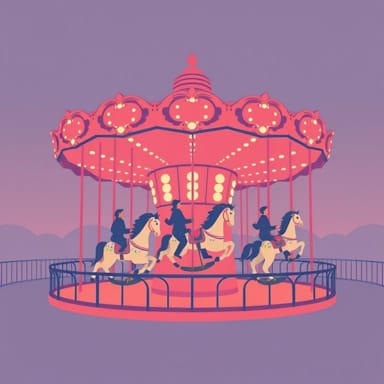
Everybody Rides the Carousel” is an animated film that explores the cyclical nature of life through a unique blend of storytelling, music, and visual art. Originally released as a television special, the film delves into the stages of human development, presenting a creative and insightful look at the journey from childhood to adulthood and beyond. With its innovative approach to animation and narrative, “Everybody Rides the Carousel” captures the universal experiences, challenges, and emotions that define human growth, offering audiences both entertainment and reflection on the patterns that shape our lives.
Overview of the Film
“Everybody Rides the Carousel” was conceived as an exploration of life’s stages, using the metaphor of a carousel to represent the cyclical and recurring patterns in human existence. Each segment of the film corresponds to a particular stage of life, from early childhood through old age, highlighting the transitions, lessons, and experiences associated with each phase. The film’s creators employ animation to visualize these stages in a symbolic and often abstract manner, allowing viewers to engage with the material on both an emotional and intellectual level. Through music, dialogue, and artistic visuals, the film conveys the universality of life’s journey.
Main Themes
- Cycles of LifeThe carousel symbolizes the repetitive yet evolving nature of human experiences.
- Personal GrowthEach stage of life presents unique challenges and opportunities for self-discovery.
- Emotional ComplexityThe film explores a wide range of emotions, from joy and curiosity to fear and sadness.
- Connection and RelationshipsInterpersonal dynamics are central to the narrative, showing how relationships influence development.
Animation and Artistic Style
The animation in “Everybody Rides the Carousel” is notable for its experimental and artistic approach. Unlike traditional animation that relies heavily on linear storytelling, this film uses visual metaphors, abstract imagery, and color symbolism to convey emotional and developmental themes. Each stage of life is depicted with distinctive artistic techniques, reflecting the mood and tone appropriate to that age. For example, childhood sequences are often playful and vibrant, while adulthood segments are more structured and nuanced. This artistic diversity helps to immerse viewers in the thematic and emotional landscape of the film.
Use of Color and Symbolism
Color plays a significant role in reinforcing the film’s messages. Bright and dynamic colors often accompany scenes of innocence and discovery, while darker or more muted tones highlight moments of conflict, introspection, or transition. Symbolic imagery, such as the carousel itself, mirrors the cyclical nature of life, emphasizing that human experiences are interconnected and continuous. These visual choices enhance the storytelling and deepen the audience’s understanding of the stages of life depicted in the film.
Music and Soundtrack
Music is integral to the emotional impact of “Everybody Rides the Carousel.” The soundtrack blends orchestral and contemporary musical elements to match the tone of each life stage. Songs and instrumental pieces underscore key moments, providing emotional cues and enhancing narrative flow. The musical choices help to communicate the internal experiences of characters, whether it is the wonder of childhood, the confusion of adolescence, or the reflection of later life. The soundtrack’s interplay with animation creates a multisensory experience that reinforces the film’s themes of growth and continuity.
Emotional Resonance
The combination of music, visuals, and storytelling allows the film to resonate deeply with viewers. By presenting universal experiences such as first love, loss, achievement, and self-realization, the film encourages audiences to reflect on their own life journeys. The emotional resonance is heightened by the way the film illustrates the passage of time and the interconnectedness of human experiences, making “Everybody Rides the Carousel” both entertaining and thought-provoking.
Character Development and Narration
While the film’s structure is more thematic than plot-driven, characters serve as guides through each stage of life. Narration and dialogue provide insight into thoughts, feelings, and motivations, helping viewers relate to the experiences depicted. The characters, though not deeply individualized, embody archetypal qualities associated with different ages and stages, allowing the audience to see reflections of themselves and their own developmental journeys. The film’s approach emphasizes universality over specificity, making its message accessible to a broad audience.
Stages of Life Portrayed
- ChildhoodDiscovery, innocence, and the initial formation of identity.
- AdolescenceExploration, rebellion, and emotional turbulence.
- AdulthoodResponsibility, relationships, and the search for purpose.
- Old AgeReflection, wisdom, and acceptance of life’s cyclical nature.
Critical Reception
“Everybody Rides the Carousel” received praise for its innovative approach to animation and storytelling. Critics highlighted its artistic ambition, emotional depth, and the universal relevance of its themes. Some viewers noted that the film’s abstract style and non-linear structure could be challenging for traditional audiences, but most agreed that its creative risks were effective in conveying the cyclical nature of life and human development. The film has since become a notable example of experimental animated storytelling, appreciated for its thoughtfulness and aesthetic achievements.
Legacy and Cultural Impact
The film’s influence extends beyond its initial release, inspiring subsequent works in animation and educational storytelling. Its unique portrayal of life stages has been referenced in studies of developmental psychology, creative pedagogy, and animation as a medium for conveying complex ideas. “Everybody Rides the Carousel” continues to be celebrated for its ability to combine art, music, and narrative into a cohesive exploration of the human experience. Its message about the continuity and interconnectedness of life resonates across generations, making it a timeless work in the landscape of animated films.
“Everybody Rides the Carousel” is a compelling animated film that creatively explores the stages of life through art, music, and narrative. By using the carousel as a metaphor for life’s cycles, the film addresses themes of growth, emotion, and human connection in a universally relatable way. Its experimental animation, emotional depth, and musical accompaniment make it both entertaining and intellectually stimulating. The film encourages audiences to reflect on their own journeys, the lessons learned, and the recurring patterns that shape human existence. As a work of animation, it stands out for its innovation, artistry, and the ability to convey profound truths about the human condition, securing its place as a unique and influential contribution to film and storytelling.