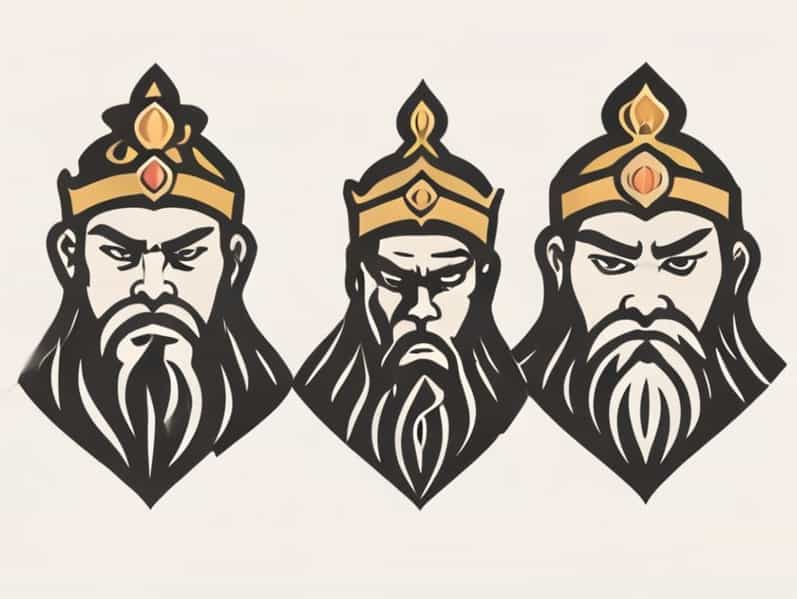
In the grand mythology of Chinese folklore, the story of Sun Wukong, the Monkey King, is one of rebellion, power, and enlightenment. Within this epic narrative, one of the most memorable encounters is between Wukong and the Four Heavenly Kings. These celestial guardians stand as symbols of divine authority and cosmic order, while Wukong represents defiance, intelligence, and transformation. The meeting of Wukong and the Four Heavenly Kings embodies a clash between heavenly law and individual will, serving as one of the defining moments in the classic tale Journey to the West.
The Origin of the Four Heavenly Kings
The Four Heavenly Kings, known in Chinese as Si Da Tian Wang, are powerful deities who protect the four cardinal directions of the world. They serve under the Jade Emperor and are tasked with maintaining balance, protecting heaven from demons, and ensuring that cosmic harmony is preserved. Each of these kings rules over a specific direction and embodies a unique attribute of divine power.
- Vaiśravaṇa (Duowen Tianwang) King of the North, associated with wealth and protection.
- Dhṛtarāṣṭra (Chiguo Tianwang) King of the East, defender of the Dharma and guardian of music.
- Virūḍhaka (Zengzhang Tianwang) King of the South, known for fostering growth and spiritual strength.
- Virūpākṣa (Guangmu Tianwang) King of the West, who oversees vision, perception, and divine insight.
These kings are often depicted wearing armor, carrying divine weapons, and standing guard over the gates of Heaven. In Buddhist temples, statues of the Four Heavenly Kings are commonly found at entrances, symbolizing protection against evil and ignorance.
The Encounter Between Wukong and the Heavenly Kings
Before becoming one of the most celebrated figures in Chinese literature, Sun Wukong was known for his arrogance and his quest for immortality. After mastering powerful martial arts and stealing heavenly treasures, Wukong’s defiance led him to challenge the celestial order itself. This rebellion drew the attention of the Jade Emperor, who sent the Four Heavenly Kings to subdue the rebellious Monkey King.
The Battle in Heaven
The confrontation between Wukong and the Four Heavenly Kings was fierce and dramatic. Despite their divine status, the kings initially underestimated the strength of the Monkey King. Wukong’s magical staff, the Ruyi Jingu Bang, could expand infinitely and crush armies with ease. He also possessed seventy-two transformations and immense agility, making him nearly impossible to capture.
Each Heavenly King tried to use their unique power to suppress Wukong. Virūḍhaka called upon his sword and legions of celestial soldiers; Dhṛtarāṣṭra played his mystical pipa to control spiritual energy; Virūpākṣa used his all-seeing eye to track Wukong’s every move; and Vaiśravaṇa summoned a magical umbrella that could create barriers and restrain demons. Yet, despite their combined efforts, Wukong’s speed and cunning allowed him to evade capture again and again.
Symbolism Behind the Conflict
The battle between the Four Heavenly Kings and Wukong is not merely an action sequence it carries deep philosophical and cultural meaning. The Four Heavenly Kings represent the established cosmic order, discipline, and hierarchy. Sun Wukong, on the other hand, embodies rebellion, self-realization, and the struggle for freedom. His defiance challenges the idea that power must always be controlled by divine authority.
Chaos and Harmony in Chinese Mythology
In Chinese cosmology, chaos and order exist in constant tension. The Four Heavenly Kings symbolize order and structure, maintaining balance in the universe. Wukong’s intrusion into Heaven represents chaos breaking into a perfect system. Yet, in Taoist and Buddhist thought, chaos is not always evil it can be a source of renewal and transformation. Through his rebellion, Wukong ultimately becomes an agent of change, forcing the heavens to evolve and recognize the power of enlightenment.
The Heavenly Kings’ Role in Wukong’s Transformation
Though they fail to permanently defeat Wukong, the Four Heavenly Kings play a crucial role in his journey toward spiritual awakening. Their confrontation serves as one of the first major lessons for Wukong that power alone cannot overcome the balance of heaven and earth. His arrogance and overconfidence lead him into direct conflict with beings of immense spiritual authority, showing him the limits of his defiance.
Capture and Humbling of the Monkey King
After the Heavenly Kings’ initial failure, the Jade Emperor calls upon more powerful forces, including Erlang Shen and eventually the Buddha himself, to subdue Wukong. But the Four Heavenly Kings remain symbolic of the divine system that first tried to teach him humility. They represent the first layer of resistance between Wukong’s chaotic ambition and his eventual enlightenment.
This sequence of battles can be interpreted as the Monkey King’s internal conflict between his uncontrolled ego and the need for self-discipline. By encountering the Four Heavenly Kings, Wukong begins the long process of understanding that true strength comes not from dominance, but from harmony and wisdom.
Interpretations in Literature and Culture
The encounter between Wukong and the Four Heavenly Kings has inspired countless adaptations in art, theater, and modern media. In traditional Chinese opera, this scene is often depicted with colorful costumes and elaborate choreography, representing the grandeur of Heaven and the wild spirit of Wukong. In modern retellings, including films, animations, and video games, the Four Heavenly Kings are often reimagined as powerful celestial warriors or guardians of sacred realms.
Modern Symbolism
In modern culture, the Four Heavenly Kings are also seen as symbols of resilience and protection. Meanwhile, Wukong continues to represent freedom, individuality, and resistance against unjust systems. Together, they reflect a balance between authority and rebellion a theme that remains relevant in every age.
- In literature, they symbolize the conflict between order and chaos.
- In religion, they embody protection and spiritual guardianship.
- In art, they represent the harmony between divine power and mortal ambition.
The dynamic between the Four Heavenly Kings and Wukong is one of enduring philosophical tension, showing how even rebellion can serve the greater balance of the universe.
Philosophical Lessons from the Encounter
At its core, the encounter between the Four Heavenly Kings and Sun Wukong teaches several lessons about morality, humility, and enlightenment. In Buddhist and Taoist traditions, defiance without wisdom leads to suffering. Wukong’s eventual imprisonment under the Buddha’s mountain symbolizes the need to control one’s desires and impulses. The Heavenly Kings, by contrast, teach discipline and duty to the cosmic order.
Balancing Power and Wisdom
Power alone cannot ensure victory or enlightenment. The Four Heavenly Kings possess great divine abilities, yet even they cannot subdue Wukong without divine intervention. Similarly, Wukong’s unmatched strength cannot grant him peace or freedom. The moral lesson is clear balance between strength and understanding is essential for harmony, both within oneself and in the world.
This duality is a recurring theme in Journey to the West. Through his encounters with the Heavenly Kings, with the Jade Emperor, and eventually with the Buddha Wukong learns that rebellion, when tempered by wisdom, can become a path to enlightenment.
Legacy of the Four Heavenly Kings and Wukong
Centuries after its creation, the story of the Four Heavenly Kings and Wukong remains one of the most beloved episodes in Chinese mythology. It captures the eternal struggle between authority and freedom, order and chaos, control and transformation. The Heavenly Kings’ vigilance and Wukong’s daring continue to inspire artists, scholars, and storytellers around the world.
Whether interpreted as a tale of rebellion, a spiritual allegory, or a moral lesson, this mythic confrontation reminds us that true enlightenment comes not from destroying order, but from understanding it. Wukong’s defiance and the Heavenly Kings’ steadfastness together illustrate the timeless balance that defines the cosmos a balance that continues to shape the imagination and philosophy of generations.