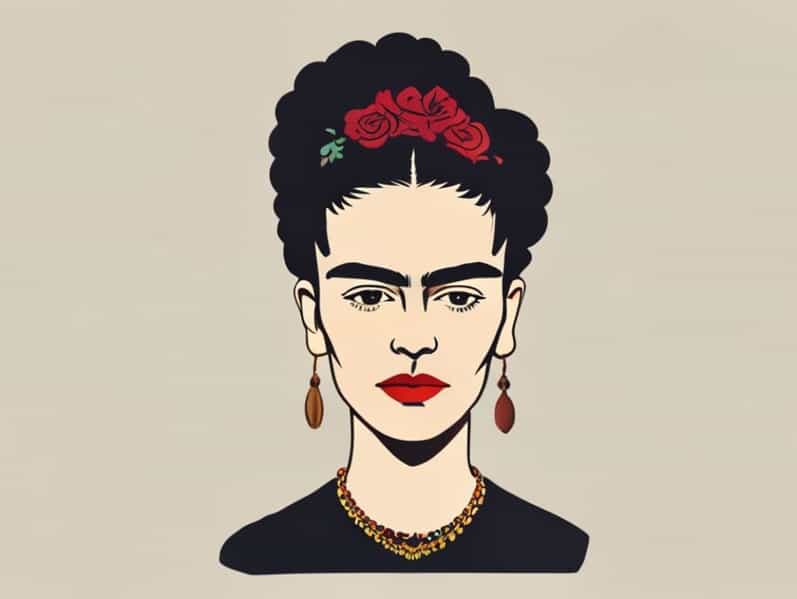
Frida Kahlo remains one of the most fascinating and influential figures in modern art, and her life continues to inspire new generations of artists, writers, and thinkers. Her story is not just one of pain and resilience but also of passion, politics, and profound creativity. British art critic and writer Hettie Judah has explored the complexity of women in art and the importance of visibility for female artists. When thinking about Frida Kahlo through the lens of Hettie Judah’s ideas, one can uncover new dimensions of how Kahlo’s art transcends time and remains deeply relevant in today’s cultural and feminist discussions.
The Life and Struggles of Frida Kahlo
Born in 1907 in Coyoacán, Mexico, Frida Kahlo’s life was marked by physical suffering and emotional intensity. After surviving a severe bus accident at the age of eighteen, she endured chronic pain and underwent numerous surgeries throughout her life. Yet, from this suffering emerged her unique artistic voice. Her paintings were deeply personal and often depicted her physical pain, emotional turmoil, and political beliefs. Kahlo’s art served as both self-expression and self-healing.
Frida Kahlo’s distinctive style combined elements of Mexican folk culture with surrealism and symbolism. However, she rejected being labeled as a surrealist, famously saying that she did not paint dreams but her own reality. This authenticity is part of what continues to draw people to her work. Every brushstroke in her paintings tells a story of endurance, identity, and the search for meaning amidst suffering.
Hettie Judah and the Visibility of Women in Art
Hettie Judah is a contemporary art critic and author who has written extensively about the position of women in the art world. Her work sheds light on how female artists have historically been overlooked, underrepresented, or misinterpreted through a male-dominated lens. Judah’s writing encourages recognition of women’s lived experiences as central to their artistic narratives, rather than peripheral or exceptional.
Judah often explores how institutions and critics have failed to acknowledge the full depth of women’s creative contributions. She also examines the intersections between art, motherhood, and the expectations placed on female artists. In this sense, her perspective is highly relevant when analyzing Frida Kahlo, a woman who turned her personal life her pain, love, and identity into art that challenged conventions and reshaped how we think about femininity and creativity.
Frida Kahlo Through the Lens of Hettie Judah’s Ideas
When viewed through Hettie Judah’s framework, Frida Kahlo becomes a prime example of a woman artist who refused to be silenced or simplified. Her work transcended the expectations of her time, and she asserted herself as the subject rather than the object of her art. This is a critical point Judah often emphasizes the importance of women creating their own narratives rather than being defined by others.
Frida’s paintings are filled with autobiographical symbolism the broken spine, the split body, and the dual self all reflect her experience as a woman navigating a world that often sought to limit her. Yet she never allowed herself to be reduced to a victim. Instead, she reclaimed her suffering as a source of strength and artistic insight. Judah’s perspective helps us understand that Kahlo’s legacy is not merely about personal tragedy but about reclaiming agency and identity through art.
The Role of Self-Portraiture in Frida Kahlo’s Work
Frida Kahlo painted dozens of self-portraits, making her one of the most prolific self-representing artists of her time. These works were not acts of vanity but of exploration and confrontation. She used her image as a canvas to explore the complexities of gender, culture, and pain. In a world where women were often depicted by men, Kahlo turned the gaze inward and reclaimed her narrative.
From Judah’s viewpoint, this act of self-representation aligns with the broader feminist goal of redefining how women are seen and understood. By painting herself again and again, Kahlo declared control over her image and refused to let others dictate her story. Her art became an ongoing dialogue between her inner world and external perception a balance that still resonates with female artists today.
Intersection of Art, Identity, and Politics
Frida Kahlo’s art cannot be separated from her political convictions. As a committed communist and supporter of Mexican nationalism, she infused her work with cultural and ideological symbolism. Her clothing, background motifs, and choice of colors celebrated Mexican identity and indigenous heritage. For Kahlo, art was an extension of her politics and her identity as a woman and a Mexican.
Hettie Judah’s writings about the social contexts of art-making highlight how artists’ personal and political realities shape their creative output. Frida Kahlo embodies this principle perfectly her art serves as both personal testimony and cultural resistance. Through her self-portraits and symbolic imagery, she merged the political with the personal, asserting that both were inseparable aspects of her existence.
How Pain Became Power
One of the most remarkable aspects of Frida Kahlo’s story is how she transformed her pain into power. Instead of hiding her suffering, she made it visible, raw, and honest. Her art communicated emotions that many women recognized but could not express. This openness made her both vulnerable and revolutionary.
Judah’s analysis of female creativity often touches on how women’s personal experiences especially those involving pain, care, or bodily autonomy are undervalued in art history. Kahlo’s work directly challenges this bias. By painting her scars, her miscarriages, and her physical fragility, she demanded that such experiences be seen as valid subjects of art. This defiance resonates strongly with Judah’s call for a more inclusive and empathetic understanding of women’s creativity.
The Lasting Influence of Frida Kahlo
Today, Frida Kahlo is not only remembered as a painter but as a cultural icon. Her image has become a symbol of female empowerment, resilience, and individuality. Yet, as Hettie Judah might point out, this popular image sometimes overshadows the complexity of her artistry. It’s important to return to her paintings themselves to the raw emotion, intricate symbolism, and deep humanity they hold.
Kahlo’s influence extends far beyond the art world. Her life has inspired countless biographies, films, and exhibitions. Her unapologetic embrace of identity continues to encourage artists to be authentic and fearless. Judah’s insistence on recognizing women’s artistic labor makes Kahlo’s story even more urgent today, reminding us that the fight for recognition and equality in art is ongoing.
Lessons from Frida Kahlo and Hettie Judah
- Authenticity in art is a form of resistance.
- Pain can be transformed into creative expression.
- Women must tell their own stories in their own voices.
- Visibility and recognition are essential for equality in art.
- Personal experiences are powerful and valid sources of artistic inspiration.
Frida Kahlo and Hettie Judah, though from different times and disciplines, share a common mission to redefine how women are seen in art and culture. Kahlo’s paintings reveal the depth of female experience, while Judah’s criticism provides the framework to understand and value that expression. Together, they remind us that art is not only about beauty it is about truth, identity, and courage. By continuing to engage with Kahlo’s legacy through the lens of thinkers like Judah, we ensure that women’s voices in art remain powerful, visible, and impossible to ignore.