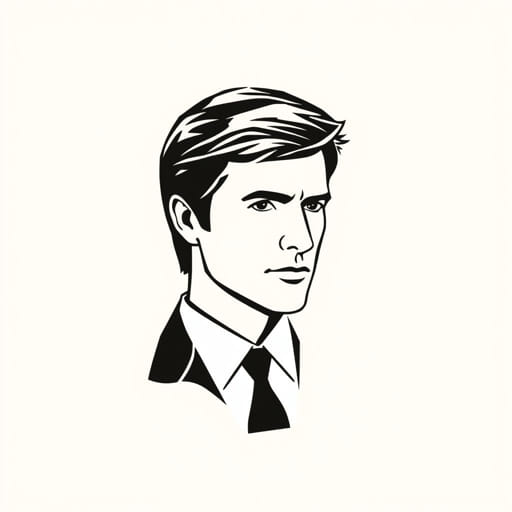
When Robert Redford stepped into the role of Jay Gatsby in the 1974 adaptation of The Great Gatsby, he brought to life one of the most iconic characters in American literature with a cool elegance and reserved intensity that defined an era. The film, based on F. Scott Fitzgerald’s classic 1925 novel, was a lavish production that aimed to capture the glamour, mystery, and melancholy of the Roaring Twenties. Redford’s portrayal of Gatsby remains a memorable interpretation that continues to captivate audiences decades later. His performance, paired with the film’s striking visual style and period-accurate details, made this version of The Great Gatsby a defining piece of 1970s cinema.
Robert Redford as Jay Gatsby
Redford’s casting as Jay Gatsby was widely anticipated, given his stature as a leading man of the time. Already known for films like Butch Cassidy and the Sundance Kid and The Way We Were, Redford brought both star power and subtlety to the role. His Gatsby was polished and distant, embodying the wealthy, enigmatic outsider who throws elaborate parties hoping to win back the woman he loves.
What made Redford’s Gatsby stand out was his ability to convey deep longing and hidden vulnerability beneath a facade of calm sophistication. His quiet moments, often underscored by longing glances and half-smiles, said as much as his dialogue. The mystery around Gatsby, one of the novel’s key themes, was preserved through Redford’s restrained performance.
- Redford portrayed Gatsby as both powerful and fragile
- His performance emphasized the emotional depth behind the character’s pursuit of Daisy
- The role required nuance and control, which Redford delivered effortlessly
The Chemistry Between Redford and Farrow
Mia Farrow played Daisy Buchanan, the object of Gatsby’s obsession. Their on-screen relationship was marked by an air of nostalgia and tragedy. While some critics felt the chemistry lacked fire, others argued that the emotional distance between the two reflected the characters’ true relationship as portrayed in the novel Gatsby idealizing a woman who no longer truly existed in the form he remembered.
Faithful to Fitzgerald’s Vision
The 1974 version of The Great Gatsby was notable for its efforts to stay close to Fitzgerald’s source material. The screenplay, written by Francis Ford Coppola, retained much of the novel’s dialogue and narration, attempting to keep the literary essence intact. The movie leaned heavily on visual storytelling, with art deco settings, elaborate costumes, and jazz-infused sequences that captured the extravagance of the 1920s.
Production Design and Visual Impact
One of the film’s greatest strengths was its production design. The lavish mansions, period costumes, and classic cars created a vivid backdrop for the drama. Every frame seemed dipped in gold and champagne, echoing Gatsby’s world of opulence and illusion. Redford, in perfectly tailored suits and surrounded by symbols of wealth, looked every bit the mysterious millionaire.
The visuals served a larger purpose: they underscored the theme of illusion versus reality. Gatsby’s mansion, parties, and lifestyle were all carefully curated to impress Daisy and recreate the past. But beneath the glitter, there was emptiness a truth the film, like the book, never allowed viewers to forget.
Critical Reception and Cultural Impact
Upon its release, the film received mixed reviews from critics. While some praised the visual spectacle and fidelity to the novel, others criticized the pacing and emotional flatness. However, Robert Redford’s performance was generally well-received, with many noting how well he embodied the aloof charisma of Gatsby.
- Praised for its cinematography and costume design
- Nominated for and won Academy Awards for Best Costume Design and Best Music
- Grew in appreciation over time as a stylish interpretation of a literary classic
Despite early criticism, the film has remained an important reference point in the legacy of Fitzgerald adaptations. Redford’s Gatsby is frequently compared to other portrayals, especially Leonardo DiCaprio’s in Baz Luhrmann’s 2013 version. While Luhrmann’s adaptation was modern and flashy, Redford’s was restrained, classical, and deeply rooted in the aesthetics of old Hollywood storytelling.
Gatsby’s Tragic Pursuit
Redford effectively captured the tragedy at the heart of Jay Gatsby: a man who builds a life of illusion based on a dream that no longer exists. Gatsby’s refusal to accept the passage of time and his obsessive belief that the past can be recaptured make him both compelling and heartbreaking. Redford’s controlled performance made these elements resonate clearly, especially in moments when Gatsby’s calm demeanor begins to unravel.
Comparing Gatsby Portrayals
Over the years, several actors have taken on the role of Gatsby. Each version brings something unique, but Robert Redford’s interpretation is often regarded as the most classically faithful to Fitzgerald’s literary vision. His version of Gatsby is more internalized than expressive, relying on subtle gestures and small emotional shifts rather than overt dramatics.
Where other portrayals leaned into Gatsby’s charisma and theatricality, Redford’s approach emphasized restraint and quiet intensity. This made his Gatsby feel real and grounded, enhancing the sense of tragedy when his dream inevitably collapses.
Legacy of the 1974 Film
The 1974 Great Gatsby remains a significant film not only because of its literary roots but also because of its place in Robert Redford’s storied career. It solidified his image as a refined, introspective leading man capable of bringing layered complexity to iconic roles. The film also contributed to the ongoing conversation about how American classics should be adapted and interpreted on screen.
In educational settings, Redford’s Gatsby is still shown as a visual companion to the novel. While no film can fully replicate the experience of reading Fitzgerald’s prose, the 1974 adaptation provides a thoughtful, beautifully crafted interpretation that captures the novel’s mood and themes.
A Gatsby for the Ages
Robert Redford’s performance in The Great Gatsby offers a timeless portrayal of one of literature’s most enigmatic characters. With elegance, poise, and emotional control, he brought Jay Gatsby to life in a way that continues to resonate. The 1974 film, though initially met with mixed reviews, has grown in appreciation over time and remains a visually rich, emotionally layered take on F. Scott Fitzgerald’s masterpiece. For many, Redford will always be Gatsby the man who believed in the green light, longing endlessly for a dream just out of reach.