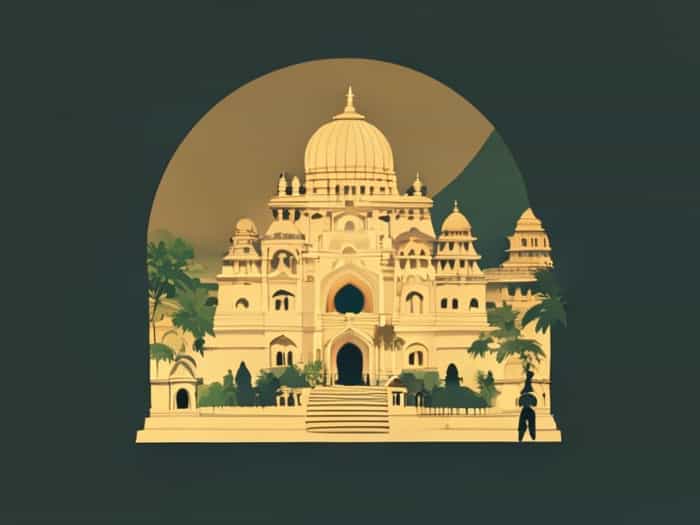
The history of the Vijayanagar Empire is one of the most captivating chapters in South Asian civilization, defined by cultural brilliance, political resilience, and a powerful vision for unity in southern India. Established during a period of turmoil and external threat, the empire emerged as a symbol of strength and revival. Its rulers built a flourishing society rooted in art, architecture, trade, and military strategy. Even today, the ruins of Hampi echo the grandeur of an empire that once stood as one of the largest and most prosperous in the Indian subcontinent.
Founding of the Vijayanagar Empire
The Vijayanagar Empire was founded in 1336 by brothers Harihara I and Bukka Raya I, who are often credited with bringing political stability back to the region. They established their capital at Vijayanagar, now known as Hampi, located along the Tungabhadra River. At the time, the southern parts of India faced repeated invasions and internal divisions, making the founding of a strong state essential for preserving regional culture and independence.
Role of Vidyaranya
Many historical accounts emphasize the influence of the sage Vidyaranya, who guided the founding brothers in establishing the new kingdom. His teachings inspired the empire’s commitment to cultural revival and protection of Hindu traditions.
- Support in political organization
- Encouragement of cultural restoration
- Promotion of unity among regional factions
Under this guidance, the empire quickly grew into a powerful force capable of resisting external threats.
The Sangama Dynasty
The earliest phase of the Vijayanagar Empire was ruled by the Sangama dynasty. This period focused on expanding the kingdom’s territory and strengthening administrative systems. The founders worked to consolidate power across present-day Karnataka, Andhra Pradesh, and parts of Tamil Nadu.
Territorial Expansion
Through strategic alliances and military campaigns, the Sangama rulers extended their influence, reducing internal rivalries and confronting northern invasions. They built fortifications, encouraged agriculture, and improved infrastructure.
Their expansion not only secured the region but also laid the foundation for future prosperity under later dynasties.
Rise of the Saluva and Tuluva Dynasties
By the late 15th century, the Sangama dynasty experienced political instability. Seizing the opportunity, the Saluva dynasty emerged to restore order. However, their rule was short-lived and primarily transitional.
Emergence of the Tuluva Dynasty
The Tuluva dynasty, founded by Narasa Nayaka and later led by his son Krishnadevaraya, became the most celebrated phase of the Vijayanagar Empire. It was during this era that the empire reached its cultural and military peak.
- Strengthened administrative institutions
- Unified diverse regions under centralized leadership
- Forged strong ties with foreign traders
The Tuluva dynasty played a crucial role in shaping the empire’s golden age and expanding its influence across South India.
Krishnadevaraya and the Golden Age
Krishnadevaraya, who ruled from 1509 to 1529, is often regarded as the greatest ruler of the Vijayanagar Empire. His reign is celebrated for military victories, infrastructural development, literary patronage, and economic prosperity. Under his leadership, the empire became one of the most powerful states in India.
Military Achievements
Krishnadevaraya led successful campaigns against the Deccan Sultanates, securing vital territories and protecting trade routes. His disciplined army and strategic brilliance made the empire a dominant force.
- Victories over Golconda and Bijapur
- Protection of coastal regions
- Expansion of borders across South India
These military accomplishments strengthened the empire’s reputation and brought stability, allowing the arts and economy to flourish.
Patronage of Art, Literature, and Culture
The Vijayanagar Empire under Krishnadevaraya was a hub of artistic expression. Poets, composers, and scholars thrived. The king himself authored the Telugu work Amuktamalyada, demonstrating his literary skill.
Architectural achievements such as temples, markets, and palaces were built in the imperial capital, leaving behind stone monuments that continue to amaze visitors today.
Society and Economy of the Empire
The Vijayanagar Empire is often admired not only for its political success but also for its dynamic society and booming economy. Its capital was one of the wealthiest cities of its time and was described by foreign travelers as a vibrant center of trade and culture.
Trade and Commerce
The empire engaged in both domestic and international trade, exporting textiles, spices, precious stones, and agricultural products. Merchants from Europe, Persia, and Southeast Asia visited its ports and markets.
- Prosperous trading ports along the western and eastern coasts
- Large-scale market activity in the capital
- Extensive network of inland trade routes
This thriving commerce contributed significantly to the stability and expansion of the empire.
Social and Cultural Diversity
People from various backgrounds lived and worked in the empire, contributing to its multicultural identity. Regional languages flourished, and religious tolerance allowed different traditions to coexist peacefully.
The empire supported temple construction, festivals, and artistic performances, strengthening its reputation as a cultural powerhouse.
Architecture and Urban Development
The architecture of Vijayanagar is one of its most enduring legacies. Its distinctive style combined Dravidian elements with local innovations. The capital city featured massive temples, stone pillars, bazaars, and water management systems.
Key Architectural Features
Many surviving structures in Hampi showcase the empire’s artistic vision and engineering skills. These include towering gopurams, intricately carved pillars, and large courtyards.
- Impressive temple complexes
- Royal enclosures with audience halls
- Efficient water reservoirs and channels
These architectural achievements highlight the empire’s mastery in urban planning and design.
Challenges and Decline
Despite its strength, the Vijayanagar Empire faced growing pressure from rival states. The Deccan Sultanates, once fragmented, began uniting against the empire. Internal disputes and shifting alliances further weakened its control.
The Battle of Talikota
In 1565, the allied forces of the Deccan Sultanates confronted the Vijayanagar Empire in the Battle of Talikota. The battle resulted in a devastating defeat for Vijayanagar, leading to massive destruction of the capital.
- Collapse of central authority
- Widespread destruction of Hampi
- Shift of remaining power to southern territories
Although the empire survived for some time under the Aravidu dynasty, it never regained the power and influence it once held.
Legacy of the Vijayanagar Empire
The legacy of the Vijayanagar Empire continues to inspire historians, travelers, and scholars. Its contributions to culture, architecture, literature, and regional identity remain significant in South Asian history.
A Cultural and Historical Landmark
Hampi, the heart of the empire, is now a UNESCO World Heritage Site, reminding visitors of a civilization that reached remarkable heights. The empire’s emphasis on cultural preservation, economic growth, and artistic expression still shapes southern India’s heritage.
The history of the Vijayanagar Empire stands as a testament to resilience, creativity, and unity. From its early foundations to its golden age and eventual decline, the empire left an undeniable impact that continues to be remembered, explored, and celebrated today.