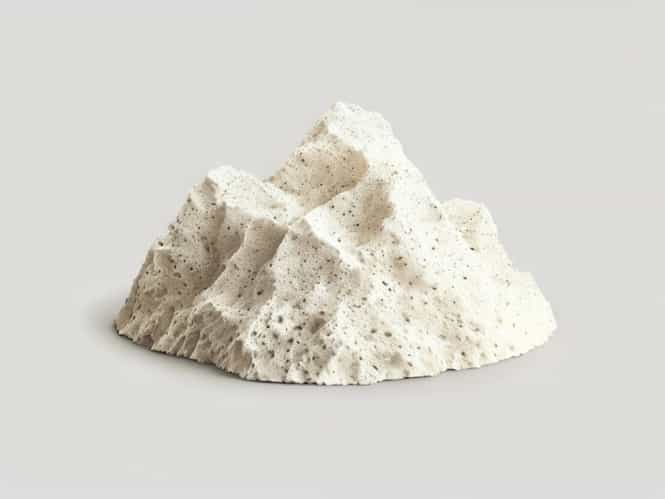
Calcareous tufa is a fascinating natural formation that has intrigued geologists, environmental scientists, and nature enthusiasts for centuries. These porous, often sponge-like deposits of calcium carbonate are found in rivers, springs, waterfalls, and other freshwater environments. They are different from other limestone formations due to their lightweight, soft, and highly porous structure. Understanding how calcareous tufa is formed involves exploring chemical, biological, and environmental processes that work together over time to create these unique geological structures. By studying tufa, we gain insights into water chemistry, mineral deposition, and the interaction between living organisms and their environment.
What is Calcareous Tufa?
Calcareous tufa is a type of limestone, composed primarily of calcium carbonate (CaCO3). Unlike harder limestones that form deep underground, tufa is typically soft and porous, often forming in shallow, flowing water systems. It is sometimes confused with travertine, another form of calcium carbonate, but tufa is generally lighter, more porous, and forms in different environmental conditions. Tufa formations can include small mounds, terraces, or even cascades near springs and waterfalls, often providing habitats for mosses, algae, and other aquatic plants.
Importance of Studying Tufa
Studying calcareous tufa provides valuable information about past and present environmental conditions. Because tufa forms from mineral-rich water interacting with organisms and environmental factors, its structure and composition can indicate water chemistry, flow rates, and ecological health. Tufa deposits can also preserve fossils of plants, algae, and microorganisms, helping scientists reconstruct past climates and water conditions. Understanding how tufa forms enhances our knowledge of geochemical cycles and the role of living organisms in shaping the landscape.
Chemical Process of Formation
The formation of calcareous tufa begins with water that is rich in dissolved calcium ions (Ca2+) and bicarbonate ions (HCO3–). This mineral-rich water often originates from limestone or chalk aquifers. When water emerges at the surface, changes in pressure, temperature, or carbon dioxide concentration trigger chemical reactions that result in the precipitation of calcium carbonate.
Step-by-Step Chemical Formation
The chemical process can be summarized in the following steps
- Dissolution Rainwater absorbs carbon dioxide (CO2) from the atmosphere and soil, forming weak carbonic acid (H2CO3).
- Reaction with Limestone The carbonic acid reacts with calcium carbonate in rocks, dissolving it into calcium bicarbonate [Ca(HCO3)2].
- Transport The calcium bicarbonate-rich water flows to springs, streams, or waterfalls.
- Precipitation When water loses CO2due to turbulence, temperature changes, or lower pressure, calcium carbonate precipitates out, forming solid tufa deposits.
This process can take place over years, decades, or even centuries, gradually building porous tufa mounds and terraces. The precipitation is often accelerated in areas with flowing water, such as waterfalls or cascades, where CO2is rapidly released into the atmosphere.
Biological Influence on Tufa Formation
Biological processes play a significant role in the formation of calcareous tufa. Algae, mosses, and bacteria can facilitate the deposition of calcium carbonate by providing surfaces for crystals to attach and by altering local chemical conditions. These organisms remove CO2from water during photosynthesis, increasing the pH and encouraging calcium carbonate to precipitate. In many tufa formations, delicate structures can be seen growing around living mosses and algae, creating intricate textures and porous patterns.
Examples of Biological Contribution
- Algae and Cyanobacteria Their metabolic processes reduce CO2in water, causing calcium carbonate to deposit around them.
- Mosses Mosses growing in mineral-rich water trap calcium carbonate crystals, forming solid tufa structures around their stems and leaves.
- Bacteria Certain bacteria can precipitate calcium carbonate as part of their metabolic processes, further contributing to tufa buildup.
These biological influences result in a tufa that is often lighter, more porous, and biologically integrated than chemically precipitated limestone alone.
Environmental Factors Affecting Tufa Formation
Several environmental factors influence how calcareous tufa is formed, including water chemistry, flow rate, temperature, and carbon dioxide concentration. Understanding these factors helps explain why tufa appears in certain locations and not others.
Water Chemistry
High concentrations of dissolved calcium and bicarbonate ions are essential for tufa formation. Water that passes through limestone or chalk formations typically has the right balance of these ions. Slight changes in pH or mineral content can either encourage or inhibit precipitation.
Flow Rate and Turbulence
Flowing water, particularly in streams, rivers, and waterfalls, accelerates tufa formation. Turbulence releases carbon dioxide from water, triggering calcium carbonate precipitation. Areas with slow-moving or stagnant water tend to produce less tufa because CO2is not released as efficiently.
Temperature and Sunlight
Temperature and sunlight also play roles in tufa formation. Higher temperatures reduce CO2solubility, promoting calcium carbonate precipitation. Sunlight supports photosynthetic organisms like algae and moss, indirectly encouraging tufa deposition by removing CO2from water.
Common Locations of Calcareous Tufa
Calcareous tufa is often found in freshwater environments with high mineral content. Common locations include
- Spring-fed rivers and streams, where water emerges from limestone aquifers.
- Waterfalls and cascades, where turbulence enhances CO2release.
- Shallow lake edges, particularly where aquatic plants and algae are abundant.
- Caves and karst systems, where groundwater rich in calcium bicarbonate reaches the surface.
Famous examples of tufa formations include the travertine terraces at Pamukkale in Turkey and Mono Lake in California, though these may have slightly different characteristics from typical soft tufa.
Human and Ecological Significance
Calcareous tufa formations are ecologically significant because they provide habitats for plants, algae, invertebrates, and even some amphibians. Their porous structures create microenvironments that support biodiversity. Additionally, tufa can influence water flow patterns, soil formation, and nutrient cycling in aquatic ecosystems.
From a human perspective, studying tufa helps geologists understand water chemistry, past climate conditions, and natural mineral deposition. In some cases, tufa deposits are used in construction or landscaping due to their lightweight and aesthetically pleasing appearance. However, preserving natural tufa formations is important because they are fragile and ecologically valuable.
Calcareous tufa is a remarkable example of the interplay between chemistry, biology, and environmental factors in shaping the natural world. It forms when mineral-rich water releases carbon dioxide, causing calcium carbonate to precipitate, often facilitated by algae, mosses, and bacteria. Environmental conditions such as water chemistry, flow rate, temperature, and sunlight all influence the rate and structure of tufa formation. These porous limestone deposits are not only visually striking but also ecologically important, providing habitats for numerous organisms and offering insights into water chemistry and climate history. Understanding how calcareous tufa is formed deepens our appreciation of natural geological processes and highlights the intricate connections between living organisms and the mineral environment.