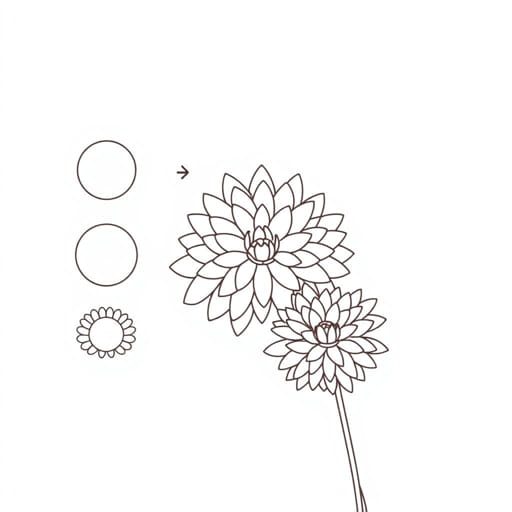
Drawing a chrysanthemum may seem challenging at first because of its complex layers of petals and intricate shape. However, with a step-by-step approach and a bit of patience, anyone can learn how to draw a chrysanthemum flower. This flower is not only beautiful but also rich in symbolic meaning, often associated with autumn, longevity, and celebration. Whether you’re a beginner or an experienced artist looking to improve your botanical illustrations, learning how to draw a chrysanthemum can be a rewarding experience. This guide will walk you through the process in clear and easy-to-follow steps.
Understanding the Chrysanthemum Structure
Before starting to draw, it helps to observe and understand the structure of a chrysanthemum. This flower is composed of multiple layers of narrow, curved petals that radiate from a central point. The petals are often densely packed and can vary in length and curvature depending on the variety. Some chrysanthemums have rounded petals, while others have more pointed or curled shapes. Taking a moment to look at real photos or live flowers can provide helpful reference for your drawing.
Key Characteristics of Chrysanthemums
- Dense arrangement of petals
- Round flower head with layered texture
- Petals that curve inward or outward depending on the angle
- Visible center, often partially hidden by inner petals
Materials You Will Need
Gather your drawing materials before you begin. You don’t need anything fancy to start, just the basics:
- Pencil (HB or 2B for sketching)
- Eraser (preferably kneaded for gentle correction)
- Drawing paper or sketchbook
- Fineliner or ink pen (optional, for outlining)
- Colored pencils or watercolor (optional for coloring)
Step-by-Step Guide to Drawing a Chrysanthemum
Step 1: Draw the Basic Outline
Start by drawing a light circle to represent the overall shape and size of the flower. This will serve as your guide for placing the petals. Inside this circle, draw a small center circle which will be the heart of the chrysanthemum. From the center, draw a few guide lines radiating outward like spokes on a wheel. These lines will help with petal placement and direction.
Step 2: Sketch the First Layer of Petals
Begin drawing short petals around the inner circle. These petals should be small and closely packed since they represent the innermost layer. Make sure the petals are slightly curved and overlap a bit to mimic the natural look. Keep your pencil strokes light and loose at this stage.
Step 3: Add the Middle Petal Layer
Move outward from the center and start drawing longer petals. These should curve more dramatically than the inner ones and may start to arch outward. Draw them to follow the guide lines but stagger them so they don’t align directly with the inner petals. This layering creates depth and realism.
Step 4: Draw the Outer Petals
The outer petals are usually the longest and may bend or curl slightly at the tips. Add several rows, maintaining the overall rounded shape. Let some petals overlap others and vary their direction slightly to give a more natural, organic look. Don’t worry about perfection variations in petal size and placement will enhance the drawing.
Step 5: Add Details and Texture
Go back to your petals and add fine lines along each one to indicate veins and curvature. These lines should follow the shape of the petal from base to tip. You can also add slight shading at the base of each petal to suggest depth. Use short, light pencil strokes for a soft and realistic texture.
Drawing the Stem and Leaves
Step 6: Draw the Stem
From the bottom of the flower head, draw two parallel lines extending downward to form the stem. Chrysanthemum stems are fairly thick and straight. You can make it slightly curved for a more natural appearance.
Step 7: Sketch the Leaves
Chrysanthemum leaves are jagged and lobed with deep indentations. Draw a few leaves branching off the stem. Start with a central vein, then add smaller veins extending outward. Shape the leaf edges with sharp, irregular curves. Adding leaves not only balances the composition but also enhances botanical accuracy.
Refining the Drawing
Step 8: Clean Up the Sketch
Use an eraser to remove any unnecessary guide lines and lighten any areas that seem too heavy. Now you should be left with a clean pencil sketch showing all the petals, stem, and leaves clearly.
Step 9: Add Final Outline (Optional)
If you want a more defined look, use a fine-tip pen or marker to outline your pencil lines. Be careful and precise, especially around the petals. Once the ink is dry, you can erase the pencil marks underneath.
Step 10: Add Color (Optional)
If you’d like to bring your chrysanthemum to life, use colored pencils, markers, or watercolor. Chrysanthemums come in a variety of colors such as yellow, white, pink, red, and purple. Use a reference image if you want to match a real flower. Start with light base layers and build up the color gradually. Blend shades to show shadows and highlights on the petals and leaves.
Tips for Drawing Chrysanthemums
- Work from the center outward to maintain structure
- Observe real flowers or clear reference images
- Keep your hand relaxed to create natural petal curves
- Practice drawing individual petals before assembling the whole flower
- Use layering and shading techniques to enhance realism
Common Mistakes to Avoid
- Making all petals the same size or shape variation is key
- Overcrowding petals without maintaining structure
- Forgetting to suggest depth through overlapping and shading
- Drawing too dark initially use light strokes and build up
Practicing Different Styles
Once you’re comfortable drawing realistic chrysanthemums, try exploring different artistic styles. You could create a stylized version using simple lines and bold shapes or experiment with abstract interpretations. Botanical illustration, anime-style flowers, and minimal line drawings are all interesting ways to express creativity while drawing chrysanthemums.
Learning how to draw a chrysanthemum allows you to practice both detail and composition. By breaking the process into manageable steps from understanding structure to sketching petals and adding finishing touches you can create a beautiful and balanced flower drawing. Whether you keep it simple or add color and shading, the result can be both artistic and rewarding. With regular practice, your ability to draw chrysanthemums will improve, helping you develop both your observation skills and artistic confidence.