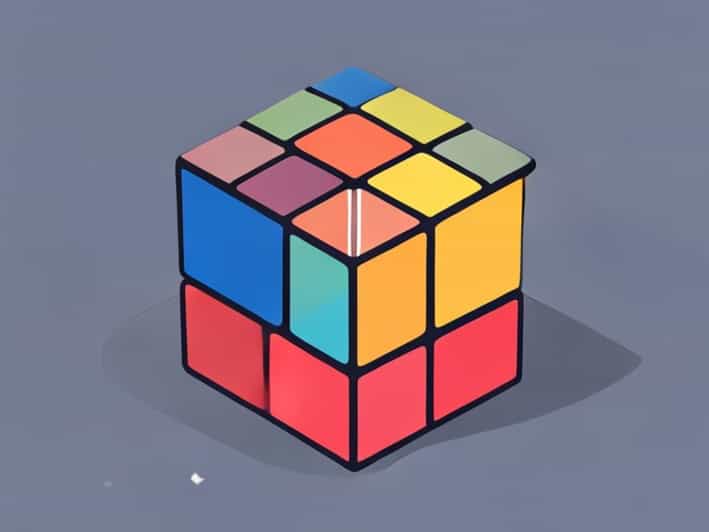
Solving a 2×2 Rubik’s Cube may seem challenging at first, especially for beginners who are unfamiliar with cube notation and algorithms. Unlike the standard 3×3 cube, the 2×2 version, often called the Pocket Cube, has fewer pieces but still requires strategy, planning, and a basic understanding of patterns. Learning how to solve a 2×2 Rubik’s Cube not only improves problem-solving skills but also enhances spatial awareness and memory. With practice, anyone can master this puzzle, and it can be a fun and rewarding activity for people of all ages.
Understanding the 2×2 Rubik’s Cube
The 2×2 Rubik’s Cube consists of eight corner pieces and has no fixed center or edge pieces, unlike the 3×3 cube. Each corner piece shows three different colors, and the goal is to arrange all pieces so that each face of the cube has a uniform color. While it may appear simpler due to the fewer pieces, the 2×2 cube still requires knowledge of basic algorithms and solving methods to complete efficiently.
Cube Notation
Before attempting to solve the 2×2 Rubik’s Cube, it is essential to understand the cube notation. Cube notation is a system used to describe rotations and moves. Each face is represented by a letter
- U – Up
- D – Down
- F – Front
- B – Back
- R – Right
- L – Left
A single letter indicates a 90-degree clockwise turn of that face, while an apostrophe (‘) indicates a 90-degree counterclockwise turn. The number 2 after a letter represents a 180-degree turn. Understanding this notation is crucial for following solving algorithms accurately.
Step 1 Solving the First Layer
The first step in solving a 2×2 Rubik’s Cube is to complete one layer, usually starting with the white face. Focus on positioning the white corner pieces correctly. Unlike the 3×3 cube, you do not need to worry about edge pieces, so you only need to align the corners with their adjacent colors.
Tips for Solving the First Layer
- Identify all white corner pieces and their corresponding colors.
- Place each white corner in the correct position on the bottom layer without worrying about orientation at first.
- Use simple rotations (R, U, R’, U’) to move corners without disturbing solved pieces.
Step 2 Orienting the Last Layer
After completing the first layer, the next step is to orient the pieces in the last layer so that the top face is a single color, usually yellow. This step involves applying specific algorithms to rotate corners without affecting the completed first layer. At this stage, it is important to memorize a few key algorithms for efficiency.
Common Last Layer Algorithms
- R U R’ U’ – This algorithm rotates a corner piece clockwise on the top layer.
- U R U’ L’ U R’ U’ L – Used for swapping multiple corner pieces while keeping the top color intact.
- R2 D R’ U2 R D’ R’ U2 R’ – A more advanced algorithm for adjusting multiple corners simultaneously.
Practicing these algorithms will help you solve the last layer more efficiently. Start slowly and focus on understanding the effect of each move on the cube’s pieces.
Step 3 Permuting the Last Layer
Once the top layer is oriented correctly, the final step is to permute the corners, moving them into their correct positions. This step ensures that all pieces are in the right place and the cube is completely solved. Similar to orientation, permutation involves specific sequences of moves that only affect the top layer corners.
Key Permutation Algorithms
- U R U’ L’ U R’ U’ L – Used to swap three corner pieces clockwise.
- U’ L’ U R U’ L U R’ – Used to swap three corner pieces counterclockwise.
By repeatedly applying these algorithms and observing how the pieces move, you can correctly position all corners without disturbing the solved first layer.
Tips for Practicing and Improving Speed
Learning to solve the 2×2 Rubik’s Cube requires patience and consistent practice. As you become familiar with algorithms and rotations, your solving time will naturally decrease. Here are some tips to improve your efficiency and speed
- Practice finger tricks to execute moves quickly and smoothly.
- Learn to recognize patterns to reduce the number of algorithms needed.
- Time yourself during solves to track improvement.
- Focus on solving with fewer rotations rather than memorizing excessive algorithms at first.
- Gradually transition from slow, deliberate solving to more fluid and intuitive solving.
Common Mistakes to Avoid
While learning to solve a 2×2 Rubik’s Cube, beginners often make mistakes that can slow progress. Common issues include
- Not aligning colors properly on the first layer before moving to the top layer.
- Applying algorithms incorrectly due to misunderstanding cube notation.
- Rotating the top layer unnecessarily, which can disrupt solved pieces.
- Rushing through moves without observing the effect on the cube.
Taking time to understand each step and practicing slowly at first will help avoid these mistakes and build a solid foundation for faster solving.
Solving a 2×2 Rubik’s Cube involves understanding the structure of the cube, learning basic algorithms, and practicing orientation and permutation of the pieces. By starting with the first layer, then orienting the last layer, and finally permuting the corners, you can solve the cube systematically. Regular practice and attention to detail will improve speed and accuracy. Mastering the 2×2 cube not only provides a sense of accomplishment but also prepares you for tackling more complex cubes, such as the 3×3 and larger variations. With patience and dedication, anyone can learn how to solve a 2×2 Rubik’s Cube efficiently and enjoy the rewarding challenge it offers.