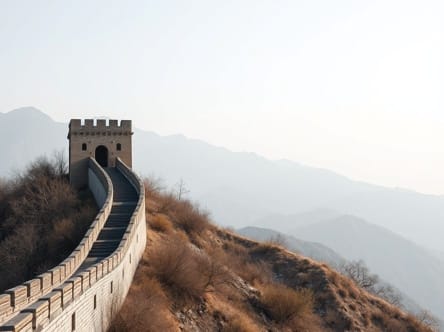
The Great Wall of China is one of the most iconic landmarks in the world, stretching across thousands of kilometers and winding through mountains, deserts, and grasslands. While most people are familiar with its massive presence in northern China, few consider the exact locations where the Wall begins and ends. Of particular interest is its easternmost point, a section often overlooked by travelers and historians alike. Understanding where this point is located involves more than simply looking at a map; it requires an appreciation of Chinese geography, historical borders, and the strategic significance of the Wall’s construction. The easternmost point of the Great Wall is found in a province that played a crucial role in defending ancient China’s coastline and borders from invaders arriving by both land and sea.
Location of the Easternmost Point
The easternmost point of the Great Wall of China is located inLiaoning Province, a region situated in the northeastern part of the country. This point specifically terminates at a place calledHushan, near the city of Dandong, right next to the Yalu River, which separates China from North Korea. This section is often referred to as the Hushan Great Wall.
Liaoning Province is a significant geographical area because it bridges northern China and the Korean Peninsula. As the eastern edge of the Ming Dynasty’s defensive network, Hushan represented not only a strategic military position but also a political boundary in historical conflicts and foreign relations.
Why Liaoning Was Chosen
The location of the easternmost point in Liaoning is no coincidence. Several reasons influenced the decision to extend the Great Wall to this region
- Military DefenseLiaoning was a frontier province prone to invasions and skirmishes from nomadic tribes and other emerging powers across the Korean Peninsula and Manchurian plains.
- Geopolitical StrategyThe proximity to the Yalu River provided a natural defensive line, making it easier to monitor and control cross-border movement.
- Coastal SecurityBeing close to the Bohai Sea, this area allowed China to protect its coastline from potential naval invasions, particularly during the Ming Dynasty when maritime threats were increasing.
Historical Importance of Hushan
Though less well-known than Badaling or Mutianyu sections near Beijing, Hushan holds critical historical importance. It represents the edge of the Great Wall’s reach toward the East China Sea and reflects the extent of China’s northern defense line during the Ming period.
Construction and Architecture
The Hushan section of the Great Wall features a combination of stone walls, watchtowers, and gates that are remarkably well preserved. Built on steep terrain, it offered commanding views of both the river and the surrounding hills. This enabled defenders to spot any approaching threats well in advance. Some parts of this section were reconstructed in modern times to preserve their structure and make them accessible for tourism and educational purposes.
Interaction with the Korean Peninsula
Due to its proximity to Korea, the Hushan Wall area historically served as a point of interaction between China and the Korean kingdoms. Trade, diplomacy, and occasional conflict occurred near this border. The Wall not only functioned as a defensive structure but also symbolized a boundary between differing cultures and political spheres of influence in East Asia.
Geographic Features of Liaoning Province
Liaoning Province is characterized by a diverse landscape that includes mountain ranges, river systems, and coastal plains. These natural features played a significant role in determining the route of the Great Wall through this region.
Mountains and Hills
The eastern terminus lies along a chain of forested hills that connect to larger mountain ranges further inland. These natural elevations provided an excellent foundation for constructing defensive walls and watchtowers.
Rivers and Waterways
The Yalu River forms the natural boundary at the very edge of the Wall. This river not only served as a barrier against invasion but also as a trade route and line of communication. Its strategic value cannot be overstated, especially during times of heightened tension or military mobilization.
Climate Considerations
The region experiences a continental climate with cold, dry winters and hot, humid summers. These seasonal variations influenced the construction methods used along this section of the Wall. Stones and bricks were chosen for their durability under extreme weather conditions, helping the Wall stand the test of time.
Cultural and Modern-Day Significance
Today, the Hushan section of the Great Wall and its location in Liaoning Province attract growing interest from both domestic and international visitors. It offers not only scenic views and historic intrigue but also a deeper understanding of China’s territorial evolution and cultural preservation.
Tourism and Education
Efforts have been made to preserve and promote the Hushan Wall as a tourist destination. Visitors can hike along the restored paths, visit nearby museums, and gain insight into the architectural techniques used in ancient times. Educational signage and exhibits help contextualize the wall’s construction, historical role, and significance in regional politics.
Border Relations
Because Hushan is so close to North Korea, it also provides a rare opportunity to view the neighboring country from a safe vantage point. This proximity adds a layer of geopolitical interest to any visit and highlights the continuing importance of border regions in international relations.
Local Economy
The presence of the Great Wall in Liaoning contributes to local economic development through tourism, preservation jobs, and cultural events. It has become a source of regional pride, enhancing community identity and historical awareness among residents.
Comparisons with Other Great Wall Sections
Many people associate the Great Wall with more popular sections near Beijing or Gansu Province, where the wall cuts through deserts and mountain passes. However, the easternmost point in Liaoning is just as impressive in both scale and importance. What distinguishes it most is the coastal proximity and its role in ancient maritime defense strategies.
- BadalingFamous for its accessibility and restoration, but located inland.
- JiayuguanThe westernmost point, marking the desert edge of the Wall.
- HushanThe easternmost point, standing as a coastal and river boundary.
Each section has its own unique character, and together they form a comprehensive network of historical fortifications that tell the story of a nation’s evolving borders and defense needs.
The easternmost point of the Great Wall of China lies in Liaoning Province, at the Hushan section near Dandong. This location holds strategic, historical, and cultural significance that extends beyond its geographic coordinates. It served as a sentinel against northern and eastern threats, a symbol of territorial sovereignty, and today remains a place of reflection on China’s rich past. As part of one of the world’s most iconic architectural feats, the Hushan Wall reminds us that even the less-traveled ends of the Great Wall are rich in meaning and deserve recognition for their contribution to the legacy of Chinese civilization.