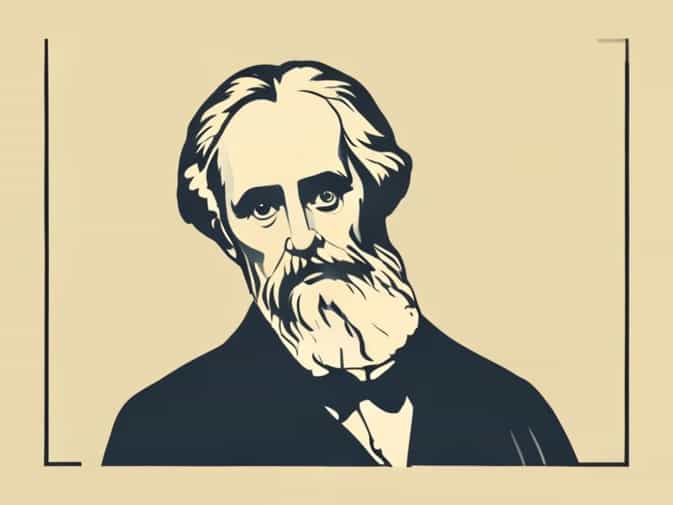
Michael Faraday, one of the most influential scientists in history, made groundbreaking contributions to the fields of electromagnetism and electrochemistry. His inventions and discoveries laid the foundation for much of modern electrical engineering and physics. Faraday’s work not only advanced scientific knowledge but also enabled practical applications that continue to impact daily life. From electric motors to transformers and innovations in chemical processes, his contributions illustrate the profound connection between scientific theory and technological invention. Exploring the inventions of Michael Faraday provides insight into the creativity, experimentation, and persistence that shaped the modern world.
Early Experiments and Discoveries
Michael Faraday’s career began humbly as an apprentice to a bookbinder, where he developed a fascination for science through reading. His early experiments focused on electricity and magnetism, leading to the discovery of several fundamental principles. Faraday was not only a brilliant experimenter but also a keen observer, often conducting careful studies to test the relationship between magnetic fields and electric currents. These early investigations set the stage for his more significant inventions.
Electromagnetic Induction
One of Faraday’s most famous discoveries was electromagnetic induction, which he demonstrated in 1831. He discovered that a changing magnetic field could induce an electric current in a nearby wire. This principle is the foundation of electric generators and transformers. Faraday’s electromagnetic induction showed that electricity could be produced from magnetism, a revolutionary idea that bridged the gap between theoretical physics and practical electricity generation.
Faraday’s Law of Induction
Faraday’s experiments led to the formulation of Faraday’s Law of Induction, which quantifies the induced electromotive force (EMF) in a circuit due to a changing magnetic field. This law remains a cornerstone of electrical engineering and is essential for understanding how generators, transformers, and many other electrical devices operate. By establishing this law, Faraday demonstrated the predictable relationship between magnetism and electricity, enabling the creation of reliable electric power systems.
Inventions Inspired by Faraday’s Discoveries
Michael Faraday’s discoveries inspired numerous inventions that have had lasting impacts on technology and industry. Many of these inventions were direct applications of his research in electromagnetism and electrochemistry. The most notable include
The Electric Motor
Faraday created one of the first simple electric motors in 1821. He demonstrated that an electric current could produce rotational motion when applied to a wire placed in a magnetic field. This invention marked the beginning of converting electrical energy into mechanical energy, a principle that underlies modern electric motors used in appliances, industrial machinery, and electric vehicles. Faraday’s electric motor was a conceptual breakthrough, illustrating the practical potential of electromagnetism.
Electric Generator
Faraday also invented the first electric generator, or dynamo, which converted mechanical energy into electrical energy using electromagnetic induction. By rotating a copper disk between the poles of a magnet, he generated a continuous electric current. This invention provided the conceptual basis for modern electricity generation in power plants, enabling the widespread use of electricity in homes, businesses, and industry.
Electrolysis and Electrochemistry
In addition to his work with electricity and magnetism, Faraday made significant contributions to electrochemistry. He conducted experiments with the electrolysis of water and other compounds, establishing foundational laws of electrolysis. Faraday’s laws quantified the relationship between the amount of substance produced at an electrode and the amount of electric charge passed through the electrolyte. These principles are crucial in battery technology, electroplating, and industrial chemical processes.
The Faraday Cage
Another practical invention attributed to Michael Faraday is the Faraday cage, a structure designed to block electric fields. Faraday demonstrated that an enclosure made of conducting material could protect its interior from external electrical charges. Today, Faraday cages are used to shield sensitive electronic equipment from electromagnetic interference, protect against lightning strikes, and ensure the safety of devices in laboratories and industrial settings.
Impact on Modern Technology
The inventions of Michael Faraday have profoundly influenced modern technology and everyday life. His work laid the groundwork for electric power generation, distribution, and practical applications in electronics and machinery. Without Faraday’s discoveries, modern conveniences such as electric lights, household appliances, computers, and electric vehicles would not exist in their current form. Faraday’s emphasis on experimentation, observation, and applying scientific principles to solve practical problems continues to inspire engineers and inventors today.
Applications in Electrical Engineering
Faraday’s discoveries are fundamental to electrical engineering, forming the basis of transformers, inductors, and electric circuits. His principles allow engineers to design and optimize electrical systems for efficiency, safety, and performance. From small electronic devices to large-scale power grids, Faraday’s contributions remain central to the field.
Influence on Scientific Research
Beyond practical inventions, Faraday’s work shaped scientific methodology. His rigorous experimentation and careful documentation of results became a model for future scientists. Faraday’s approach emphasized testing hypotheses through controlled experiments, observing natural phenomena, and applying results to real-world applications. This methodology has influenced generations of researchers in physics, chemistry, and engineering.
Legacy of Michael Faraday
Michael Faraday’s legacy extends beyond his inventions to his role as a teacher, mentor, and advocate for science. He delivered public lectures, wrote extensively, and inspired future scientists, including James Clerk Maxwell, who later formalized Faraday’s experimental discoveries into mathematical equations. Institutions and awards have been named in his honor, reflecting the enduring impact of his work on science and technology. Faraday’s inventions continue to shape our daily lives, demonstrating how scientific curiosity, experimentation, and practical ingenuity can transform society.
Key Takeaways
- Michael Faraday discovered electromagnetic induction, forming the foundation for modern electric generators and transformers.
- He created the first electric motor, demonstrating that electrical energy can be converted into mechanical motion.
- Faraday’s work in electrochemistry established the laws of electrolysis, influencing battery technology and industrial processes.
- The Faraday cage is a practical invention that protects sensitive equipment from external electric fields.
- Faraday’s methods and inventions continue to influence scientific research, electrical engineering, and modern technology.
The inventions of Michael Faraday revolutionized our understanding of electricity, magnetism, and chemistry. His contributions provided the foundation for modern electrical engineering, power generation, and numerous practical applications that we rely on today. From the electric motor to the Faraday cage, his innovations illustrate the profound impact of combining scientific inquiry with creative problem-solving. Faraday’s legacy serves as a reminder of how curiosity, dedication, and experimentation can lead to discoveries that transform technology and improve human life. Studying Faraday’s inventions offers valuable insights into the history of science and the principles that continue to drive technological advancement in the modern world.