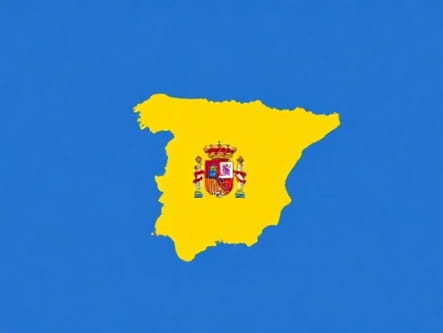
When thinking about Spain’s geographic and maritime identity, people often wonder whether Spain is considered transatlantic or transpacific. This question arises from how countries are positioned relative to the world’s major oceans and how they historically and economically engage with global regions. Spain, located in southwestern Europe, has been a major seafaring nation for centuries. To fully understand whether Spain is transatlantic, transpacific, or perhaps even both, it’s essential to examine its geography, history, trade connections, and international relations.
Understanding the Term Transatlantic”
Definition and General Context
The term “transatlantic” refers to anything that spans or crosses the Atlantic Ocean. It usually describes the connections between Europe, Africa, and the Americas. Countries located along the Atlantic coast often engage in transatlantic trade, diplomacy, and cultural exchange. Spain, being located on the western edge of Europe, directly faces the Atlantic Ocean, making it part of the transatlantic world in a very real and practical sense.
Spain’s Atlantic Coastline
Spain’s Atlantic coast includes regions like Galicia, Asturias, Cantabria, and the Basque Country in the north, and extends down to parts of Andalusia in the south. Major Atlantic ports such as A Coruña, Santander, and Cádiz have long been gateways for transatlantic navigation and commerce. These ports facilitated Spain’s role in colonial expeditions, transatlantic slave trade, and global exploration, especially during the 15th and 16th centuries.
Spain’s Historical Role in the Transatlantic World
The Age of Exploration
Spain was at the forefront of the Age of Exploration. When Christopher Columbus sailed west in 1492 under the Spanish crown, he made the first transatlantic voyage that connected Europe to the Americas. This journey was a pivotal moment in global history and firmly established Spain as a transatlantic power. Spain went on to establish colonies across the Americas, creating deep political, economic, and cultural ties across the Atlantic Ocean.
Colonial Legacy and Cultural Exchange
The Spanish Empire spread from Mexico and Peru to the Caribbean and parts of the United States. The legacy of Spain’s transatlantic empire remains visible in the widespread use of the Spanish language and cultural practices in Latin America. Transatlantic connections also led to the exchange of goods, such as gold, silver, cocoa, and tobacco, which were shipped back to Spain’s ports and distributed across Europe.
Modern Transatlantic Alliances
In the modern era, Spain remains deeply engaged in transatlantic institutions. Spain is a member of NATO, a transatlantic military alliance that links North America and Europe. It also maintains strong diplomatic and trade relationships with the United States, Canada, and Latin American nations. These modern connections continue to underscore Spain’s place in the transatlantic world.
What About the Pacific Ocean?
Geographic Reality
While Spain’s involvement in the Atlantic is clear and historically rooted, its relationship with the Pacific Ocean is much less direct. Spain is not geographically located near the Pacific Ocean, and its mainland territory does not touch it. The Pacific lies on the opposite side of the globe from Spain, separating it from Asia and the western coasts of the Americas by vast distances.
Historical Presence in the Pacific
Despite its geographic distance, Spain had a notable presence in the Pacific during the height of its empire. In the 16th century, Spain colonized the Philippines, Guam, and other Pacific islands. The Manila Galleons were a famous Spanish trading route that connected Manila in the Philippines with Acapulco in Mexico, linking the Pacific and Atlantic via Spanish colonies. This maritime corridor was vital for the transport of goods like spices, silk, and silver.
However, Spain lost most of its Pacific holdings by the late 19th century. The Treaty of Paris in 1898, which ended the Spanish-American War, saw Spain cede control of the Philippines, Guam, and other Pacific territories to the United States. Since then, Spain’s role in the Pacific has been minimal, and it no longer maintains significant political or economic influence in the region.
Modern Connections to the Pacific Rim
Limited Direct Engagement
In contemporary geopolitics and trade, Spain has limited direct ties to the Pacific Rim. Its trade relationships are more concentrated within the European Union, Africa, and the Americas. While Spain does have diplomatic missions in Asia and participates in global forums that include Pacific nations, its practical role in Pacific affairs is not central.
Spanish Companies in Global Markets
That said, global Spanish companies like Telefónica and Repsol have international operations that sometimes extend into Pacific countries. Spain also engages in international business and tourism with countries like China, Japan, and Australia. However, these connections are not enough to classify Spain as a transpacific nation in the same sense as countries with direct Pacific coastlines.
Comparative Summary
Spain as a Transatlantic Nation
- Located directly on the Atlantic Ocean
- Deep historical ties with the Americas
- Key player in transatlantic exploration and trade
- Modern participation in NATO and EU-US relations
Spain’s Limited Pacific Role
- Geographically distant from the Pacific Ocean
- Had historical colonies in the Pacific but lost them in the 19th century
- Minimal political or economic influence in Pacific affairs today
Based on geography, history, and current global relations, Spain is best described as a transatlantic nation rather than a transpacific one. Its strategic position along the Atlantic coast and its extensive historical and modern ties with other Atlantic countries support this classification. Although Spain once had a notable colonial presence in the Pacific, that influence has significantly diminished over time. Today, Spain’s focus remains largely within the Atlantic framework, including its relationships with Europe, Africa, and the Americas. The term transatlantic continues to best reflect Spain’s global identity and positioning.