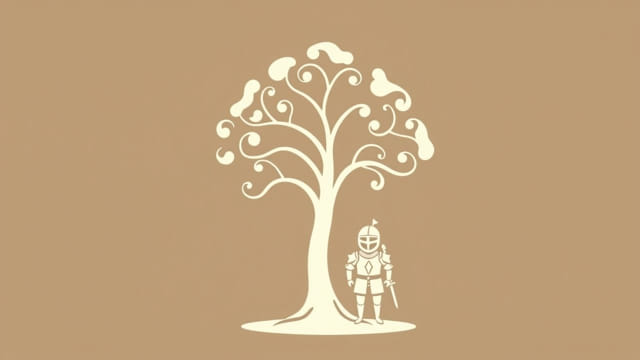
Within the sprawling world of Westeros, filled with legends, battles, and political intrigue, few tales are as mysterious and haunting as the story of the Knight of the Laughing Tree. This enigmatic figure, whose identity remains one of the most debated topics among fans of George R.R. Martin’s A Song of Ice and Fire, emerges briefly in a tale told to Bran Stark. Despite the brevity of their appearance, the Knight of the Laughing Tree has sparked years of speculation and analysis due to the symbolic and narrative weight the story seems to carry.
The Tale as Told in the Books
The story of the Knight of the Laughing Tree is shared by Meera Reed during a quiet moment in the *A Storm of Swords*. She recounts it as a story passed down from her father, Howland Reed, who witnessed the events firsthand at the Tourney at Harrenhal. According to her tale, a mysterious knight clad in mismatched armor and a shield painted with a laughing weirwood tree appeared at the tournament. This knight challenged and unhorsed three squires who had bullied Howland Reed earlier, demanding that they teach their lords honor and respect.
The Knight of the Laughing Tree won the admiration of the crowd but vanished before they could be unmasked. King Aerys II, the Mad King, sent men to search for the knight, believing it was a threat. But no one was ever found. Many assume that the identity of this knight is central to the mysteries that prelude Robert’s Rebellion, including the relationships between Lyanna Stark, Rhaegar Targaryen, and the fall of the Targaryen dynasty.
Symbolism of the Laughing Tree
The weirwood tree is a powerful symbol in Westeros, often associated with the old gods of the North and the Stark family. The laughing aspect adds an eerie, almost ironic dimension. It suggests a subversion of the typical knightly ideal. Rather than seeking glory, the Knight of the Laughing Tree stood for justice, humility, and possibly vengeance in a way that challenged traditional norms of knighthood.
The use of the weirwood tree further connects the mysterious knight to the North and House Stark. Trees do not laugh in Westeros. That the tree laughs here may hint at a hidden truth, a buried Stark secret, or simply the absurdity of knightly hypocrisy exposed by this lone figure.
Speculated Identity: Was It Lyanna Stark?
The most widely accepted theory among readers is that the Knight of the Laughing Tree was Lyanna Stark in disguise. Though women were not permitted to joust, Lyanna’s strong will, fiery temperament, and sense of justice fit perfectly with the knight’s actions. She was known to be an exceptional horse rider and was fiercely protective of her friends and family.
Supporting this theory is the reaction of Prince Rhaegar Targaryen, who reportedly won the tournament but then crowned Lyanna as the queen of love and beauty, bypassing his own wife. If Rhaegar discovered Lyanna’s identity as the mysterious knight, this act could have been an acknowledgment of admiration, fascination, or even love. This moment, many believe, planted the seed for their eventual elopement, triggering the events that led to Robert’s Rebellion.
The Role of the Tourney at Harrenhal
The Tourney at Harrenhal is often described as a pivotal moment in Westeros history. It was more than a simple gathering of lords and knights; it was the convergence of multiple storylines and destinies. The tourney brought together the future leaders of Westeros Eddard Stark, Robert Baratheon, Jaime Lannister, and others under one roof. In this politically charged atmosphere, the appearance of the Knight of the Laughing Tree was more than a curiosity; it was a moment of defiance against the established order.
Many fans speculate that the tourney was orchestrated, at least in part, to give Rhaegar Targaryen a platform to reveal truths or challenge his father’s reign. Whether or not that is true, it’s clear that the events surrounding the knight added a mysterious tone to an already legendary gathering.
The Impact on Westeros’ History
While the Knight of the Laughing Tree appeared only briefly, the consequences of their actions reverberated across the realm. If the knight was indeed Lyanna Stark, and if her actions sparked Rhaegar’s interest, then the disappearance of the knight becomes a key turning point in the downfall of House Targaryen and the shift of power in Westeros. The elopement, or possible abduction, of Lyanna by Rhaegar was the catalyst for Robert’s Rebellion, which saw the death of thousands and the reshaping of the Seven Kingdoms.
Possible Interpretations
- Feminist Lens: If Lyanna was the knight, her story challenges the patriarchal norms of Westerosi society, where women are often sidelined from acts of heroism or knighthood.
- Mythological Motif: The disguised warrior trope is common in myths and fairy tales, symbolizing hidden power, justice, and resistance.
- Political Symbol: The knight may represent the North’s quiet resistance to Southern rule, embodying the values of House Stark and the Old Gods.
Legacy in Modern Fandom
The Knight of the Laughing Tree remains a favorite mystery among fans of the series. It has inspired countless fan theories, fan art, and detailed analysis on forums and videos. What makes the tale so compelling is not just the mystery, but the way it bridges themes of identity, gender, justice, and the quiet strength of individuals overlooked by history.
In a story filled with grand battles and political games, the Knight of the Laughing Tree serves as a reminder of how even small, defiant acts can alter the course of history. The figure is a testament to the hidden depths of George R.R. Martin’s storytelling, where even a brief tale within a tale carries world-changing weight.
Mystery That Lives On
The Knight of the Laughing Tree may never be definitively unmasked in the books, but their story continues to captivate and inspire readers. Whether viewed as a tale of bravery, a symbol of justice, or a veiled commentary on gender roles, the knight holds a special place in Westerosi lore. The unanswered questions surrounding the laughing tree and its knight leave room for wonder, debate, and the magic of storytelling that George R.R. Martin so masterfully weaves.