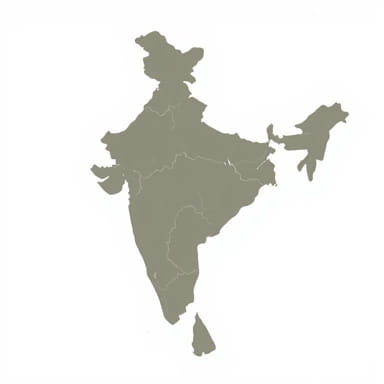
In the vast expanse of the Bay of Bengal, two isolated volcanic islands Narcondam and Barren Island stand as rare geological marvels under Indian territory. These remote islands are part of the Andaman and Nicobar Islands, a union territory of India located far to the southeast of the Indian mainland. Known for their unique ecological and geological significance, both islands draw the attention of scientists, environmentalists, and curious travelers. Their locations on the map of India may not be well-known to many, but their strategic and scientific importance is undeniable. Studying the map and placement of Narcondam and Barren Islands gives insight into India’s extended maritime geography and rich natural diversity.
Geographic Location and Map Placement
Position in the Bay of Bengal
Narcondam and Barren Islands are situated in the northeastern part of the Indian Ocean within the Bay of Bengal. These islands are volcanic in origin and are part of the Andaman Sea region, located to the east of the main Andaman Island chain. They lie between the Indian subcontinent and Southeast Asia, making them important from both a navigational and ecological perspective.
- Narcondam Islandlies approximately 256 kilometers northeast of Port Blair, the capital of the Andaman and Nicobar Islands.
- Barren Islandis situated about 138 kilometers northeast of Port Blair, and around 70 kilometers east of Middle Andaman.
Map Representation
On a detailed map of India, particularly maps showing the full extent of the Andaman and Nicobar Islands, Narcondam and Barren Island appear as small but distinct points toward the easternmost edge of the archipelago. Due to their small size and remote locations, they are often not labeled on standard maps, but they are always marked on maritime and topographical maps used for research, navigation, and defense purposes.
Barren Island India’s Only Active Volcano
Volcanic Activity and Geological Significance
Barren Island holds the distinction of being the only confirmed active volcano in India. It is part of the volcanic arc created by the subduction of the Indian Plate beneath the Burmese Plate. The volcano has erupted multiple times in recorded history, with significant eruptions observed in recent decades, including notable activity from 1991 to 1995, and again in the 2000s and 2010s.
Island Features
The island is mostly barren, as its name suggests, due to the regular volcanic activity that prevents vegetation from taking root across most of its surface. However, some areas on the island have seen the emergence of limited plant life. The crater of the volcano is clearly visible from aerial views and from the sea, making it an interesting subject for geological study and photography.
- Coordinates Approximately 12.29°N latitude and 93.85°E longitude
- Diameter Around 3 kilometers
- Status Active volcano with ongoing minor activity
Restricted Access and Observation
Due to its volatile nature, public access to Barren Island is strictly limited. Indian authorities allow only authorized researchers, navy personnel, or special permission-based eco-tourism. Boats sometimes approach the island for viewing from a safe distance, but landing is generally prohibited.
Narcondam Island A Dormant Volcanic Gem
Volcanic Origins and Topography
Narcondam Island is a dormant volcanic island, rising steeply from the sea to a height of about 710 meters above sea level. It is believed to be part of the same volcanic arc as Barren Island, though no eruption has been recorded in modern history. Its lush vegetation and unique ecosystem differentiate it from its more active neighbor.
Ecological Importance
Narcondam is home to the critically endangered Narcondam Hornbill, a bird species found nowhere else on Earth. The island is covered with thick forest and has a limited area of flat land, which makes it difficult for human habitation or infrastructure development. It is considered a biological treasure and is protected under environmental laws in India.
- Coordinates Approximately 13.45°N latitude and 94.27°E longitude
- Size Around 6.8 square kilometers
- Status Dormant volcano and ecological reserve
Limited Human Presence
Narcondam Island is uninhabited except for a small Indian police outpost that serves strategic and administrative functions. The surrounding waters are rich in marine biodiversity and are popular among scuba divers and researchers, though access requires special permits.
Strategic and Environmental Importance
Strategic Maritime Location
The location of Narcondam and Barren Islands gives India a significant presence in the eastern Indian Ocean and the Bay of Bengal. These islands lie close to important international sea lanes and contribute to India’s maritime surveillance network. Their placement on defense maps is critical, and naval patrols often monitor these waters.
Environmental Protection and Biodiversity
Both islands play a role in India’s efforts to preserve biodiversity. Barren Island’s surroundings host rich coral reefs and marine ecosystems, despite the volcanic conditions. Narcondam is an officially recognized Important Bird Area (IBA) due to the presence of the Narcondam Hornbill and other unique fauna.
How These Islands Appear on Indian Maps
Inclusion in Official Indian Geography
On official government and scientific maps, Narcondam and Barren Islands are categorized under the North and Middle Andaman district. They are marked as important natural landmarks and are often included in studies related to tectonic activity, biodiversity, and climate research. High-resolution satellite maps provide detailed views of their elevation and geographical features.
Navigation and Marine Charts
Marine maps and nautical charts used by the Indian Navy, Coast Guard, and scientific research institutions highlight the islands clearly, including depth contours, volcanic ridges, and surrounding reef structures. These maps are crucial for safe navigation in the area, given the presence of underwater volcanic features and strong currents.
Tourism and Scientific Interest
Scientific Expeditions
Researchers from India and abroad are increasingly interested in studying the geological and ecological features of these islands. Barren Island is an active site for volcanic studies, while Narcondam is vital for biodiversity research. Both islands have featured in academic journals and environmental studies.
Controlled Tourism
While tourism is heavily restricted, certain cruise routes and scuba diving excursions operate in nearby waters. These tours offer distant views of Barren Island’s smoldering crater or the scenic cliffs of Narcondam, often accompanied by briefings from experts on the natural history of the region.
Narcondam and Barren Islands may seem like remote, tiny specks on the map of India, but their significance stretches far beyond their size. Barren Island, with its active volcano, and Narcondam, with its rare hornbill and dormant volcanic peak, together showcase the geological richness and ecological diversity of India’s maritime boundaries. Their presence in the Andaman Sea strengthens India’s strategic position in the Indian Ocean while offering invaluable opportunities for science and conservation. Maps of India that include these islands reflect not only national territory but also the vast natural heritage that lies at the country’s edge.