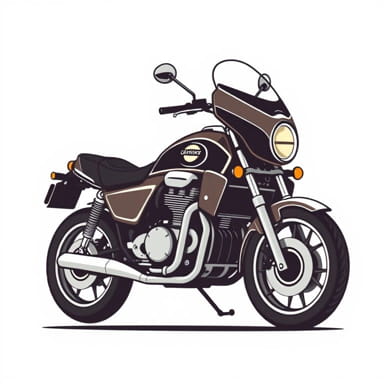
The Honda Goldwing, a legendary touring motorcycle, is known for its comfort, performance, and long-distance capabilities. However, one area that has historically caused concern among owners of older Goldwing models is the stator-based charging system. When this system fails, it can be expensive and complicated to repair. That’s where the ‘Poor Boy Alternator Conversion’ comes in. This DIY-friendly modification replaces the original stator with a car-style external alternator, offering increased reliability, easier maintenance, and a boost in charging capacity. Motorcycle enthusiasts looking to improve their Goldwing’s electrical system often turn to this cost-effective solution.
Understanding the Stock Goldwing Charging System
Before diving into the conversion, it’s important to understand how the stock system works. The Honda Goldwing GL1000, GL1100, and GL1200 models typically use an internal three-phase stator located behind the engine casing. This system is paired with a rectifier-regulator to convert AC current to DC and charge the battery. However, due to high heat and limited airflow, the stator is prone to failure, especially after years of use. Replacing it requires splitting the engine case a labor-intensive and expensive process.
Common Problems with the Original Stator
- Overheating due to poor ventilation
- Worn connectors causing voltage drops
- Complete failure leading to battery drain
- Limited amperage output, especially for accessories
What Is the Poor Boy Alternator Conversion?
The Poor Boy alternator conversion is a clever retrofit that adds an external automotive alternator to the front of the engine. It’s called Poor Boy because it allows riders to fix or upgrade their electrical system without breaking the bank. Instead of spending hours inside the engine casing replacing a failed stator, owners can mount a car alternator to the engine’s front crankshaft pulley using custom brackets and pulleys. The system uses a V-belt to drive the alternator, offering an easy-to-service setup with high output capabilities.
Benefits of the Poor Boy Conversion
- Increased Reliability: Automotive alternators are designed for longevity and are easily replaceable if they fail.
- Higher Output: Most car alternators provide more amps than the stock stator, which is ideal for additional lights, heated gear, and sound systems.
- Ease of Maintenance: No need to disassemble the engine to replace a failed alternator just swap it out in minutes.
- Cost Savings: The conversion can be done for a fraction of the price of an OEM stator replacement.
Parts Needed for the Poor Boy Conversion
The conversion process is relatively straightforward, but you’ll need several components. These can often be sourced from auto parts stores, hardware stores, or online suppliers.
- Small frame automotive alternator (e.g., GM 10SI or Hitachi style)
- Crankshaft pulley adapter
- V-belt (sized to fit your setup)
- Alternator mounting bracket and hardware
- Custom fan or radiator modifications (in some models)
- Wiring to connect alternator output to the bike’s electrical system
Installation Overview
While each installation may differ slightly depending on the bike model and chosen alternator, the general steps are similar.
Step 1: Remove Front Engine Cover
Begin by removing the bike’s radiator (if needed) and the front timing belt cover. This gives you access to the crankshaft where the pulley adapter will be mounted.
Step 2: Install Crankshaft Pulley
Attach the crankshaft pulley adapter, which allows a V-belt to be connected. Make sure it’s centered and torqued properly to avoid wobble or imbalance.
Step 3: Mount the Alternator
Fabricate or buy a bracket that holds the alternator securely in front of the engine. The alternator should be aligned so that the belt tracks straight between it and the crankshaft pulley.
Step 4: Fit and Tension the Belt
Install the belt and ensure proper tension. A belt that’s too tight may damage bearings; too loose, and it may slip under load. Use an adjustable bracket or turnbuckle to dial in the correct tension.
Step 5: Electrical Connections
Wire the alternator’s output to your bike’s battery, ideally through a fuse. Some alternators also require a switched ignition wire for excitation. Ensure proper grounding for safe operation.
Potential Modifications and Considerations
Although the conversion is relatively simple, there are a few important considerations and optional upgrades:
- Radiator Clearance: In some GL models, you may need to move or replace the radiator fan to clear the new alternator.
- Belt Wear: Check belt condition regularly and keep a spare on long rides.
- Charging Monitor: Install a voltmeter to track battery voltage and alternator performance.
- Weatherproofing: While automotive alternators are fairly rugged, ensure your setup is well-protected against rain and debris.
Performance Improvements with the Poor Boy Setup
Riders who complete the Poor Boy alternator conversion often notice immediate improvements in charging performance. Even at idle, a properly selected alternator can deliver ample current to maintain battery voltage and power accessories. This is especially valuable for riders using heated grips, GPS units, LED lights, and aftermarket audio systems. Moreover, since the alternator spins independently of engine RPM, it doesn’t suffer from the same output limitations as the factory stator at low speeds.
Common Myths Debunked
- It ruins the look of the bike: While the alternator is visible, many riders see it as a practical upgrade and even a conversation starter at meets.
- It’s hard to install: With basic tools and mechanical skills, the conversion can be done in a weekend.
- It’s not reliable: Automotive alternators are built for harsh environments and often outlast the bike itself.
The Poor Boy alternator conversion for the Honda Goldwing is a smart, affordable, and practical solution for those experiencing charging system failures or simply seeking better electrical output. It’s a popular modification among the Goldwing community and has proven its worth through countless successful installs. Whether you’re a weekend warrior or long-distance tourer, upgrading your Goldwing with this conversion can significantly enhance your riding experience while giving you peace of mind.
With careful planning, quality parts, and attention to detail, this conversion transforms the classic touring bike into a modern and reliable electrical powerhouse, ready to tackle any road ahead.