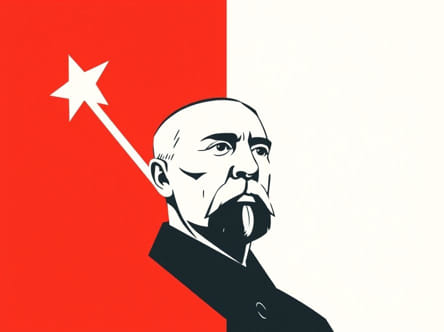
In the years leading up to and following the Russian Revolution of 1917, the Bolshevik Party rose to prominence under the leadership of a few key revolutionary figures. Among these, Vladimir Lenin stands out as the most influential early Bolshevik leader, who not only shaped the ideological foundations of the party but also directed the course of Soviet history during its formative years. The early Bolshevik leadership was not only about revolutionary theory but also about bold political strategy and a willingness to defy convention. These early leaders, though controversial, played a critical role in dismantling the Russian monarchy and establishing the world’s first socialist state.
Background of the Bolshevik Movement
Origins and Ideological Foundation
The Bolshevik Party emerged from the Russian Social Democratic Labour Party (RSDLP), which split into two factions in 1903: the Bolsheviks and the Mensheviks. The Bolsheviks, led by Lenin, advocated for a tightly organized group of professional revolutionaries who could seize power and lead the proletariat to socialism. The ideological difference between the two factions was pivotal in the eventual success of the Bolsheviks during the revolution.
Conditions in Pre-Revolutionary Russia
Russia in the early 20th century was characterized by widespread poverty, autocratic rule, and growing dissatisfaction with the Tsarist regime. The failures of the Russo-Japanese War, the Revolution of 1905, and the hardship of World War I contributed to revolutionary sentiments. The Bolsheviks, under Lenin’s leadership, capitalized on this unrest, advocating for ‘Peace, Land, and Bread’ a slogan that resonated deeply with the masses.
Vladimir Lenin: The Central Figure
Early Life and Revolutionary Beginnings
Born Vladimir Ilyich Ulyanov in 1870, Lenin was deeply influenced by the execution of his brother for attempting to assassinate Tsar Alexander III. Lenin’s early political life was shaped by Marxist ideology, and he spent years in exile across Europe, where he wrote extensively on revolutionary theory. His writings laid the groundwork for what would later become Bolshevik doctrine.
Leadership During the Revolution
Lenin’s return to Russia in April 1917, aided by the Germans hoping to destabilize Russia, was a turning point. With the publication of the April Theses, Lenin urged the overthrow of the Provisional Government. His leadership during the October Revolution was decisive. He orchestrated the seizure of key government facilities in Petrograd, effectively dismantling the existing power structure and replacing it with a Soviet-based administration.
Policy and Governance
Once in power, Lenin implemented radical changes through the Decree on Land, which redistributed land to peasants, and the Decree on Peace, which called for Russia’s withdrawal from World War I. He was also instrumental in founding the Cheka, the secret police, and suppressing opposition during the Red Terror. His New Economic Policy (NEP) introduced limited capitalism to stabilize the economy after the civil war, reflecting his pragmatic approach to governance.
Other Prominent Early Bolshevik Leaders
Leon Trotsky
Another towering figure in the Bolshevik leadership was Leon Trotsky. Though initially a Menshevik, Trotsky joined forces with Lenin during the 1917 revolution. As the founder of the Red Army, Trotsky played a critical role in the Bolsheviks’ victory in the Russian Civil War. His military acumen and powerful oratory made him one of Lenin’s most trusted allies, though he would later fall out of favor with Stalin and be exiled.
Joseph Stalin
While Stalin was not the intellectual equal of Lenin or Trotsky, his organizational skills and political cunning allowed him to rise quickly through the ranks. During the early years, Stalin held the role of Commissar for Nationalities and later General Secretary of the Communist Party. His position enabled him to consolidate power quietly, eventually leading to his control after Lenin’s death.
Other Notable Figures
- Grigory Zinoviev – Chairman of the Petrograd Soviet and close ally of Lenin.
- Lev Kamenev – Temporary head of state and a significant figure during the transitional government period.
- Yakov Sverdlov – Head of the All-Russian Central Executive Committee and responsible for organizational leadership.
Impact of the Early Bolshevik Leadership
Revolutionary Achievements
The early Bolshevik leadership was responsible for ending centuries of monarchy in Russia. They nationalized industries, introduced centralized planning, and laid the foundation for a new form of governance based on Soviet power. Their influence extended beyond Russia, inspiring communist movements across Europe and Asia.
Controversial Measures
Despite their achievements, early Bolshevik leaders also initiated controversial policies. The Red Terror, war communism, and political purges set a precedent for authoritarian rule. While they claimed to act in the interest of the proletariat, many of their actions suppressed dissent and curtailed freedoms.
Legacy and Influence
The legacy of the early Bolshevik leadership is complex. Lenin is still viewed by many as a revolutionary genius who dared to reshape society. His writings continue to influence leftist movements around the world. Trotsky’s contributions to revolutionary theory and military strategy are also recognized globally. Stalin’s rise, although built on the foundations laid by his predecessors, marked a sharp turn toward totalitarianism, overshadowing some of the early ideals of the Bolshevik cause.
The early Bolshevik leaders, particularly Vladimir Lenin, were instrumental in shaping the political and ideological direction of the Soviet Union. Their bold actions, unwavering commitment to revolution, and strategic vision allowed them to dismantle the Tsarist regime and attempt to construct a new social order. Though their legacy remains controversial, their impact on 20th-century history is undeniable. The story of the prominent early Bolshevik leaders continues to provoke debate, reflection, and study among historians, political scientists, and citizens alike, making their contributions a pivotal chapter in the narrative of global political transformation.