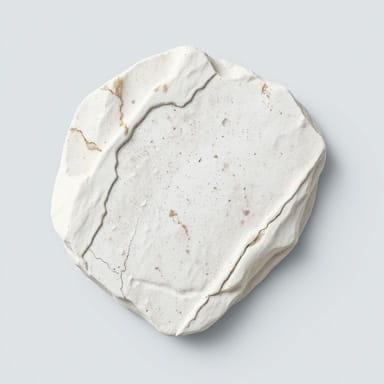
Quartzite is one of the most durable and visually appealing metamorphic rocks found on Earth. It is often admired for its strength, resistance to weathering, and sparkling appearance. But beyond its aesthetic and structural properties lies a fascinating geological story about transformation under pressure and heat. To understand quartzite, we must first look at the original rock it forms from and the intense processes that shape it deep within the Earth’s crust. The parent rock that quartzite is derived from plays a critical role in defining its texture, composition, and properties.
The Parent Rock of Quartzite
Quartz Sandstone The Original Rock
Quartzite is a metamorphic rock that originates from quartz sandstone. Quartz sandstone is a sedimentary rock composed mainly of quartz grains that are cemented together by natural minerals such as silica or calcite. Over millions of years, layers of sand accumulate in environments like beaches, riverbeds, or deserts. As these layers are buried by additional sediments, they compact and cement together, forming quartz-rich sandstone.
The key characteristic of quartz sandstone is its high quartz content, often exceeding 90%. This makes it an ideal candidate for metamorphism, as quartz is stable at a wide range of temperatures and pressures. The transition from quartz sandstone to quartzite occurs when the rock is subjected to intense heat and pressure, typically associated with mountain-building events or tectonic collisions.
How Quartzite Forms
The Metamorphic Process
Metamorphism involves the alteration of a rock’s structure and mineral composition due to elevated temperatures and pressures, without the rock fully melting. In the case of quartzite, the quartz grains in sandstone undergo recrystallization. During this process, the grains fuse together tightly, eliminating most of the pore spaces and original cementing materials.
As a result, quartzite becomes extremely hard and interlocking in texture. Unlike its parent rock, which may be friable and prone to erosion, quartzite resists both mechanical weathering and chemical breakdown. The heat and pressure that transform sandstone into quartzite typically occur at convergent plate boundaries, where rocks are deeply buried and compressed over geological time.
Textural Changes During Metamorphism
One of the most significant changes is the shift from a granular to a crystalline texture. In sandstone, quartz grains remain individual ptopics, loosely held together. But in quartzite, the grains become tightly fused, forming a mosaic of intergrown crystals. This fusion results in a denser, more solid structure that breaks across the grains rather than around them, a key identifying feature of quartzite.
Characteristics of Quartzite
Physical Properties
- HardnessQuartzite ranks high on the Mohs scale, typically around 7, making it harder than many other rocks.
- ColorCommonly white or gray, but impurities can create shades of pink, red, yellow, or green.
- TextureGenerally fine to medium-grained with a granular or sugary appearance.
- FractureBreaks with a conchoidal or uneven fracture across grains, unlike sandstone.
Resistance and Durability
Due to its compact crystalline structure, quartzite is extremely resistant to weathering, both chemical and physical. It does not readily absorb water, and it is resistant to most acids and bases, making it suitable for outdoor construction, decorative uses, and even countertops in kitchens and bathrooms.
Where Quartzite Is Found
Common Geological Settings
Quartzite is often found in mountain ranges and regions that have undergone regional metamorphism. It frequently appears in areas where ancient sedimentary rocks have been pushed deep into the Earth’s crust and exposed later through erosion and uplift. Quartzite ridges often stand out in landscapes due to their toughness and resistance to erosion.
Global Distribution
- Appalachian Mountains, USA
- Scottish Highlands, UK
- Himalayas, Asia
- Outcrops in Brazil and South Africa
- Parts of Australia and Canada
How to Identify Quartzite
Field Identification Tips
Distinguishing quartzite from its sedimentary precursor or similar rocks can be tricky. Here are a few helpful tips
- Quartzite will scratch glass due to its high hardness.
- It typically does not fizz when exposed to acid, unlike limestone or dolostone.
- Breaks through grains, not around them, unlike sandstone.
- Has a slightly sparkly, crystalline appearance under sunlight.
Difference from Marble and Sandstone
While marble is also a metamorphic rock, it forms from limestone and is composed of calcite, not quartz. It is softer and reacts with acid. Sandstone, though similar in composition to quartzite, is much softer and has a grainy texture. Quartzite’s superior hardness and interlocked grain structure set it apart clearly from both rocks.
Uses of Quartzite
In Construction and Architecture
Quartzite is valued in the construction industry for its strength, resistance, and appearance. It is often used for
- Paving and flagstones
- Flooring tiles
- Decorative wall cladding
- Countertops and vanity tops
Industrial Applications
Quartzite can also be used in the production of ferrosilicon, an alloy used in steel manufacturing. Crushed quartzite is employed as a flux in the smelting of iron. In addition, its high silica content makes it suitable for the glass and ceramics industries.
Environmental and Geological Significance
Indicator of Past Environments
The presence of quartzite in a region can reveal much about that area’s geological past. It indicates that the region once had quartz-rich sand deposits and later experienced significant tectonic forces. Studying quartzite formations helps geologists reconstruct ancient environments, sediment sources, and plate movements.
Durability in Natural Landscapes
Because of its toughness, quartzite often forms ridges and prominent outcrops that remain after surrounding softer rocks have eroded. These features can dominate the local topography and contribute to watershed patterns and soil formation in their vicinity.
Quartzite is a metamorphic rock made from quartz sandstone through the geological process of recrystallization under heat and pressure. Its origin as a sedimentary rock, rich in quartz grains, plays a key role in its transformation into one of the hardest and most weather-resistant rocks on Earth. With its high durability, attractive appearance, and geological importance, quartzite continues to be studied, quarried, and admired across the globe. Whether forming majestic mountain ridges or gleaming on a kitchen counter, quartzite tells a story of time, pressure, and transformation that began with a simple deposit of sand.