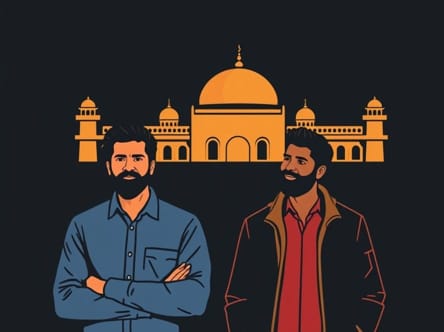
India’s journey into space owes much to the contributions of two pioneering men: Rakesh Sharma and Ravish Malhotra. Both were selected in the early 1980s to represent India in the Intercosmos program in collaboration with the Soviet Union. Although only one of them would ultimately travel into space, their shared efforts and dedication symbolized the growing ambitions of India’s space exploration. Their names remain deeply associated with the history of Indian astronauts and the country’s expanding space presence.
Selection for the Intercosmos Program
The Indo-Soviet Space Collaboration
In the late 1970s and early 1980s, the Soviet Union extended an invitation to India to send one of its citizens into space through the Intercosmos program. The Indian Air Force (IAF) was tasked with selecting candidates for this historic mission. The program not only aimed at advancing scientific cooperation but also at demonstrating the strength of the political and diplomatic relationship between India and the USSR.
Training and Preparation
After an intensive selection process, two IAF pilots were chosen: Squadron Leader Rakesh Sharma and Wing Commander Ravish Malhotra. Both underwent rigorous training at the Yuri Gagarin Cosmonaut Training Center in Star City, near Moscow. They trained in zero-gravity simulations, spacecraft systems, Russian language, and physical fitness programs designed to prepare them for the demanding environment of space travel.
Rakesh Sharma: India’s First Man in Space
The Historic Mission
On April 2, 1984, Rakesh Sharma made history by flying aboard Soyuz T-11, becoming the first Indian to travel to space. The spacecraft docked with the Salyut 7 space station, where Sharma spent nearly eight days conducting experiments alongside his Soviet counterparts.
Scientific Contributions
During his mission, Sharma participated in various scientific experiments, including:
- Remote sensing of India using photographic techniques
- Material science research in microgravity
- Medical experiments to understand the effects of space travel on the human body
These experiments contributed valuable data to both Indian and Soviet space research initiatives. Sharma’s flight was a tremendous morale boost for India and elevated its status on the global space stage.
Iconic Moments
Perhaps the most memorable moment of Sharma’s mission came when he spoke to then-Prime Minister Indira Gandhi. When asked how India looked from space, he replied, Saare Jahan Se Achha, quoting the famous patriotic poem by Muhammad Iqbal. This response deeply resonated with Indians and became an iconic quote in the nation’s space history.
Post-Mission Recognition
For his achievements, Rakesh Sharma was awarded the Ashoka Chakra, India’s highest peacetime military award. He also received honors from the Soviet Union, including the Hero of the Soviet Union medal. After returning to Earth, Sharma continued to serve in the Indian Air Force before retiring and later contributing to Indian space and defense initiatives.
Ravish Malhotra: The Unsung Hero
The Backup Cosmonaut
While Ravish Malhotra did not get the opportunity to fly into space, his role was no less significant. He trained alongside Sharma and was prepared to take his place at a moment’s notice if necessary. His contribution ensured the mission’s success, and his readiness demonstrated professionalism and dedication.
Continued Service
After the mission, Malhotra continued his distinguished career in the Indian Air Force, eventually attaining the rank of Air Commodore. Although he did not receive the same public recognition as Sharma, his role in India’s space legacy is honored among space historians and the defense community.
Legacy and Inspiration
Ravish Malhotra has since been vocal about the importance of space research and has encouraged young Indians to pursue careers in science and aerospace. His humility and support of Sharma’s mission have made him a respected figure in the narrative of India’s space achievements.
Impact on Indian Space Ambitions
Boost to ISRO
The success of Rakesh Sharma’s mission inspired the Indian Space Research Organisation (ISRO) to expand its capabilities. Although ISRO was not directly involved in the 1984 mission, it benefited from the attention and support that followed. This period saw increased funding and public interest in space exploration.
Legacy in Public Imagination
Both Sharma and Malhotra became household names in India during the 1980s. Their journey motivated many students to explore careers in science, aviation, and space technology. Their contributions are often cited as foundational in India’s aspirations to send more astronauts, including future plans for the Gaganyaan mission.
Comparison and Contrast
Shared Training, Different Destinies
While both men shared the same training and were equally capable, only Sharma had the opportunity to fly. This contrast reflects the nature of space programs, where only one candidate may be chosen but both are essential for the mission’s safety and success.
Public Recognition
Rakesh Sharma remains a celebrated national figure, while Ravish Malhotra is often remembered in more specialized circles. Nevertheless, both are respected for their dedication, courage, and professionalism in representing India at a crucial moment in its space history.
Continuing Influence
Modern Indian Astronauts
As India prepares to send more astronauts into space with its human spaceflight program, Gaganyaan, the legacy of Sharma and Malhotra becomes even more relevant. They laid the groundwork, both technically and symbolically, for future generations to explore beyond Earth.
Commemorations and Tributes
Their names are frequently mentioned in educational texts, space-related documentaries, and government tributes. Rakesh Sharma’s words from space continue to echo in classrooms and patriotic events, while Ravish Malhotra is praised for his unwavering support and discipline.
Rakesh Sharma and Ravish Malhotra together symbolize a pivotal moment in India’s journey toward becoming a spacefaring nation. Sharma’s successful flight marked India’s presence in space, while Malhotra’s dedication ensured the mission’s reliability. Both men, with their courage, discipline, and pioneering spirit, inspired a new era of science and innovation in India. Their story is not just about space travel; it is about national pride, preparation, and the shared dream of reaching the stars.