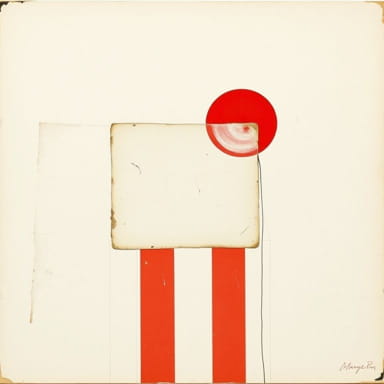
Robert Rauschenberg was a visionary who transformed the world of contemporary art by redefining the boundaries of creativity. Known for his groundbreaking works that blurred the lines between painting, sculpture, photography, and performance, Rauschenberg emerged as a bold and experimental figure in the post-war American art scene. His imaginative approach reshaped artistic expression in the 20th century, and his inventive genius continues to influence countless artists today. With an eye for materials others discarded, Rauschenberg saw opportunity in the ordinary and created art that challenged convention, making him a central figure in the evolution of modern visual culture.
Early Life and Artistic Foundation
Born in Port Arthur, Texas in 1925, Robert Rauschenberg did not grow up in an environment immersed in fine art. Nevertheless, he exhibited an early curiosity about the world around him. After serving in the Navy during World War II, he pursued art studies at the Kansas City Art Institute, and later at the Académie Julian in Paris. But it was at Black Mountain College in North Carolina that Rauschenberg truly began to form his unique vision. There, under the influence of avant-garde figures like Josef Albers and John Cage, he embraced experimentation and interdisciplinary collaboration.
Challenging Traditions
From the beginning, Rauschenberg resisted traditional definitions of art. He disliked boundaries and sought to disrupt the separation between artistic mediums. He refused to categorize his work as simply painting or sculpture. Instead, he aimed to integrate diverse elements paint, photographs, found objects, and even live animals into cohesive compositions that defied norms.
His dissatisfaction with conventional painting led him to create the ‘White Paintings’ in the early 1950s. These minimalist canvases, completely coated in white, were meant to reflect ambient light and shadows, drawing attention to the world around the viewer rather than the painting itself. These works became significant forerunners to the conceptual and minimal art movements.
The Combines: Fusion of Life and Art
Perhaps Rauschenberg’s most celebrated innovation was the development of ‘Combines’ works that merged painting and sculpture using non-traditional materials. These pieces incorporated anything from newspaper clippings and fabric to stuffed animals and taxidermy. One of the most iconic Combines,Monogram(1955-59), featured a taxidermied goat encircled by a tire, resting on a painted canvas. This radical composition stunned audiences and critics alike.
The Combines demonstrated Rauschenberg’s belief that art should interact with life. He was not interested in creating works that existed in a vacuum. Instead, he wanted his art to reflect the chaotic, messy, vibrant nature of the real world. Through this process, he created pieces that felt alive, unpredictable, and deeply human.
Influence of Everyday Materials
Rauschenberg was fascinated by the beauty and utility of the discarded and overlooked. His use of found materials wasn’t just about being resourceful it was a conscious rejection of elitism in art. By incorporating objects from the street, newspapers, and flea markets, he elevated the ordinary into something profound.
- Paint-splattered fabric scraps
- Cardboard boxes and signage
- Old photographs and x-rays
- Mirrors, tires, and industrial debris
This inclusive approach made art more accessible and democratic, aligning with his belief that creativity should not be limited by convention or privilege.
Collaboration and Performance
Rauschenberg did not view himself as an isolated genius but rather as part of a broader cultural dialogue. His collaborations with dancers, composers, and other visual artists were a vital part of his process. He worked closely with Merce Cunningham’s dance company, designing innovative sets and costumes that responded to the performers’ movements in real time.
These interdisciplinary projects demonstrated Rauschenberg’s fascination with chance, spontaneity, and interaction. He viewed performance art not as a separate discipline but as an extension of his visual language. His collaborative ethos broke barriers between artist and audience, turning passive viewers into active participants.
Exploring New Technologies
Never content with repetition, Rauschenberg was always seeking new tools and techniques. In the 1960s, he began experimenting with silkscreen printing, transferring images from magazines and newspapers onto canvas. This method allowed him to comment on mass media, politics, and American culture, embedding his works with layers of meaning.
Later in his career, he embraced digital media and international exchange. HisRauschenberg Overseas Culture Interchange (ROCI)project, launched in the 1980s, took him to over ten countries including China, Cuba, and Russia, where he created site-specific works and engaged with local artists. This global outlook reflected his belief in art as a bridge across cultural and political divides.
Legacy and Lasting Impact
Robert Rauschenberg’s inventive genius lies in his relentless curiosity and refusal to conform. He not only expanded the possibilities of what art could be but also redefined who it was for. His embrace of imperfection, improvisation, and chance continues to inspire a wide spectrum of creators, from painters and sculptors to musicians and designers.
Beyond his work, Rauschenberg was also a philanthropist and environmental advocate. He established the Robert Rauschenberg Foundation to support artists and cultural initiatives, ensuring that his commitment to innovation and inclusion lived on after his death in 2008.
Why Rauschenberg Still Matters
In an age of rapid technological change and artistic saturation, Rauschenberg’s approach remains remarkably relevant. His emphasis on breaking down barriers between mediums, disciplines, and people speaks directly to the challenges and opportunities of our time. He encouraged artists to be fearless, to embrace contradiction, and to remain open to the unknown.
- He turned trash into treasure
- He merged high and low culture
- He celebrated unpredictability
- He invited everyone into the creative process
Rauschenberg taught us that art doesn’t have to be polished or perfect to be powerful. His work invites us to look again, to reconsider what we value, and to find meaning in the unexpected corners of life.
Robert Rauschenberg was more than a painter, sculptor, or designer he was an inventive genius who expanded the very definition of art. His career was marked by fearless experimentation and a desire to engage directly with the world around him. Whether through his groundbreaking Combines, his global collaborations, or his early embrace of new technologies, Rauschenberg consistently challenged assumptions and invited others to do the same. His legacy lives on not just in museums and galleries, but in the spirit of artists who dare to take risks, break rules, and see beauty where others see chaos.