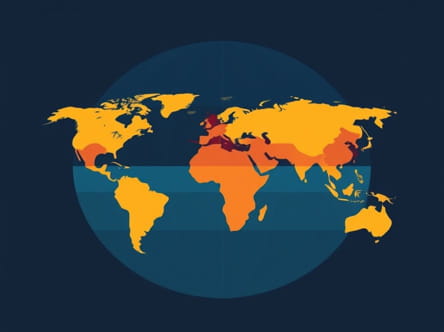
Globalization, as a driving force behind the interconnectedness of societies, has evolved through various historical stages that have each shaped the world in distinct ways. This evolution has not been a linear process but rather a series of significant phases, or epochs, that reflect changes in technology, trade, culture, and political power. Understanding these six great epochs of globalization helps provide a clearer perspective on how our world became so interdependent, and how human activity on a global scale has been shaped over centuries. Each epoch played a unique role in connecting distant regions, influencing cultures, and laying the foundation for the global society we live in today.
Epoch 1: The Prehistoric Exchange
Early Human Movement and Interaction
The first epoch of globalization dates back to prehistoric times when early humans began migrating out of Africa. These movements, though slow and sporadic, marked the beginning of interregional contact. Early humans exchanged not only genetic material but also tools, fire-making techniques, and knowledge of survival.
Although the scale was limited, these initial exchanges were significant. They laid the foundation for linguistic, cultural, and technological diffusion. The emergence of trade routes such as obsidian or salt trails marked the earliest forms of economic globalization.
Epoch 2: The Agricultural and Urban Revolutions
Settlements and Cultural Expansion
With the advent of agriculture around 10,000 years ago, humans began forming permanent settlements. As agricultural surplus allowed for specialization of labor, complex societies emerged, leading to the rise of cities and trade networks.
The Fertile Crescent, the Nile Valley, and the Indus Valley became centers of cultural and commercial exchange. Writing systems developed to manage trade and governance, which further facilitated long-distance communication and control.
- Increased agricultural productivity led to population growth
- New technologies such as the wheel and plow expanded regional influence
- Religious and cultural practices began spreading along early trade routes
Epoch 3: The Classical Empires and the Silk Road
Formal Trade Networks and Imperial Expansion
During the classical era, empires such as Rome, Persia, China’s Han Dynasty, and the Mauryan Empire in India expanded their borders and interconnected vast territories. This period witnessed the development of the Silk Road a series of land and sea trade routes linking East Asia to the Mediterranean.
The Silk Road not only carried silk, spices, and precious stones but also facilitated the exchange of ideas, religions (like Buddhism and Christianity), and scientific knowledge. The Han-Roman interaction, though indirect, symbolizes one of the earliest truly global economic networks.
This epoch is crucial in understanding how power, commerce, and culture began transcending regional boundaries on a massive scale.
Epoch 4: The Age of Exploration
Europe’s Maritime Expansion and Global Contact
The 15th and 16th centuries marked a dramatic shift in globalization with the Age of Exploration. European powers such as Portugal and Spain began navigating across the Atlantic and around Africa, eventually leading to the discovery of the Americas and sea routes to Asia.
This epoch transformed the globe through colonization, conquest, and the integration of distant continents into a single economic system. The Columbian Exchange an enormous transfer of crops, animals, people, and diseases had both beneficial and devastating effects.
- New World crops like potatoes and maize altered diets worldwide
- The Atlantic slave trade reshaped demographic and economic systems
- Colonial empires established enduring global inequalities
Epoch 5: The Industrial Revolution
Technology, Capitalism, and Accelerated Exchange
The Industrial Revolution of the 18th and 19th centuries radically transformed the global economy. Innovations such as the steam engine, mechanized production, and the telegraph accelerated production and communication like never before.
Britain emerged as a global manufacturing hub, and international trade networks expanded to supply raw materials and distribute finished goods. The creation of a global labor market was marked by mass migration both voluntary and coerced as people sought work in industrialized centers or were displaced by colonial expansion.
This epoch saw:
- The rise of capitalist economies and multinational corporations
- Railways and steamships reducing transport time and cost
- The spread of Western institutions, values, and education
Epoch 6: The Digital and Contemporary Global Era
Information Technology and Global Interdependence
The most recent epoch, beginning in the late 20th century, is defined by the digital revolution. The internet, satellite communication, and mobile technology have created an unprecedented level of global connectivity. Information flows instantly across the planet, enabling real-time collaboration, commerce, and cultural exchange.
Global supply chains, digital finance, and social media have transformed how economies and societies operate. Companies like Amazon, Apple, and Google illustrate the power of globalization in the digital age. At the same time, global challenges such as climate change, pandemics, and cyber threats highlight how deeply interdependent modern nations have become.
This current epoch is marked by:
- Global digital platforms reshaping commerce and culture
- Remote work and digital nomadism influencing labor markets
- Political tensions over data sovereignty and economic competition
Understanding the Continuity of Globalization
The six great epochs of globalization reveal that the integration of the world has been a gradual and complex process shaped by human innovation, ambition, and adaptation. From the first steps of prehistoric exchange to the high-speed digital age, globalization has continually redefined human interaction across vast distances.
Recognizing the historical roots and transitions between these epochs allows us to appreciate the benefits and consequences of a globalized world. As we navigate the challenges of the 21st century, understanding these historical patterns offers valuable insights for building a more inclusive, sustainable, and interconnected future.