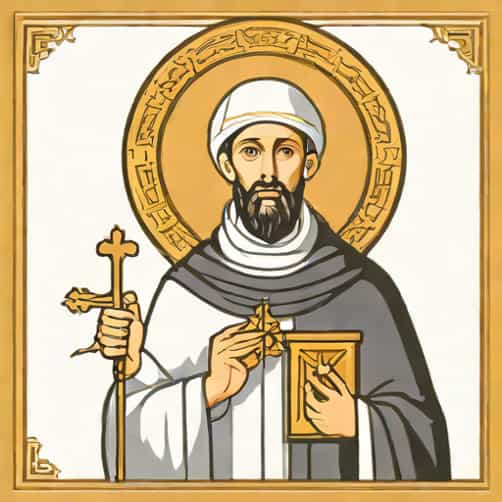
The Albigensian Crusade was a significant and brutal chapter in medieval European history, marked by the intersection of religion, politics, and military power. Central to this period was the role of St Dominic, a figure whose legacy is often associated with the foundation of the Dominican Order and efforts to combat heresy through preaching and education rather than violence. Understanding the connection between St Dominic and the Albigensian Crusade offers insight into the broader religious and social dynamics of 13th-century southern France, where the Cathar movement had gained substantial influence and posed a challenge to the authority of the Roman Catholic Church.
Background of the Albigensian Crusade
The Albigensian Crusade, launched in 1209, was initiated by Pope Innocent III to eliminate the Cathar heresy, which had spread across the Languedoc region of southern France. The Cathars, also known as Albigensians, promoted dualistic beliefs that contrasted sharply with the teachings of the Catholic Church. They rejected the material world as evil and criticized the corruption and wealth of the established clergy. This ideological challenge, coupled with the political fragmentation of the region, prompted the Church to call for a military campaign to suppress the movement.
Political and Social Context
Southern France during the early 13th century was characterized by relative autonomy of local nobility, economic prosperity, and a culture that differed from the northern French territories. The Cathar faith found support among certain nobles and townspeople who valued its austere teachings and perceived moral integrity. The combination of religious dissent and regional independence created tensions that the northern French monarchy and the Catholic Church sought to resolve through the Crusade, framing it as both a spiritual and political mission.
St Dominic’s Role
St Dominic, also known as Dominic de Guzmán, was a Spanish priest who arrived in southern France during this period of religious unrest. While he was not a military leader in the Albigensian Crusade, his role was influential in addressing the spread of heresy through peaceful means. Dominic emphasized preaching, education, and community engagement as tools for converting heretics and reinforcing orthodox Catholic beliefs. He founded the Order of Preachers, commonly known as the Dominicans, to provide a dedicated group of clergy trained in theology, rhetoric, and pastoral care specifically to combat heresy intellectually and spiritually.
Dominic’s Approach to Heresy
Unlike the Crusaders who relied on military force, St Dominic advocated for persuasion, moral example, and the dissemination of orthodox doctrine. His approach involved rigorous study of scripture, public preaching, and establishing institutions where individuals could learn about Catholic theology. Dominic believed that reasoned argument and compassionate engagement could win back those who had been led astray by Cathar teachings. This method contrasted sharply with the violent campaigns of the Crusaders, highlighting a dual strategy in the Church’s response to heresy during this period.
Course of the Albigensian Crusade
The military aspect of the Albigensian Crusade was both intense and destructive. Northern French nobles and their armies, sanctioned by the Pope, advanced into the Languedoc region, besieging towns and castles that were sympathetic to the Cathars. One of the most infamous events was the massacre at Béziers in 1209, where thousands of inhabitants were killed, with the phrase Kill them all; let God sort them out often associated with the brutality of the attack. Over the next two decades, the campaign led to widespread devastation of the region and the weakening of local nobility.
Impact on the Cathar Movement
The Crusade severely disrupted the Cathar community, reducing their numbers and undermining their social support. Many Cathar leaders were executed, while others fled or converted under pressure. Despite these losses, Cathar beliefs persisted in some areas, illustrating the resilience of religious ideas even in the face of violent suppression. The combination of military campaigns and the intellectual efforts of figures like St Dominic contributed to the eventual eradication of the movement, though not without lasting consequences for the local population and culture.
St Dominic and the Dominican Order
The foundation of the Dominican Order was a direct response to the challenges posed by heretical movements such as the Cathars. St Dominic envisioned an organized, mobile, and educated clergy capable of preaching, teaching, and guiding communities back to orthodox faith. The Dominicans emphasized poverty, scholarship, and moral discipline, reflecting Dominic’s belief that spiritual authority and personal example were key to combating heresy. Over time, the order became one of the most prominent teaching and missionary orders in the Catholic Church.
Educational and Missionary Initiatives
Dominicans were trained in theology, philosophy, and rhetoric to equip them for intellectual engagement with heretical ideas. They established schools and centers of learning, which helped to standardize Catholic teachings and provide a counter-narrative to Cathar beliefs. This strategy of education complemented the military campaigns of the Crusade, offering a long-term approach to sustaining orthodoxy in regions affected by heresy. The balance of coercion and education exemplified the multifaceted approach of the Church during this era.
Legacy of St Dominic and the Crusade
The legacy of St Dominic in relation to the Albigensian Crusade is complex. While the Crusade itself is remembered for its violence and social upheaval, Dominic’s efforts represent an alternative model of addressing religious dissent through dialogue and education. The Dominican Order continues to influence Catholic teaching and missionary work to this day, demonstrating the enduring impact of Dominic’s vision. The Crusade, meanwhile, left a permanent mark on southern France, reshaping political structures, religious adherence, and cultural landscapes.
Lessons from the Period
The interplay between St Dominic’s preaching and the military campaigns of the Albigensian Crusade offers valuable lessons in history. It highlights the challenges of addressing ideological conflicts, the consequences of religious intolerance, and the importance of combining moral persuasion with social and political strategies. The period also illustrates how religious institutions adapt to crises, balancing coercion, education, and pastoral care to achieve long-term objectives.
The St Dominic Albigensian Crusade period represents a pivotal moment in medieval European history, where the Catholic Church confronted heresy through both military and intellectual means. St Dominic’s role was crucial in shaping a non-violent approach, emphasizing preaching, education, and moral example, which complemented the more forceful campaigns of the Crusade. The legacy of this period is reflected in the continued influence of the Dominican Order and the historical memory of the Languedoc region’s cultural transformation. Understanding this intersection of religion, politics, and strategy provides a nuanced perspective on the complexities of medieval religious conflicts and the enduring impact of figures like St Dominic.