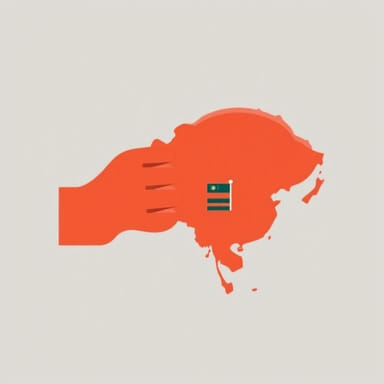
In the complex world of international relations, nations often rely on more than just military power or diplomacy to assert influence. One of the most significant tools in this arsenal is the act of economically punishing another nation. This practice, known in political and economic circles as the use of economic sanctions, is designed to pressure governments into changing behaviors without resorting to physical conflict. Economic punishment can take many forms, ranging from trade restrictions to financial freezes, and its effects can be felt for generations. Understanding how economic measures work, their implications, and their effectiveness is critical in grasping how global power dynamics unfold in the modern age.
Definition and Purpose of Economic Punishment
What Is Economic Punishment?
Economic punishment is a strategy used by one country or a group of countries to exert pressure on another nation by imposing restrictions on its economic activities. These restrictions are typically meant to punish the targeted nation for actions that the imposing country deems unacceptable. It may involve halting trade, freezing assets, banning exports, or blocking financial transactions.
Common Reasons for Imposing Economic Sanctions
- Human rights violations
- Acts of aggression or terrorism
- Development of nuclear weapons programs
- Undermining democratic processes
- Violation of international law
The goal is to create economic hardship that forces the targeted government to alter its policies or behavior.
Types of Economic Punishment
Unilateral vs. Multilateral Sanctions
Economic punishment can be applied unilaterally, where one country imposes measures independently, or multilaterally, where several nations or international bodies act together. Multilateral sanctions, such as those coordinated by the United Nations or the European Union, generally have broader impact and greater legitimacy in the international community.
Comprehensive vs. Targeted Sanctions
Comprehensive sanctions are broad and affect the entire economy of a nation, such as restrictions on all trade or financial transactions. Targeted sanctions, also called smart sanctions, are more selective and may focus on specific individuals, companies, or sectors, such as freezing the assets of political leaders or banning arms exports.
Examples of Economic Punishment in Recent History
Sanctions on Iran
One of the most prominent examples of economic punishment is the series of sanctions placed on Iran by the United States and its allies due to Iran’s nuclear program. These sanctions included limitations on oil exports, banking restrictions, and asset freezes. The pressure ultimately led to negotiations resulting in the Joint Comprehensive Plan of Action (JCPOA), though the deal has since faced challenges.
Trade Restrictions on Russia
Following the annexation of Crimea in 2014 and more significantly, the 2022 invasion of Ukraine, Russia faced extensive economic sanctions from Western nations. These included restrictions on energy exports, bans on technology transfers, financial sanctions, and the freezing of foreign reserves. The goal has been to isolate Russia economically and reduce its capacity to fund military aggression.
North Korea’s Isolation
North Korea has been the target of numerous sanctions due to its ongoing development of nuclear weapons. These sanctions have contributed to the country’s extreme economic isolation and limited access to international trade and financial systems.
Economic and Humanitarian Impacts
On the Targeted Nation
The immediate impact of economic punishment is often seen in reduced GDP, rising inflation, job losses, and shortages of goods. Over time, the sanctions may lead to social unrest, weakened government authority, and economic stagnation. However, in authoritarian regimes, leaders may remain in power despite severe economic decline, meaning the intended political goals are not always achieved.
On Civilians
One of the most debated aspects of economic sanctions is their unintended impact on ordinary citizens. In many cases, sanctions can lead to widespread suffering, including limited access to food, medicine, and other essential services. Humanitarian exemptions are sometimes included, but enforcement can be inconsistent.
On the Imposing Country
While imposing economic punishment may seem straightforward, it can also backfire. Countries that impose sanctions may lose trade revenue, face retaliation, or experience strain in international partnerships. Sanctions can also drive targeted countries to seek alliances elsewhere, potentially shifting global power balances.
Legal and Ethical Considerations
International Law
Under international law, sanctions must adhere to principles of proportionality and legality. They must not violate human rights or impose collective punishment. When sanctioned through multilateral organizations like the UN, economic punishment gains legal weight, though enforcement mechanisms remain challenging.
Ethical Concerns
The ethics of economic punishment have long been debated. While the intent is to pressure governments without warfare, the outcomes often disproportionately harm civilians. Critics argue that sanctions can become tools of coercion rather than justice, leading to humanitarian crises and long-term instability.
Effectiveness of Economic Punishment
When Sanctions Work
Sanctions can be effective when they are well-targeted, clearly communicated, and part of a broader diplomatic strategy. The success of sanctions often depends on international unity, the economic vulnerability of the target, and the availability of alternatives. In some cases, they lead to negotiated settlements or policy changes, especially when combined with incentives for compliance.
When Sanctions Fail
In other cases, sanctions fail to achieve their goals. Countries like Cuba and North Korea have endured decades of sanctions without major shifts in government policy. Black markets, alternative trade partnerships, and strong internal control mechanisms allow regimes to survive economic isolation. Moreover, inconsistent enforcement can weaken the effectiveness of sanctions.
Alternatives to Economic Punishment
Diplomatic Engagement
Direct negotiation and diplomacy are often preferred over punitive economic measures, especially when long-term peace and cooperation are the ultimate goals. Diplomatic engagement can open channels for communication, trust-building, and gradual reform.
Incentive-Based Approaches
Rather than punishing bad behavior, offering rewards for positive action can sometimes be more effective. These may include economic aid, trade deals, or development partnerships that support democratic reforms or compliance with international norms.
The act of economically punishing another nation is a complex and powerful tool of statecraft. While it offers a nonviolent means of influence, it carries significant risks, both morally and practically. Understanding how and when to use economic punishment effectively requires careful consideration of geopolitical objectives, ethical implications, and human costs. As global interdependence grows, the use of economic measures in foreign policy will remain a central, and often controversial, part of international relations.