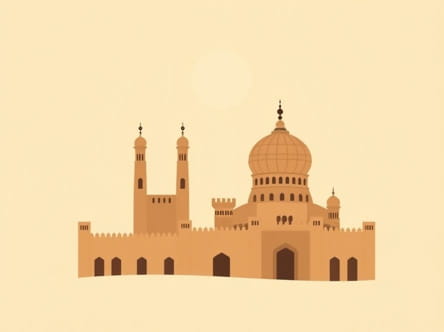
The Almoravid and Almohad Empires were two influential Berber Muslim dynasties that shaped the history, politics, and culture of North Africa and the Iberian Peninsula during the Middle Ages. Emerging from different religious and ideological backgrounds, these two empires rose to power in response to both internal reforms and external threats. Their impact was profound, not only on Islamic civilization but also on Christian Europe. Through their military conquests, architectural innovations, and religious reforms, the Almoravids and Almohads left an enduring legacy that continues to be studied by historians and scholars of Islamic and African history.
Origins of the Almoravid Empire
Founding and Religious Zeal
The Almoravid Empire began in the early 11th century, founded by Abdallah ibn Yasin, a Berber Islamic scholar and reformer from the Sanhaja tribe. The movement began as a religious revival, aiming to purify Islam from what its followers saw as corrupt practices. Ibn Yasin advocated a strict interpretation of Sunni Islam based on the Maliki school of thought.
Expansion into North Africa
With the support of various Berber tribes, the Almoravids expanded rapidly across the Maghreb. Their capital was established in Marrakesh, which became a center for Islamic learning and culture. By the late 11th century, the Almoravids had extended their control into present-day Morocco, Algeria, and parts of Mauritania and Senegal.
Conquest of Al-Andalus
The political instability in Muslim Spain (Al-Andalus) opened a window for Almoravid intervention. In 1086, the Almoravids crossed into the Iberian Peninsula to aid Muslim rulers against advancing Christian forces. They defeated Alfonso VI of Castile at the Battle of Sagrajas and eventually took control of key Andalusian cities, including Seville, Cordoba, and Granada.
Culture and Achievements of the Almoravids
Religious Policies
The Almoravids enforced a conservative Islamic code. They suppressed what they considered un-Islamic behaviors, regulated religious practices, and supported scholars and religious institutions. Their rule emphasized Islamic unity and orthodoxy.
Architecture and Infrastructure
The Almoravids contributed to architectural developments, particularly in Morocco and Spain. They constructed mosques, schools (madrasas), and public buildings, often characterized by intricate stonework and austere aesthetics. Marrakesh’s development into a political and religious hub was a direct result of Almoravid patronage.
The Rise of the Almohad Empire
A New Reformist Movement
The Almohad Empire emerged in the 12th century, initially as a reaction against what its leaders saw as the Almoravids’ religious rigidity and failure to embody true Islamic principles. The founder, Ibn Tumart, declared himself the Mahdi, or divinely guided one, and launched a revolutionary movement among the Masmuda Berbers of the High Atlas Mountains.
Military Campaigns and Overthrow of the Almoravids
Following Ibn Tumart’s death, his successor Abd al-Mu’min took charge and transformed the religious movement into a powerful military force. The Almohads defeated the Almoravids in Morocco by 1147, capturing Marrakesh and establishing their own rule over former Almoravid territories.
Expansion into Iberia and North Africa
The Almohads continued their predecessors’ military campaigns in the Iberian Peninsula. They defeated Christian armies and recaptured territories, asserting their dominance over Al-Andalus. At their height, the Almohad Empire stretched from Libya in the east to the Atlantic Ocean in the west, and as far north as the Ebro River in Spain.
Almohad Culture and Religious Ideals
Philosophical and Theological Foundations
The Almohads followed a different theological approach compared to the Almoravids. They rejected the Maliki school and advocated a more rationalist form of Islam, heavily influenced by philosophy and theology. They supported thinkers like Ibn Rushd (Averroes), who became a major figure in Islamic philosophy and had a lasting influence on both Muslim and European thought.
Science, Literature, and Architecture
Under the Almohads, scientific inquiry and philosophical debate flourished. Libraries and educational institutions received royal patronage. Architecturally, they introduced innovations such as the horseshoe arch and minarets that later inspired Gothic and Moorish designs in Spain. Notable buildings include the Kutubiyya Mosque in Marrakesh and the Giralda in Seville.
Decline of the Almoravid and Almohad Dynasties
Internal Weakness and External Pressure
Despite their achievements, both dynasties eventually succumbed to internal divisions and external threats. The Almoravids lost control due to revolts and failure to integrate diverse ethnic and religious groups. Their centralized authority weakened, and the rise of the Almohads marked their end.
Similarly, the Almohads struggled with succession disputes, revolts by regional governors, and the rising power of Christian kingdoms in the north. The decisive Battle of Las Navas de Tolosa in 1212 marked the beginning of Almohad decline in Iberia.
Legacy and Fragmentation
After their fall, successor states such as the Marinid dynasty in Morocco took over some of their territories. However, the cultural, religious, and intellectual contributions of both the Almoravids and Almohads continued to influence North African and Iberian societies for centuries.
Key Differences Between Almoravids and Almohads
- Religious Approach: The Almoravids followed strict Maliki jurisprudence, while the Almohads embraced a more philosophical and rational interpretation of Islam.
- Origins: Almoravids came from the Sanhaja tribe; the Almohads arose from the Masmuda Berbers.
- Cultural Contributions: Almoravids focused on religious orthodoxy, whereas Almohads emphasized intellectual and philosophical growth.
- Architectural Legacy: Both contributed to Islamic architecture, but the Almohads introduced more refined styles and left enduring monuments in Spain and Morocco.
Lasting Influence of the Berber Empires
The Almoravid and Almohad Empires were more than just military powers; they were cultural and religious movements that shaped the trajectory of Islamic history in the western Mediterranean. They not only defended Islamic territories from Christian advances but also stimulated intellectual life and architectural development. Their legacies are still visible in the cities they built and the ideas they promoted.
By understanding the rise and fall of these two Berber Muslim empires, we gain insight into the dynamic interplay of religion, politics, and culture in medieval North Africa and Al-Andalus. The Almoravids and Almohads serve as reminders of how ideological movements can evolve into powerful dynasties that leave a deep historical imprint.