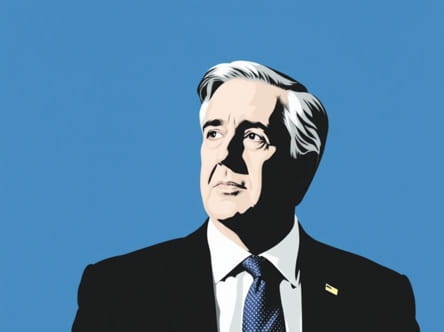
The Right Honourable Brian Mulroney is remembered as one of Canada’s most influential and consequential political leaders. As the 18th Prime Minister of Canada, serving from 1984 to 1993, Mulroney left a lasting mark on the country’s political and economic fabric. Known for his strong leadership style, commitment to free trade, and environmental advocacy, his legacy is both impactful and complex. From constitutional negotiations to international diplomacy, Mulroney’s tenure reflected bold decisions and transformative policies that continue to shape Canadian society. This topic explores the major aspects of Brian Mulroney’s political life, his achievements, controversies, and long-standing contributions to Canada and the world.
Early Life and Legal Career
Brian Mulroney was born on March 20, 1939, in Baie-Comeau, Quebec. Raised in a working-class Irish Catholic family, he was fluent in both English and French, which would later prove to be politically advantageous. After studying at St. Francis Xavier University and graduating with a law degree from Université Laval, Mulroney joined the legal profession, working at the prominent Montreal law firm Ogilvy Renault.
His early legal career was marked by his deep interest in labor issues and public affairs. Mulroney quickly rose through the ranks, earning a reputation for charisma, ambition, and a talent for negotiation. These qualities laid the groundwork for his transition into politics and corporate leadership.
Corporate Success and Entry into Politics
Before entering political life, Brian Mulroney served as the President of the Iron Ore Company of Canada, which gave him extensive experience in business and industry. This background strengthened his economic perspective and his belief in the importance of market-driven policies. In 1983, he won the leadership of the Progressive Conservative Party of Canada, succeeding Joe Clark. The following year, his party won a landslide victory, marking the beginning of a transformative era.
Prime Ministership (1984-1993)
Economic Reforms and Free Trade
One of the cornerstones of Mulroney’s legacy is the Canada-United States Free Trade Agreement (FTA), which was signed in 1988. This historic deal laid the foundation for the later North American Free Trade Agreement (NAFTA), which included Mexico. Mulroney’s bold move toward liberalized trade was controversial at the time but is now widely recognized as a pivotal decision that helped integrate Canada into the global economy.
- Promotion of economic growth through deregulation and privatization
- Implementation of the Goods and Services Tax (GST), a consumption tax aimed at modernizing federal revenue
- Reduction of the federal deficit through fiscal reforms
Constitutional Challenges
Mulroney also invested significant political capital into resolving constitutional disputes. He introduced the Meech Lake Accord in 1987 to gain Quebec’s formal acceptance of the 1982 Constitution. While initially successful, the accord failed to gain unanimous provincial support and collapsed in 1990. This was followed by the Charlottetown Accord in 1992, which also failed after a national referendum. These defeats were setbacks to Mulroney’s vision of national unity and cost him significant political support.
Environmental Leadership
Though often associated with economic policies, Mulroney also championed environmental causes. He established the Montreal Protocol in 1987, an international treaty designed to phase out substances that deplete the ozone layer. His government also took steps to address acid rain and collaborated with the United States on cross-border environmental issues.
Foreign Policy and International Diplomacy
Brian Mulroney’s foreign policy emphasized close relationships with major allies and moral leadership on global issues. He took a firm stand against South Africa’s apartheid regime, advocating for sanctions and strongly opposing racial segregation. His friendship with U.S. President Ronald Reagan and later George H. W. Bush helped solidify Canada’s strategic role in North America.
He also contributed to the creation of the Arctic Environmental Protection Strategy and played a role in shaping Canada’s post-Cold War international identity.
Controversies and Public Perception
Despite his achievements, Mulroney’s political career was not free from controversy. The introduction of the GST in 1991 was deeply unpopular among Canadians, sparking protests and criticism. His government also faced allegations of patronage and corruption, particularly the Airbus affair, which cast a shadow over his post-political life. Although no charges were brought, the controversy damaged public trust and lingered for years.
Mulroney’s approval ratings declined significantly toward the end of his tenure, and the Progressive Conservative Party suffered a devastating loss in the 1993 federal election under new leader Kim Campbell. However, historical assessments of his leadership have grown more favorable over time, with many recognizing the long-term vision behind his reforms.
Later Years and Public Recognition
Following his resignation from politics, Brian Mulroney returned to practicing law and engaged in corporate advisory roles. He remained an influential voice on Canadian policy and international affairs. In recognition of his service, he received numerous honors, including the Order of Canada and honorary degrees from several institutions.
Mulroney published his memoirs in 2007, offering personal insights into his political career and decisions. The book was well received and helped reshape public perception of his legacy. He continued to speak at global forums and remained active in Canadian political discourse well into his later years.
Legacy and Impact
The legacy of the Right Honourable Brian Mulroney is one of ambition, controversy, and long-term impact. He redefined the Canadian economy through free trade and tax reform, took a strong stance on human rights globally, and made environmental policy a national priority. Though some of his decisions were unpopular at the time, their benefits became clearer over the decades.
Mulroney is often regarded as a visionary who took political risks to pursue bold reforms. His efforts to bridge the linguistic and cultural divide in Canada, though not always successful, demonstrated his commitment to unity and inclusiveness. Today, political analysts and historians acknowledge him as one of Canada’s most transformative prime ministers, whose influence continues to shape the nation’s trajectory.
Brian Mulroney’s tenure as prime minister was a turning point in Canadian history. From free trade to environmental leadership and constitutional negotiations, his bold actions left an indelible mark. While not universally celebrated during his time in office, the Right Honourable Brian Mulroney’s legacy has endured and matured with time. His vision, leadership, and policies continue to inform debates about Canada’s role in the global arena and its path forward as a modern, dynamic democracy.