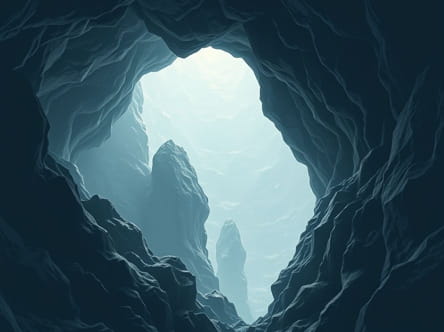
The phrase through caverns measureless to man evokes a sense of mystery, awe, and limitless imagination. Found in Samuel Taylor Coleridge’s poem Kubla Khan, these words have intrigued readers and scholars alike for generations. The line paints a vivid picture of an unseen world beyond comprehension, a place that exists outside the boundaries of ordinary human experience. This expression has become symbolic not just of Romantic poetry, but also of the deeper human desire to explore the unknown, both externally in the world and internally in the mind. The phrase holds rich meaning when considered through poetic, philosophical, and psychological lenses.
Origin of the Phrase
Kubla Khan by Samuel Taylor Coleridge
The line through caverns measureless to man appears in Coleridge’s poem Kubla Khan, written in 1797 and published in 1816. The poem is known for its dreamlike, surreal quality, and was famously composed under the influence of opium. Coleridge himself claimed that the poem came to him in a dream, only to be interrupted before he could finish it.
The full stanza containing the phrase is
A savage place! as holy and enchanted
As e’er beneath a waning moon was haunted
By woman wailing for her demon-lover!
And from this chasm, with ceaseless turmoil seething,
As if this earth in fast thick pants were breathing,
A mighty fountain momently was forced
Amid whose swift half-intermitted burst
Huge fragments vaulted like rebounding hail,
Or chaffy grain beneath the thresher’s flail
And mid these dancing rocks at once and ever
It flung up momently the sacred river.
Five miles meandering with a mazy motion
Through wood and dale the sacred river ran,
Then reached the caverns measureless to man,
And sank in tumult to a lifeless ocean.
In this context, the caverns become a powerful symbol of mystery, possibly of the subconscious or the divine.
Literal and Symbolic Meaning
Literal Imagery
On the surface, the line suggests a river that runs through vast and immeasurable caverns, spaces so large and deep that no human has ever fully explored or measured them. These underground landscapes are hidden from view, unreachable and untouched, enhancing the mystical tone of the poem. The literal reading conjures a fantastical scene, rich with visual depth and natural wonder.
Symbolism and Interpretation
Beneath the surface, the caverns measureless to man serve as a metaphor for the unknown. They might represent the subconscious mind, the creative imagination, or spiritual mysteries. Coleridge, as a Romantic poet, often explored themes of the sublime experiences so vast or powerful that they evoke both beauty and terror. The caverns, in their immeasurable size, suggest a spiritual or metaphysical dimension that defies logic or human comprehension.
Philosophical Implications
The Sublime and the Infinite
In Romantic literature, the sublime is a central theme. It refers to experiences that are awe-inspiring, vast, and sometimes terrifying. The caverns evoke this feeling by being measureless,” beyond the reach of scientific or rational understanding. They stand as a symbol of infinity, a concept that both fascinates and humbles human beings.
The Unconscious Mind
Some readers interpret the caverns as a representation of the unconscious or subconscious mind. The river possibly a symbol of thought or inspiration flows into these deep inner spaces, where conscious control ceases. Coleridge’s own opium use and dreamlike writing style support this psychological reading. In this way, the caverns are where ideas originate, where imagination thrives, and where the boundaries of reason are dissolved.
Artistic and Literary Influence
Romantic Ideals
The image of caverns measureless to man aligns perfectly with the values of Romanticism, which emphasized emotion, imagination, and the beauty of the untamed natural world. Romantic poets often pushed back against the Enlightenment’s focus on reason and science, favoring instead the mystical, the emotional, and the subjective. The line has become emblematic of that movement’s fascination with the unexplored and unknowable.
Modern Usage
The phrase has been adopted in various modern contexts, often used to suggest something profound and mysterious. Writers, artists, and philosophers continue to draw on this imagery when exploring the human condition, consciousness, or the sublime aspects of nature. It often appears in discussions of poetry, dream theory, and even psychology.
Comparative Interpretations
Spiritual Interpretation
Some view the caverns as spiritual or divine. The river could be seen as a sacred current, flowing from the physical world into a deeper spiritual realm. The lifeless ocean it ultimately reaches may represent death, eternity, or a place of ultimate rest. From this perspective, the journey of the river mirrors the soul’s journey from life into the afterlife.
Creative Process
For writers and creatives, the caverns may symbolize the source of inspiration. Creativity often arises from places within the mind that feel unreachable or difficult to understand. Ideas seem to come from nowhere, like a river vanishing into a dark cave. This interpretation reinforces the connection between the mystical language of the poem and the artistic experience.
Why the Phrase Endures
Through caverns measureless to man endures because it captures the essence of mystery and awe. It symbolizes the aspects of life, nature, and the mind that cannot be fully grasped or explained. Coleridge’s language resonates across time because it speaks to a universal human experience the encounter with the unknown. Whether interpreted literally, symbolically, spiritually, or psychologically, the line remains open to exploration, just like the caverns it describes.
- The line reflects Romantic ideals of imagination and emotion over reason.
- It offers a metaphor for the unconscious, the divine, and the unknown.
- Its beauty lies in its ambiguity, inviting many layers of interpretation.
- It continues to inspire literature, philosophy, and artistic thought.
In exploring the meaning of this famous line, we are reminded that not everything in life is meant to be understood. Some things are best left vast, mysterious, and measureless to man. And therein lies their enduring power.