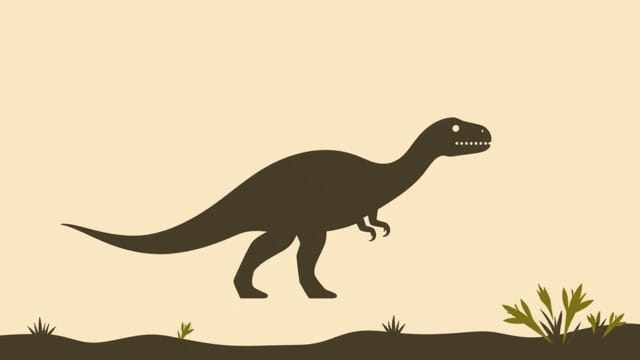
The Triassic Period, a fascinating chapter in Earth’s history, marked the dawn of a new era following the devastating Permian mass extinction. Lasting from approximately 252 to 201 million years ago, this era laid the groundwork for the rise of dinosaurs, mammals, and the earliest marine reptiles. One of the most unique facts about the Triassic Period is the evolutionary experimentation that occurred, giving rise to bizarre and diverse life forms. During this time, Earth’s continents were still connected in a vast supercontinent known as Pangaea, influencing both climate and species development in remarkable ways. This topic explores various unique facts about the Triassic Period, from paleogeography to evolutionary milestones, emphasizing its importance in shaping life as we know it.
The Supercontinent Pangaea and Its Impact
A Unified Landmass
During the Triassic Period, all major landmasses were joined together into a supercontinent called Pangaea. This unique configuration had significant effects on global climate, ocean circulation, and species dispersal. Unlike today’s continents, Pangaea created vast interior deserts due to the lack of nearby bodies of water to moderate temperature.
Climatic Consequences
Because Pangaea was so expansive, much of its interior experienced arid and semi-arid climates. This led to the dominance of drought-resistant plants such as conifers and cycads. Rainfall was largely seasonal, which shaped the development of early flora and fauna that could adapt to dry conditions. This climate also influenced evolutionary trajectories, encouraging resilience and adaptation.
The Rise of Archosaurs
Precursors to Dinosaurs and Crocodiles
A distinctive feature of the Triassic Period is the emergence of archosaurs ‘ruling reptiles’ that included ancestors of dinosaurs, pterosaurs, and crocodilians. These creatures quickly rose to dominance due to the ecological vacuum left by the Permian extinction. One unique aspect of this time is that it was not yet ruled by dinosaurs, but by a wide variety of competing reptiles.
Diversity of Early Reptiles
Among these archosaurs were creatures likePostosuchusandEffigia, some of which displayed traits similar to those of later dinosaurs. Some archosaurs walked upright, while others still moved in a sprawling posture like lizards. This diversity showcased an evolutionary trial-and-error period that would eventually give rise to the more specialized Jurassic fauna.
The First True Mammals
Therapsids and Their Evolution
Another unique fact about the Triassic Period is that it saw the appearance of the first true mammals. Descended from therapsids, or mammal-like reptiles, early mammals were small, nocturnal, and insectivorous. They coexisted with larger reptiles and survived by occupying ecological niches that didn’t directly compete with dominant reptiles.
Survival Through Adaptation
These early mammals had important evolutionary features like differentiated teeth and larger brains relative to body size. Their ability to adapt to different environments and their small size allowed them to survive the Triassic-Jurassic extinction event and thrive in the Mesozoic’s later periods.
Marine Life and Ichthyosaurs
Return to the Oceans
The Triassic oceans were also home to remarkable evolutionary developments. Marine reptiles like ichthyosaurs and nothosaurs made their appearance during this time. Ichthyosaurs, which resembled modern dolphins, are one of the most unique aspects of Triassic marine life. They were among the first vertebrates to give live birth in the water, an adaptation that set them apart from many other marine reptiles.
Coral Reefs and Invertebrates
Coral reefs began to reestablish themselves after being nearly wiped out during the Permian extinction. Alongside this, ammonites diversified rapidly and became important index fossils for dating Triassic strata. Their abundance and rapid evolution made them key markers in geological studies.
The End-Triassic Extinction
A Mysterious Catastrophe
The Triassic Period ended with one of the five major mass extinctions in Earth’s history, although it is often overshadowed by the more famous Permian and Cretaceous extinctions. The cause remains debated, but many scientists point to massive volcanic eruptions in what is now the Central Atlantic Magmatic Province (CAMP). These eruptions released huge amounts of carbon dioxide and sulfur dioxide, leading to global warming and ocean acidification.
Opening the Door for Dinosaurs
Despite its destruction, the end-Triassic extinction had a unique consequence: it cleared the way for the dinosaurs to dominate the Jurassic Period. By eliminating many archosaur competitors, the extinction event opened ecological niches that allowed dinosaurs to expand and evolve rapidly.
Flora of the Triassic
Plants in Transition
Triassic flora was dominated by gymnosperms, including conifers, cycads, and ginkgos. These plants were well-suited to the dry, seasonal climate of Pangaea. Unlike the flowering plants that would later dominate the Cretaceous, Triassic plants reproduced via exposed seeds, often with the help of wind dispersal.
Importance of Seed Ferns
Another group that flourished during this time was the seed ferns. Although they looked like ferns, they reproduced with seeds rather than spores. These plants bridged the gap between primitive and more modern flora and were particularly important in Triassic ecosystems.
Unique Geological Formations
Red Beds and Desert Environments
Geological evidence from the Triassic includes extensive red beds, sedimentary rocks stained by iron oxide. These formations are found across many continents and indicate arid or semi-arid conditions. The widespread presence of desert dunes and dry basins further supports this interpretation of the Triassic climate.
Fossil Lagerstätten
Some of the world’s most important fossil sites date to the Triassic Period, including the Monte San Giorgio in Switzerland and the Petrified Forest in Arizona. These Lagerstätten have preserved not only bones but also impressions of soft tissues, offering rare insight into early Mesozoic ecosystems.
A Period of Beginnings and Experiments
In many ways, the Triassic Period represents a turning point in Earth’s biological and geological history. It was a time of recovery and innovation, during which life rebounded from mass extinction and began to diversify in new and extraordinary ways. From the formation of Pangaea and the rise of archosaurs to the birth of the first mammals and the rebirth of marine ecosystems, the Triassic laid the foundation for future evolutionary success stories. Understanding the unique facts about the Triassic Period offers us a deeper appreciation of how life on Earth adapts, survives, and flourishes through both catastrophe and opportunity.