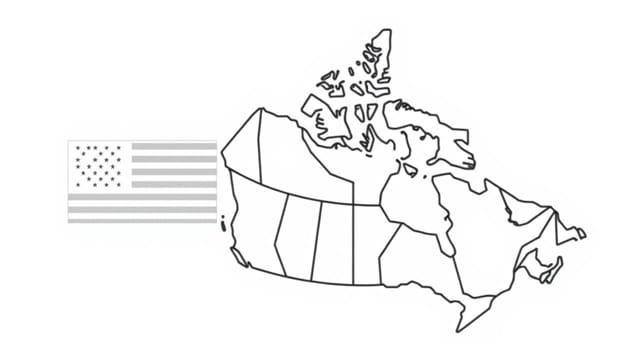
Throughout its early history, the United States made multiple attempts to invade Canada. These efforts were often tied to larger geopolitical conflicts, national ambitions, or ideological motives. Despite being neighbors today with a peaceful border, the United States and Canada then a British colony experienced moments of high tension and military confrontation. From the American Revolutionary War to the War of 1812, and even in isolated 19th-century incidents, U.S. attempts to annex or influence Canadian territory form a fascinating chapter in North American history.
The Revolutionary Era: First Invasion Attempts
Continental Army’s March North
The first major U.S. effort to invade Canada came during the American Revolutionary War. In 1775, as tensions between the American colonies and Great Britain escalated into full-scale conflict, leaders of the Continental Congress saw an opportunity to encourage rebellion among the French-speaking population of Quebec. Two military expeditions were launched one led by General Richard Montgomery and the other by Colonel Benedict Arnold. Their aim was to capture Quebec City and remove British authority in Canada.
The campaign faced harsh conditions, long marches through unforgiving wilderness, and lack of support from the local population. While Montgomery successfully took Montreal, the joint assault on Quebec City in December 1775 failed disastrously. Montgomery was killed, Arnold was wounded, and the Americans were ultimately forced to retreat. The invasion did not spark the hoped-for Canadian uprising and marked the end of major Revolutionary incursions into Canadian territory.
The War of 1812: Renewed Ambitions
Context and Causes
During the War of 1812, the United States again set its sights on Canada. Tensions with Britain over trade restrictions, impressment of American sailors, and British support for Native American resistance along the frontier prompted the U.S. to declare war. Leaders believed that conquering Canada would be relatively easy and would weaken Britain’s foothold in North America.
Multiple Invasions
Between 1812 and 1814, the U.S. launched several campaigns across the Canadian border:
- Battle of Queenston Heights (1812): A poorly coordinated American assault ended in defeat, with General Isaac Brock of the British Army becoming a national hero in Canada.
- Detroit Campaign: American General William Hull surrendered Detroit without a fight, shocking the nation and energizing British and Canadian forces.
- Battle of Chateauguay and Crysler’s Farm (1813): American efforts to reach Montreal were turned back by smaller British and Canadian forces.
Despite capturing and burning York (modern-day Toronto), the U.S. failed to hold most Canadian territory for long. Ultimately, the Treaty of Ghent in 1814 ended the war with pre-war borders restored and no major territorial gains for either side.
The Fenian Raids and Civil War Aftermath
Irish-American Involvement
In the years following the American Civil War, Irish-American veterans launched a series of unauthorized raids into Canada. These Fenian Raids (18661871) were organized by the Fenian Brotherhood, an Irish nationalist group aiming to pressure Britain into granting independence to Ireland by attacking its North American holdings.
Though not officially sanctioned by the U.S. government, the raids strained U.S.-British relations. The Canadian militias repelled the invaders, and the Fenians failed to achieve their political goals. These events nonetheless contributed to Canadian unification efforts, hastening the confederation of Canada in 1867.
Why the U.S. Failed to Conquer Canada
Lack of Local Support
One major reason for repeated U.S. failure was the lack of Canadian enthusiasm for American liberation. Many Canadians both British loyalists and French-speaking residents remained skeptical of U.S. intentions. The promise of liberty and democracy did not outweigh the risks of invasion, and local militias often resisted American forces fiercely.
Geographic Challenges
Canada’s vast wilderness, harsh winters, and limited infrastructure posed serious logistical challenges to American armies. Long supply lines, difficult terrain, and poor planning contributed to failed invasions, particularly during winter campaigns.
Strong British and Canadian Defense
British regulars, Canadian militias, and Native American allies formed effective defensive coalitions. Their knowledge of the land and strategic coordination often offset the numerical advantages of the invading American forces.
Lasting Legacy in North American History
Impact on U.S.-Canada Relations
While hostilities eventually ceased, the attempted invasions had lasting effects on both nations. For Canada, resisting U.S. invasions helped forge a stronger sense of national identity and contributed to political consolidation. For the United States, the failures helped temper future expansionist ambitions toward the north.
The World’s Longest Peaceful Border
Despite past conflicts, the U.S. and Canada share the longest undefended border in the world today. The invasions of the 18th and 19th centuries are now part of a shared historical narrative, with both countries learning from past military entanglements and focusing on diplomacy and trade in modern times.
A Complex Chapter of Expansion and Resistance
The United States’ attempts to invade Canada were driven by a mix of ideology, strategic calculation, and opportunism. From the Revolution to the War of 1812 and the Fenian Raids, each effort reveals much about American foreign policy, Canadian resilience, and British imperial strategy. While none of these invasions succeeded in altering the Canadian political landscape, they shaped national identities on both sides of the border and set the stage for a unique bilateral relationship. Understanding this complex past provides valuable insight into North American history and the evolution of peace between two neighboring countries.