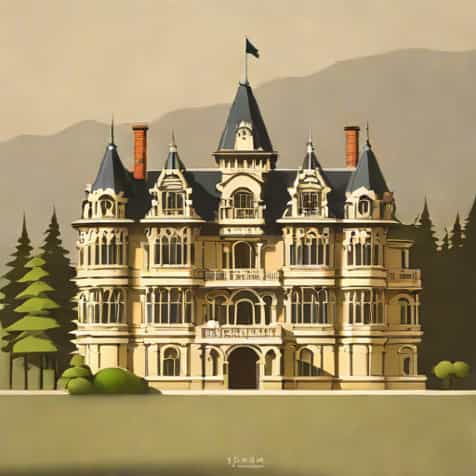
The Viceregal Lodge in Shimla is one of the most historically significant landmarks in India, often studied in detail by aspirants preparing for competitive examinations such as the UPSC. This building is not only an architectural marvel but also a place where several crucial decisions regarding India’s colonial past were taken. Known today as Rashtrapati Niwas, the Viceregal Lodge provides insights into British administration, governance, and the eventual shaping of India’s independence. For UPSC aspirants, learning about the Viceregal Lodge Shimla is important because it connects history, politics, architecture, and the evolution of administrative systems in India.
Historical Background of the Viceregal Lodge
The Viceregal Lodge was constructed during the time of Lord Dufferin, who served as the Viceroy of India from 1884 to 1888. Completed in 1888, the Lodge became the summer residence of the British Viceroys, who found Shimla a suitable escape from the intense heat of the Indian plains. It was here that major discussions and policy decisions about India’s governance were carried out during the colonial period. For students preparing for the UPSC exam, understanding this history highlights how Shimla played an administrative role during the British Raj.
Architectural Significance
The architecture of the Viceregal Lodge reflects the Jacobethan style, which combines elements of Jacobean and Elizabethan design. Built with Scottish stone, its towering turrets, steep gables, and large windows present a striking appearance. The interiors of the Lodge are equally impressive, with wood-paneled walls, expansive halls, and ornate furniture imported from Britain. The Lodge is spread across several acres and is surrounded by beautiful gardens, which add to its charm. This architectural grandeur symbolized the authority and dominance of the British Empire in India.
Key Features of the Design
- Use of local grey stone and Burma teak for interiors.
- Jacobean style mixed with Victorian aesthetics.
- Extensive lawns and botanical gardens around the Lodge.
- A library and conference rooms used for administrative purposes.
Political Importance of the Viceregal Lodge
The Viceregal Lodge was not just a residence but also a center of power. It hosted several conferences and meetings that shaped India’s future. The most notable event was the Shimla Conference of 1945, where discussions between British officials, the Indian National Congress, and the Muslim League were held. Though the conference failed to produce a final agreement, it played a crucial role in setting the stage for the eventual partition of India in 1947.
The Shimla Conference of 1945
This conference is of particular relevance for UPSC candidates, as it reflects the challenges of negotiation between different political groups in India before independence. The failure of the conference highlighted the differences between the Congress and the Muslim League, leading to the two-nation theory gaining ground. The Viceregal Lodge thus became a witness to some of the most intense political negotiations in Indian history.
Viceregal Lodge and Indian Independence
Many decisions made at the Viceregal Lodge influenced India’s independence movement. Leaders like Mahatma Gandhi, Jawaharlal Nehru, and Mohammad Ali Jinnah visited the Lodge during their political engagements. For example, Lord Wavell, who served as the Viceroy during the 1940s, frequently used the Lodge to hold dialogues with Indian leaders. This makes the Lodge a key location in the timeline leading up to India’s independence in 1947.
Present Status of the Viceregal Lodge
After independence, the Lodge was renamed Rashtrapati Niwas and was later handed over to the Ministry of Education. Today, it houses the Indian Institute of Advanced Study (IIAS), a premier research institution. Scholars from across the country and the world visit this institution to pursue advanced research in the humanities and social sciences. The Lodge is also open to tourists, who can explore its gardens and some parts of the interior, though academic activities remain its primary function.
Role of Indian Institute of Advanced Study
The Indian Institute of Advanced Study plays a crucial role in preserving the heritage of the Lodge while also promoting academic inquiry. Researchers studying Indian history, culture, politics, and governance continue to use this space, adding a modern intellectual legacy to its colonial past.
Relevance of Viceregal Lodge for UPSC Aspirants
For UPSC aspirants, the Viceregal Lodge in Shimla serves as an important case study under multiple subjects such as Modern Indian History, Indian Polity, and Art and Culture. Understanding its role can help aspirants write enriched answers in both the prelims and mains examinations.
Points of Relevance
- HistoryThe Lodge witnessed important negotiations like the Shimla Conference of 1945.
- PolityIt symbolizes the British style of governance and administration in India.
- ArchitectureAn example of colonial-era design, useful in art and culture preparation.
- Current AffairsIts role as the Indian Institute of Advanced Study makes it relevant in contemporary contexts as well.
Tourism and Cultural Heritage
The Viceregal Lodge is also a significant tourist attraction in Shimla. Visitors are drawn to its historical importance, architectural beauty, and landscaped gardens. For those interested in cultural heritage, the Lodge provides a direct connection to India’s colonial past and the transition towards independence. Tourists often explore the gardens, take guided tours of the interior, and learn about the events that took place within its walls.
Visitor Experience
Tourists can explore the lawns, admire the building’s stone architecture, and take part in guided tours organized by the Institute. The Lodge’s location on Observatory Hill also provides panoramic views of Shimla, making it a must-visit destination for both history enthusiasts and general travelers.
The Viceregal Lodge Shimla is not just a colonial-era building but a repository of India’s political and historical journey. For UPSC aspirants, it represents a critical chapter in the study of India’s freedom struggle and governance under British rule. Its architectural beauty, historical importance, and current academic role make it a multifaceted landmark. By studying the Viceregal Lodge, students gain insights into both the grandeur of the colonial administration and the struggles that led to India’s independence. Whether viewed through the lens of history, architecture, politics, or cultural heritage, the Viceregal Lodge remains a symbol of India’s rich and complex past.