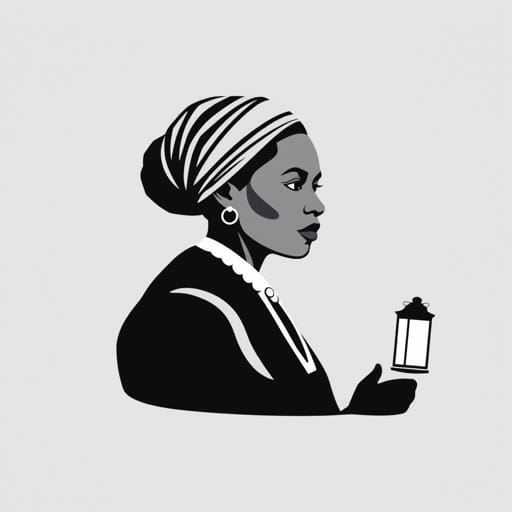
Harriet Tubman remains one of the most inspiring figures in American history, known for her fearless work in the fight against slavery. Her name is often associated with courage, sacrifice, and an unyielding pursuit of freedom. Born into slavery and subjected to unimaginable hardships, Tubman rose to become a beacon of hope for hundreds of enslaved people seeking liberation. Her contributions spanned far beyond her famous missions through the Underground Railroad, and her impact was felt in the Civil War, in women’s suffrage, and in the broader struggle for civil rights. To understand what Harriet Tubman did is to appreciate the depth of her moral strength and the lasting legacy she left behind.
Early Life and Enslavement
Harriet Tubman was born Araminta Ross in Dorchester County, Maryland, around 1822. She was one of nine children born into slavery. As a child, she was subjected to brutal labor and severe punishments. At the age of twelve, she suffered a traumatic head injury after being struck by a heavy weight thrown by a slave overseer. This injury would cause lifelong health issues and episodes of narcolepsy, but it also coincided with the beginning of her deep religious visions.
Growing up under the cruelty of slavery instilled in Tubman a determination to be free. In 1849, after the death of her owner and fearing she would be sold away from her family, she made the courageous decision to escape. She fled to Pennsylvania, a free state, using the secret network known as the Underground Railroad.
The Underground Railroad
One of the most defining aspects of what Harriet Tubman did was her involvement with the Underground Railroad. After securing her own freedom, she could have chosen to stay safe and begin a new life. Instead, she chose to risk her freedom and her life by returning to the South to rescue others still in bondage.
Leading Rescue Missions
Over the course of a decade, Tubman made an estimated 13 trips into the South and helped lead approximately 70 enslaved people to freedom. This earned her the nickname Moses, after the biblical figure who led his people out of slavery. She used various routes and methods to avoid detection, including traveling by night, hiding in safe houses, and using coded messages and spirituals as signals.
- She never lost a passenger during her missions.
- She carried a pistol for protection and to discourage anyone from turning back.
- She often disguised herself to avoid recognition.
Support and Funding
Tubman did not work alone. She received support from abolitionist communities, including figures such as Frederick Douglass and William Still. Financial and logistical support from allies in the North allowed her to plan and execute rescue missions. Despite her critical role in freeing others, Tubman often lived in poverty, using much of what she earned for the cause.
Role in the Civil War
During the American Civil War, Harriet Tubman continued to serve the Union cause in multiple capacities. She worked as a nurse, cook, and laundress for Union troops, especially caring for Black soldiers and escaped slaves. But her most notable contribution came through her work as a spy and military scout.
Combahee River Raid
In 1863, Tubman became the first woman to lead an armed expedition during the war. Alongside Colonel James Montgomery, she helped orchestrate the Combahee River Raid in South Carolina. The mission destroyed Confederate supply lines and freed more than 700 enslaved individuals. Her intelligence work, including guiding Union gunboats through hidden channels, proved vital to the success of the raid.
Advocacy for Women’s Rights
After the Civil War, Harriet Tubman turned her attention to the women’s suffrage movement. She worked alongside prominent leaders such as Susan B. Anthony and Elizabeth Cady Stanton. Tubman believed that the fight for racial equality was deeply connected to the fight for gender equality.
She gave speeches advocating for the right of women to vote, drawing upon her experiences of resilience and leadership. Although she did not see women gain the right to vote during her lifetime, her efforts helped lay the foundation for future progress in both civil and gender rights.
Later Years and Legacy
Despite her profound contributions, Tubman struggled financially after the war. She received little to no government compensation for her work, and it took years of lobbying before she was granted a small pension for her wartime service. In her later years, she established the Harriet Tubman Home for the Aged in Auburn, New York, where she cared for elderly African Americans.
Harriet Tubman passed away in 1913, but her story did not fade. Her life and work have been commemorated in books, films, monuments, and educational curricula. She symbolizes resistance, strength, and moral conviction, and she continues to inspire generations of activists and leaders.
Honors and Recognition
- In 1944, a Liberty ship was named the SS Harriet Tubman in her honor.
- In 1978, the U.S. Postal Service issued a commemorative stamp bearing her image.
- Efforts to place her portrait on U.S. currency reflect her enduring national legacy.
The Lasting Impact of Harriet Tubman’s Work
What Harriet Tubman did resonates far beyond the historical moment in which she lived. She challenged the notion that individuals born into oppression must remain victims. Her life showed that it is possible to change the course of history through courage, faith, and persistence. She not only helped dismantle slavery through direct action but also demonstrated the power of grassroots resistance and collective action.
Today, Tubman is widely regarded as a symbol of liberation. Schools, bridges, and museums have been named in her honor, and her story is frequently invoked in discussions about freedom, justice, and equality. Her legacy encourages us to confront injustice in all its forms and to act with bravery and compassion in pursuit of a more just world.
In exploring what Harriet Tubman did, we uncover more than a list of heroic deeds we uncover the story of a woman who defied systemic oppression and inspired a nation. Through the Underground Railroad, her Civil War service, and her advocacy for women’s rights, Tubman’s life illustrates the extraordinary impact one individual can have. Her example remains a guiding light for those who continue to fight for freedom and human dignity around the world.