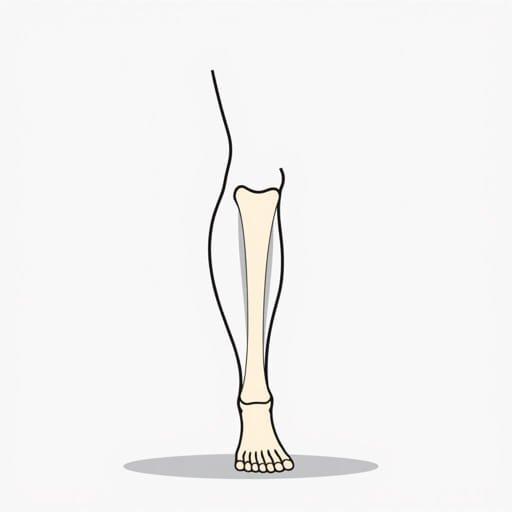
When you take a step, jump, or kick, one of the bones most responsible for carrying your weight and supporting your lower leg is the shinbone. Commonly known as the shinbone, this crucial structure plays a significant role in human movement and stability. While it’s familiar to many by touch and name, fewer people know its anatomical term and its exact importance in the skeletal system. In anatomical language, the shinbone is called the tibia. Understanding the tibia’s structure, function, and relationship with surrounding tissues can provide deeper insight into how our legs work and why this bone is so vital.
Definition and Location of the Tibia
What Is the Tibia?
The tibia is one of the two long bones located in the lower leg. It is the larger and stronger of the two, and it supports most of the body’s weight. Commonly referred to as the shinbone, the tibia is found on the medial (inner) side of the leg, running from the knee joint down to the ankle joint.
Where Is the Tibia Located?
The tibia extends from the femur at the knee joint to the talus bone at the ankle joint. It lies parallel and medial to the fibula, the other bone in the lower leg, which is thinner and provides lateral support.
Anatomy of the Shinbone (Tibia)
Main Parts of the Tibia
- Proximal end: The upper end that articulates with the femur and forms part of the knee joint. It includes structures like the medial and lateral condyles and the tibial plateau.
- Shaft: The long middle portion, which is triangular in shape and where the shin is most easily felt beneath the skin.
- Distal end: The lower part of the tibia that forms part of the ankle joint and includes the medial malleolus, a bony prominence you can feel at the inner ankle.
Articulations
The tibia forms joints with several bones:
- Femur: Forms the tibiofemoral joint at the knee.
- Fibula: Connects via the superior and inferior tibiofibular joints.
- Talus: Forms the tibiotalar joint at the ankle.
Function of the Shinbone
Weight-Bearing Support
The tibia’s most essential role is bearing the weight of the body from the upper leg to the foot. Every time you stand, walk, or run, the tibia absorbs and transfers this weight, making it a critical component of your skeletal structure.
Movement and Locomotion
By forming joints at both ends, the tibia helps enable movement at the knee and ankle. It works in conjunction with muscles and tendons to allow bending, extending, and rotating the lower leg.
Protection and Stability
The tibia also helps protect internal structures such as blood vessels and nerves in the lower leg. Because of its location and strength, it contributes to the overall stability of the leg during movement and while standing still.
Muscles and Ligaments Connected to the Tibia
Muscles Inserting or Originating from the Tibia
- Tibialis anterior: Originates from the lateral surface of the tibia and helps in dorsiflexion of the foot.
- Soleus and gastrocnemius: Insert into the heel via the Achilles tendon and assist in plantar flexion.
- Hamstrings: Attach indirectly to the tibia and are responsible for knee flexion and hip extension.
Ligaments
- Anterior cruciate ligament (ACL) and posterior cruciate ligament (PCL): Connect the tibia to the femur and stabilize the knee joint.
- Medial collateral ligament (MCL): Supports the inner part of the knee by connecting the tibia to the femur.
- Deltoid ligament: Connects the tibia to the talus, navicular, and calcaneus bones in the ankle.
Common Injuries and Conditions of the Tibia
Shin Splints
A common overuse injury in athletes and runners, shin splints refer to pain along the medial or anterior side of the tibia. It is typically caused by repeated stress and inflammation in the muscles and tendons attached to the tibia.
Tibial Fractures
Fractures of the tibia are relatively common, particularly from falls, sports injuries, or car accidents. Types include:
- Stress fractures: Tiny cracks in the bone due to repetitive impact.
- Transverse fractures: A straight break across the bone.
- Comminuted fractures: Bone shattered into multiple pieces.
Osgood-Schlatter Disease
This condition often affects adolescents and involves inflammation of the area just below the knee where the patellar tendon attaches to the tibia. It results in pain and a noticeable bump on the shinbone.
Development and Growth
Growth Plates
During childhood and adolescence, the tibia grows through the activity of growth plates located near its ends. These plates eventually close in adulthood, marking the end of vertical bone growth.
Ossification
The tibia begins as cartilage and undergoes ossification, where bone tissue replaces cartilage. Primary ossification centers appear during fetal development, and secondary centers form in the early years of life.
Diagnostic Imaging and Evaluation
Common Techniques
To diagnose tibial injuries or monitor bone health, healthcare providers use imaging such as:
- X-rays: To identify fractures or deformities.
- MRI: To assess soft tissue injuries around the tibia.
- CT scans: For detailed cross-sectional images of the tibia.
Care and Prevention
Bone Health
Maintaining strong tibias involves:
- Adequate intake of calcium and vitamin D
- Weight-bearing exercise such as walking, hiking, and strength training
- Preventing high-impact injuries through proper footwear and technique
Rehabilitation
In cases of injury, rehabilitation may include:
- Physical therapy to restore strength and mobility
- Use of braces or supports during recovery
- Surgical intervention in severe fractures
The shinbone, or tibia, is a central component of the lower leg and the skeletal system. From supporting body weight to facilitating movement and protecting vital structures, the tibia’s role cannot be overstated. It serves as an anchor for muscles and ligaments, forms important joints at both ends, and is vital in locomotion and balance. Proper care, understanding its function, and recognizing the signs of injury are all key to maintaining healthy legs and an active lifestyle. Whether walking across the room or sprinting in a race, the tibia is always at work beneath the surface, doing far more than most people realize.