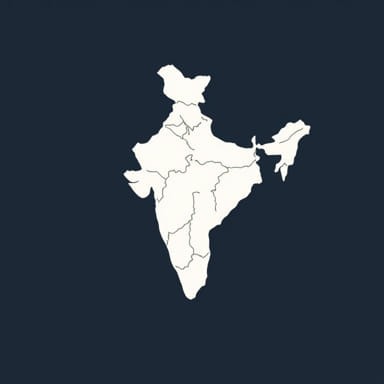
When exploring the vast geography of India, one naturally becomes curious about its furthest geographical extremes. Among the most frequently asked questions is about the easternmost part of India and which state occupies this unique position. This topic is not just about direction on a map it also involves history, cultural diversity, political significance, and the natural richness of the region. To understand which state is in the easternmost part of India, one must look toward the remote and fascinating region of the northeast, where Arunachal Pradesh stands as the answer.
Understanding India’s Eastern Frontier
Geographic Location of Arunachal Pradesh
Arunachal Pradesh is located in the northeastern part of India and is the easternmost state of the country. It shares its borders with Bhutan to the west, China to the north and northeast, and Myanmar to the east. The state is nestled among the eastern Himalayas and is known for its mountainous terrain, lush green forests, and diverse ecosystems.
The easternmost inhabited location in Arunachal Pradesh and thus in India is the village of Kibithu, situated in the Anjaw district. This small village is extremely close to the tri-junction of India, China, and Myanmar. It is here that India experiences the first light of dawn, giving Arunachal Pradesh the poetic title The Land of the Rising Sun.
Neighboring States and Regional Importance
Arunachal Pradesh is bordered by Assam and Nagaland within India. It forms part of the Seven Sister States, a group of northeastern Indian states known for their rich cultural traditions and unique geographical features. Being located at such a sensitive corner of the country, the state holds immense strategic importance.
Topographical and Natural Significance
Mountainous Terrain and River Valleys
The landscape of Arunachal Pradesh is dominated by high mountain ranges, deep valleys, and fast-flowing rivers. Some of the important rivers originating in the region include the Siang, Subansiri, Lohit, and Kameng. These rivers not only provide water to the region but are also sources of hydropower.
Rich Biodiversity
The state is home to several national parks and wildlife sanctuaries, including Namdapha National Park and Mouling National Park. These protected areas preserve endangered flora and fauna and are essential for environmental balance in the region.
Cultural and Ethnic Diversity
Tribal Communities of Arunachal Pradesh
One of the most unique features of Arunachal Pradesh is its cultural diversity. The state is home to over 25 major tribes and many smaller sub-tribes. Each tribe has its own language, customs, and traditional practices. Some of the well-known tribes include
- Adi
- Nyishi
- Apatani
- Monpa
- Galo
These communities have preserved their unique way of life for generations, celebrating festivals, wearing traditional attire, and following local belief systems. Their connection with nature and sustainable practices are noteworthy in today’s environmentally conscious world.
Languages and Communication
While Hindi and English are commonly used for official and educational purposes, many tribal languages are spoken across the state. These languages are part of the Sino-Tibetan language family, and their continued use is a testament to the region’s deep-rooted heritage.
Strategic and Political Importance
India-China Border Issues
Arunachal Pradesh is not only geographically significant but also politically sensitive. China claims a large portion of the state as part of its territory, referring to it as South Tibet.” However, India asserts full sovereignty over the region and governs it as an integral part of the Indian Union.
The border disputes have occasionally led to tensions and military standoffs between India and China, particularly in areas like Tawang and the Line of Actual Control (LAC). As a result, the Indian government has made significant investments in infrastructure and defense readiness in this region.
Military Presence and Connectivity
Due to its strategic location, Arunachal Pradesh has a strong military presence. The Indian Armed Forces operate several bases and outposts along the border. Additionally, infrastructure development projects like new roads, bridges, tunnels, and airports have helped improve connectivity within the state.
Tourism and Scenic Attractions
Natural and Spiritual Beauty
Despite its remote location, Arunachal Pradesh attracts tourists seeking adventure, nature, and spirituality. Some of the popular destinations include
- TawangHome to the Tawang Monastery, one of the largest monasteries in Asia.
- Ziro ValleyKnown for its picturesque landscapes and the Apatani tribe.
- BomdilaOffers panoramic Himalayan views and Tibetan culture.
- Namdapha National ParkIdeal for wildlife lovers and trekkers.
- DirangA peaceful hill station with natural hot water springs.
The tourism industry is growing slowly but steadily, with a focus on eco-tourism and responsible travel to preserve the state’s fragile ecosystem.
Adventure Tourism
Arunachal Pradesh is also a haven for adventure seekers. Activities like river rafting, trekking, mountaineering, and camping are increasingly popular. The challenging terrain and scenic routes offer a rewarding experience for outdoor enthusiasts.
Education and Economic Growth
Educational Initiatives
The state government has taken steps to improve literacy and education across Arunachal Pradesh. Schools and higher education institutions like Rajiv Gandhi University in Itanagar are helping build a more skilled and aware population.
Economic Activities
Agriculture remains the backbone of the state’s economy, with shifting cultivation (jhum) practiced in many tribal areas. In recent years, there has been a shift towards horticulture, especially the cultivation of oranges, apples, and spices. Hydropower is another growing sector, thanks to the abundance of rivers and favorable topography.
Transport and Accessibility
Challenges and Improvements
Arunachal Pradesh’s rugged landscape and remote location once made it one of the most inaccessible states in India. However, ongoing infrastructure projects have significantly improved the situation. New highways, railway links, and airports are being developed under central government schemes.
Air, Road, and Rail Connectivity
The newly opened Donyi Polo Airport near Itanagar connects the state capital with major cities in India. Road connectivity is being expanded through the Trans-Arunachal Highway, which links important towns across the state. Rail services are also being extended, linking Arunachal Pradesh with Assam and beyond.
Arunachal Pradesh proudly holds the title of being the easternmost state of India, with its farthest point at Kibithu. Its geographical extremity is not just a matter of cartography it represents a rich cultural, ecological, and strategic frontier of the nation. From its breathtaking natural landscapes and vibrant tribal traditions to its strategic importance and developing infrastructure, Arunachal Pradesh is a region that commands attention and respect. Understanding its role as the easternmost state of India allows us to appreciate the full expanse and diversity of the country. Whether you are a traveler, a student, or someone curious about Indian geography, knowing about Arunachal Pradesh offers valuable insights into the edge where India begins each new day.