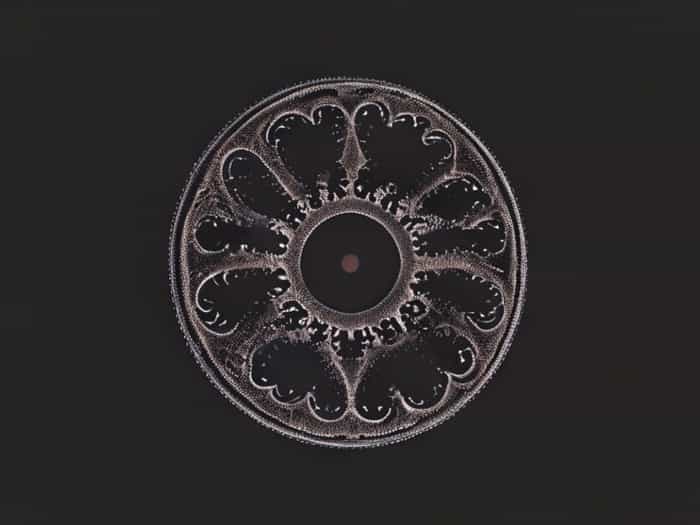
The Mandelbrot set is one of the most fascinating discoveries in mathematics and visual art, captivating both scientists and artists alike. Zooming into the Mandelbrot set reveals an infinite world of complexity hidden within a seemingly simple formula. Each level of magnification exposes new structures, patterns, and shapes that mirror the larger whole. This continuous self-similarity, known as fractal geometry, is what makes exploring the Mandelbrot set such a mesmerizing experience. Understanding what happens when zooming into this mathematical masterpiece can open a window into the beauty of infinity and chaos theory.
What Is the Mandelbrot Set?
The Mandelbrot set is a collection of complex numbers that produce a specific pattern when plotted on a plane. Named after mathematician Benoit B. Mandelbrot, it’s generated using a simple iterative formulaz = z² + c, where bothzandcare complex numbers. The process begins withzequal to zero, and the formula is repeated multiple times. The numbercis part of the Mandelbrot set if the sequence of values does not escape to infinity.
Despite its simplicity, this mathematical formula produces an image of incredible beauty and complexity. The boundary of the Mandelbrot set is infinitely detailed no matter how deeply you zoom in, there are always new structures and designs to discover. This makes it one of the best visual representations of mathematical infinity ever discovered.
The Magic of Zooming In
When zooming into the Mandelbrot set, one of the first things you notice is that patterns seem to repeat. At first glance, you might think the same shapes appear again and again, but closer inspection reveals subtle differences. Each region has its own unique variation of spirals, filaments, and bulb-like shapes that grow ever more intricate as magnification increases. This property of repeating patterns with variation is calledself-similarity.
Infinite Complexity from Simple Rules
Each zoom into the Mandelbrot set is like traveling deeper into a never-ending landscape. The same rules of mathematics apply at every scale, but the results look entirely different. The deeper you go, the more complex the patterns become. Some regions resemble galaxies, others look like tiny cells or coral structures. This endless complexity arises from a very simple mathematical rule an example of how beauty and order can emerge from simplicity.
The Feeling of Infinity
Zooming infinitely into the Mandelbrot set is not just a mathematical exercise it’s a philosophical experience. It challenges our understanding of scale, boundary, and repetition. The fact that there is no end, no smallest detail, creates a sense of wonder about infinity itself. In theory, you could keep zooming forever, always discovering new regions that have never been seen before, because the Mandelbrot set never repeats exactly.
How Zooming Works Technically
Creating a Mandelbrot zoom requires computer algorithms capable of handling complex number calculations and very high levels of precision. As you zoom in, the level of detail increases exponentially, and so does the amount of computation needed to render the image accurately. Each pixel on the screen represents a complex number, and the computer must determine whether it belongs to the Mandelbrot set or not by iterating the formula many times.
Precision and Computation
At shallow zoom levels, standard floating-point numbers are sufficient for calculations. However, at extreme depths billions or even trillions of magnification ordinary precision is not enough. Specialized arbitrary-precision arithmetic is required to keep the calculations stable and accurate. Without it, rounding errors would distort the image.
Rendering such deep zooms can take enormous computing power and time. Some enthusiasts use supercomputers or distributed systems to explore deeper into the Mandelbrot set than ever before. Each new zoom level often reveals never-before-seen patterns that astonish both mathematicians and artists.
Patterns and Regions Inside the Mandelbrot Set
As you zoom into different areas of the Mandelbrot set, you encounter distinct regions, each with unique characteristics. The black area in the center represents points that are part of the Mandelbrot set, meaning their values never escape to infinity. The surrounding colorful bands represent points that do escape, with colors often corresponding to how quickly they diverge.
- The Main CardioidThis large heart-shaped area forms the central body of the Mandelbrot set. It represents stable values that remain bounded.
- The BulbsAttached to the cardioid are circular shapes known as bulbs, each representing different periodicities within the set.
- The Seahorse ValleyFound near the main cardioid, this region contains swirling, spiral-like shapes that resemble seahorses.
- The Elephant ValleyAnother fascinating area where curved structures look like elephant trunks or organic tendrils.
- Mini MandelbrotsAs you zoom in deeper, you’ll encounter miniature versions of the Mandelbrot set itself, each surrounded by new and complex patterns.
The Art of the Mandelbrot Zoom
Beyond mathematics, zooming into the Mandelbrot set is an artistic journey. The vivid colors used in digital renderings are not part of the mathematics itself they’re added to visualize the rate of divergence. Artists choose color schemes that highlight contrast and bring out hidden structures, creating breathtaking fractal art that bridges the gap between science and beauty.
Color Mapping and Aesthetics
The colors in Mandelbrot zooms are determined by how quickly the points escape to infinity. Points that diverge quickly might be colored blue or green, while slower ones might appear red or orange. By adjusting the color palette, artists can emphasize different features and moods, transforming mathematical data into stunning digital landscapes.
Music and Motion
Zooming animations of the Mandelbrot set have also become popular online. These videos take viewers on a journey through infinite layers of structure, often synchronized with music. The rhythmic unfolding of patterns gives the impression of organic growth, evolution, and transformation. The combination of sound and imagery makes the experience both hypnotic and meditative.
The Mathematical Beauty of Chaos
The Mandelbrot set belongs to a field of study known aschaos theory, which explores how simple systems can produce unpredictable and infinitely complex outcomes. Zooming into the Mandelbrot set perfectly demonstrates this concept. The same equation behaves differently depending on small changes in initial conditions, leading to an explosion of diversity and pattern formation.
Fractals in Nature
Fractals like the Mandelbrot set are not just abstract concepts they appear everywhere in nature. From the branching of trees and lightning bolts to the structure of snowflakes and coastlines, fractal geometry describes patterns that repeat at different scales. Zooming into the Mandelbrot set mirrors this natural self-similarity, connecting mathematics to the physical world.
The Human Fascination with Infinity
Humans have always been intrigued by infinity, and the Mandelbrot set provides a visual representation of this idea. The endless zoom is a metaphor for exploration and curiosity. No matter how far you go, there’s always more to discover new shapes, spirals, and miniature replicas waiting to be found. It’s both humbling and inspiring, reminding us that the universe, like the Mandelbrot set, is filled with infinite depth and wonder.
Why We Keep Zooming
The reason people continue to zoom into the Mandelbrot set is not only to admire its beauty but also to understand the principles of complexity and emergence. It shows how deterministic rules can generate unpredictable behavior a fundamental idea in many scientific fields, from physics to biology. For artists, mathematicians, and dreamers alike, zooming into the Mandelbrot set is a journey through the infinite possibilities of creation itself.
Zooming into the Mandelbrot set is a fascinating experience that blends mathematics, art, and philosophy. Each level of magnification reveals new details, challenging our perception of repetition, order, and chaos. The infinite beauty hidden within a simple formula demonstrates how mathematics can create art that transcends numbers and equations. Whether viewed as a scientific curiosity or an artistic expression, the Mandelbrot set continues to inspire awe, reminding us that infinity can exist within the smallest boundaries of a complex number plane.