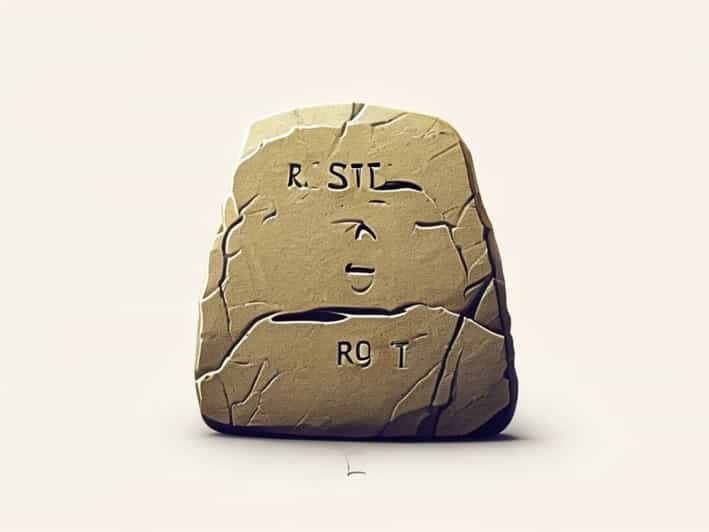
The Rosetta Stone is one of the most famous artifacts in history, known for its critical role in deciphering Egyptian hieroglyphs. Discovered in 1799 near the town of Rosetta in Egypt, this inscribed stone contains the same text written in three scripts Greek, Demotic, and Egyptian hieroglyphs. Its discovery provided scholars with the key to understanding the long-lost language of ancient Egypt. For centuries, hieroglyphs had been a mystery, but the Rosetta Stone enabled linguists and historians to finally translate the inscriptions and gain insight into ancient Egyptian culture, governance, and religion.
Historical Background of the Rosetta Stone
The Rosetta Stone dates back to 196 BC during the reign of King Ptolemy V. It was created as a decree by Egyptian priests celebrating the king’s coronation and reaffirming his divine authority. The decree was carved in three scripts to ensure that it could be read by a wide audience. Greek was the language of the administration, Demotic was the common script used by Egyptians, and hieroglyphs were reserved for religious and ceremonial purposes. This multi-script format ultimately provided the comparative material that allowed modern scholars to decode hieroglyphs.
Discovery and Initial Study
The stone was discovered by French soldiers during Napoleon’s campaign in Egypt. Recognizing its importance, scholars began studying the inscriptions, but it was not until later that serious attempts at decipherment were made. When the British took control of Egypt, the Rosetta Stone was transported to the British Museum, where it remains on display today. Early studies focused on the Greek portion, which scholars could read, using it as a reference to interpret the Egyptian scripts.
What the Rosetta Stone Actually Says
The text of the Rosetta Stone is a formal decree issued by Egyptian priests praising King Ptolemy V for his generosity and confirming his royal authority. It outlines the king’s benevolence, religious piety, and contributions to temples and public life. The inscription also details the privileges granted to priests, including tax exemptions and special honors. Essentially, the text served both as propaganda to legitimize the king’s rule and as a historical record of royal decrees.
Content of the Decree
- The king’s acts of generosity and donations to temples.
- Confirmation of religious practices and support for the priesthood.
- Public announcements intended to be displayed in temples and widely read.
- Affirmation of the king’s divine status and his relationship with the gods.
By comparing the Greek text with the hieroglyphs, scholars could identify corresponding words and symbols, ultimately allowing them to reconstruct the meaning of many hieroglyphic signs. This breakthrough provided insight into both the language and the political and religious culture of Ptolemaic Egypt.
The Role of the Rosetta Stone in Deciphering Hieroglyphs
Before the discovery of the Rosetta Stone, hieroglyphs were largely undecipherable. Ancient scholars had little understanding of their meaning or structure. The stone’s tri-script inscription offered a linguistic bridge, particularly because the Greek portion could be read and translated accurately. This allowed researchers to match Greek words to their hieroglyphic and Demotic equivalents, revealing patterns in grammar, vocabulary, and symbolic representation.
Key Figures in Decipherment
The French scholar Jean-François Champollion is credited with the final breakthrough in translating hieroglyphs. Using the Rosetta Stone as a guide, he systematically compared the Greek and Egyptian texts, identifying phonetic values and symbolic meanings. Champollion’s work in the 1820s laid the foundation for modern Egyptology and transformed the understanding of ancient Egyptian history and culture.
Significance Beyond Language
The Rosetta Stone is more than just a linguistic tool. It provides a glimpse into the political, religious, and social structure of ancient Egypt. The decree illustrates the king’s relationship with the priesthood, the importance of temples in society, and the role of public proclamations in legitimizing royal power. It also demonstrates how language and writing were used strategically to communicate authority and preserve historical memory.
Insights Into Ancient Egyptian Culture
- The hierarchical structure of society and the role of priests in governance.
- Religious practices, including temple rituals and divine kingship.
- The interplay between local Egyptian traditions and the ruling Greek administration under the Ptolemies.
Modern Relevance of the Rosetta Stone
Today, the Rosetta Stone remains a symbol of linguistic discovery and scholarly perseverance. It is frequently referenced in studies of language, history, and archaeology. Its impact extends beyond Egyptology, inspiring educational tools, translation software, and even cultural metaphors for understanding complex systems. By unlocking the secrets of hieroglyphs, the Rosetta Stone has enabled researchers to reconstruct vast aspects of Egyptian civilization that would have otherwise been lost to history.
Educational and Cultural Impact
- Used as a teaching tool in linguistics and history courses.
- Represents the importance of multilingual documents in understanding ancient cultures.
- Serves as a cultural icon symbolizing discovery, scholarship, and cross-cultural communication.
The Rosetta Stone reveals a decree celebrating the reign of Ptolemy V, highlighting acts of generosity, religious support, and royal authority. Its tri-script inscription allowed scholars to decipher hieroglyphs, opening a window into ancient Egyptian culture, religion, and governance. Beyond its historical content, the stone symbolizes the power of language as a tool for communication and preservation of knowledge. Understanding what the Rosetta Stone says provides not only linguistic insights but also a deeper appreciation for the civilization that produced it, making it an enduring icon of historical and scholarly significance.