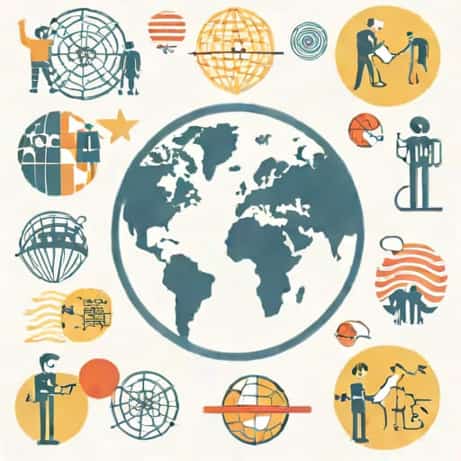
Globalization is a complex and multifaceted process that has reshaped the way people, businesses, and nations interact in the modern world. At its core, globalization is the intensification of worldwide social relations, connecting individuals and communities across borders in unprecedented ways. This process affects economic, cultural, political, and social dynamics, creating both opportunities and challenges for societies. As globalization deepens, interactions among people, ideas, goods, and information become faster, more frequent, and more influential, highlighting the interconnectedness of the global community. Understanding globalization as the intensification of social relations allows us to explore its effects on daily life, international cooperation, and cultural exchange.
Defining Globalization
Globalization is often defined in terms of economics, trade, and communication, but its social dimension is equally important. Sociologists and scholars describe globalization as the intensification of worldwide social relations, which means that actions and events in one part of the world increasingly influence people and societies in distant locations. This definition emphasizes that globalization is not merely about technology or commerce but about the interconnectedness of human relationships on a global scale. Social networks, cultural exchange, migration, and international collaboration all contribute to the complex web of global social relations.
Key Features of Global Social Relations
- Interconnectedness Individuals and communities are linked through networks that span continents.
- Reciprocal Influence Actions in one region can affect societies in distant regions.
- Acceleration The pace of social interaction has increased due to technology and communication.
- Cultural Exchange Ideas, values, and practices travel across borders, influencing local cultures.
- Global Awareness People are increasingly aware of social, economic, and political events worldwide.
Economic Dimensions of Globalization
The intensification of worldwide social relations has significant economic implications. Globalization facilitates international trade, foreign investment, and the movement of capital and labor. Multinational corporations operate across countries, connecting markets and creating global supply chains. Economic globalization not only drives growth but also spreads technological innovations and production methods worldwide. However, these economic interactions also highlight inequalities between nations and social groups, making it important to consider both the benefits and challenges of globalization.
Global Trade and Markets
International trade is a cornerstone of economic globalization. Countries import and export goods and services, creating networks of economic dependence and cooperation. Trade agreements and international organizations such as the World Trade Organization (WTO) facilitate these exchanges. The movement of products and capital has transformed industries and created opportunities for employment and entrepreneurship. At the same time, globalization has led to debates about labor rights, environmental sustainability, and economic disparities among nations.
Cultural Impact of Globalization
Globalization also has profound cultural effects. The intensification of social relations across the world facilitates the exchange of ideas, traditions, and lifestyles. People can access music, films, literature, and fashion from different cultures, creating hybrid cultural forms and new social experiences. This cultural exchange promotes understanding and collaboration but can also raise concerns about cultural homogenization, where dominant cultures overshadow local traditions and identities. Globalization encourages societies to balance openness with the preservation of cultural heritage.
Global Communication and Media
- Social media platforms connect individuals worldwide, fostering new relationships and communities.
- News outlets and online platforms allow real-time awareness of global events.
- Cross-cultural collaboration in education and research expands knowledge and innovation.
- Virtual communities form around shared interests, transcending geographic boundaries.
Political and Social Implications
Globalization influences political relations and social structures. The intensification of worldwide social relations means that decisions made by governments, international organizations, or corporations in one country can impact populations elsewhere. Global governance, international treaties, and collaborative efforts to address climate change, public health, and human rights are all examples of how social relations have expanded beyond national borders. Political globalization requires societies to develop new forms of cooperation, negotiation, and conflict resolution in a connected world.
International Cooperation and Governance
- Global institutions facilitate collaboration on issues like trade, security, and human rights.
- Cross-border social movements advocate for environmental protection, equality, and justice.
- Migration and refugee movements demonstrate the social interdependence of nations.
- Policy decisions in one country can have worldwide social and economic effects.
Challenges of Globalization
While globalization offers many benefits, it also presents challenges. The intensification of worldwide social relations can exacerbate inequalities, cultural tensions, and environmental issues. Global interconnectedness means that economic crises, pandemics, or political instability can spread quickly, affecting multiple regions simultaneously. Additionally, globalization can lead to the marginalization of certain groups or the erosion of local cultures and traditions. Understanding these challenges is essential for creating strategies that maximize benefits while mitigating negative consequences.
Addressing Inequalities and Risks
- Promoting equitable access to education, healthcare, and economic opportunities globally.
- Encouraging cultural diversity and preserving local traditions while embracing global exchange.
- Strengthening international cooperation to manage economic, environmental, and health crises.
- Developing policies to reduce social and economic disparities between countries.
The Future of Global Social Relations
Globalization continues to evolve, driven by advances in technology, communication, and transportation. The intensification of social relations worldwide is likely to increase as virtual interactions, digital commerce, and global networks expand. Future trends may include greater collaboration across nations, more interconnected social movements, and increased awareness of global issues. To harness the positive potential of globalization, societies must focus on inclusivity, sustainability, and mutual understanding, ensuring that the benefits of global connectivity reach all communities.
Opportunities for Global Engagement
- Virtual learning platforms and online education create global access to knowledge.
- Collaborative scientific research addresses challenges like climate change and disease control.
- Global cultural festivals and events promote cross-cultural understanding.
- International partnerships enhance innovation and economic development.
Globalization, as the intensification of worldwide social relations, has transformed the way people interact, communicate, and collaborate across the globe. Its effects are evident in economic integration, cultural exchange, political cooperation, and social interdependence. While globalization presents significant opportunities for growth, innovation, and cultural enrichment, it also brings challenges such as inequality, cultural homogenization, and global risks. Understanding globalization through the lens of social relations highlights the importance of connectivity, cooperation, and shared responsibility. By embracing the benefits while addressing the challenges, societies can create a more inclusive, sustainable, and interconnected world.
Ultimately, globalization is not merely an economic or technological phenomenon but a profound transformation of social life. It connects individuals and communities, fosters cross-cultural understanding, and encourages global cooperation. Recognizing globalization as the intensification of worldwide social relations helps us appreciate its complexity and prepare for a future where social, economic, and cultural interactions increasingly shape the global experience.