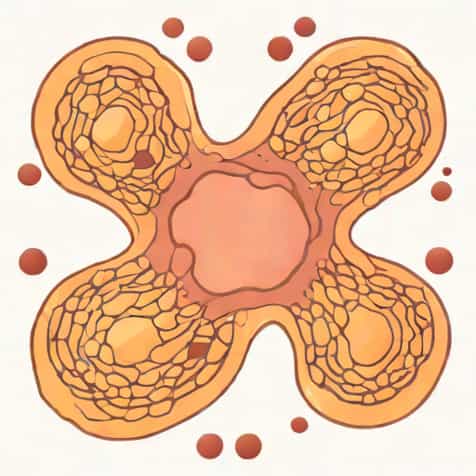
The thyroid gland is a vital endocrine organ responsible for regulating metabolism, growth, and development through the secretion of thyroid hormones. A fundamental component of this gland is the thyroid follicular cells, which are specialized epithelial cells that produce and secrete thyroid hormones such as thyroxine (T4) and triiodothyronine (T3). Understanding the embryological origin of thyroid follicular cells is essential for medical students, researchers, and healthcare professionals, as it provides insight into developmental biology, congenital anomalies, and potential sources of thyroid dysfunction. The development of these cells is a complex process that involves multiple stages, signaling pathways, and interactions with surrounding tissues.
Embryological Origin of Thyroid Follicular Cells
Thyroid follicular cells, also known as thyrocytes, originate from the endodermal layer of the embryonic pharynx. Specifically, they derive from the median endodermal thickening on the floor of the primitive pharynx during the early stages of embryogenesis. This thickening, known as the thyroid primordium, forms around the third week of gestation in humans. The primordium later invaginates and migrates inferiorly to form the definitive thyroid gland. The endodermal origin is crucial because it determines the functional and structural characteristics of follicular cells, distinguishing them from other thyroid cell types such as parafollicular cells, which have a neural crest origin.
Formation of the Thyroid Primordium
The thyroid primordium begins as a small epithelial proliferation in the midline of the pharyngeal floor, located between the first and second pharyngeal pouches. This area is situated posterior to the developing tongue and anterior to the pharyngeal gut. As the primordium develops, it forms a bilobed structure connected to the pharynx by the thyroglossal duct. This duct serves as a temporary conduit for migration and usually involutes by the end of the first trimester. Proper formation and migration of the primordium are essential for the thyroid gland to achieve its normal anatomical position in front of the trachea.
Molecular Signals in Thyroid Follicular Cell Development
The differentiation and proliferation of thyroid follicular cells are regulated by a network of molecular signals and transcription factors. Several key genes are involved in orchestrating this process, ensuring that cells acquire the correct identity and functional properties necessary for thyroid hormone synthesis.
Key Transcription Factors
- NKX2-1 (TTF-1)Essential for the initiation of thyroid development and the specification of follicular cell fate.
- PAX8Works alongside NKX2-1 to promote differentiation and maintenance of thyroid follicular cells.
- FOXE1 (TTF-2)Involved in the migration of the thyroid primordium and in the development of the thyroglossal duct.
- HHEXPlays a role in the early patterning of the thyroid primordium and its subsequent growth.
Mutations or dysregulation of these transcription factors can lead to congenital hypothyroidism, ectopic thyroid tissue, or other developmental anomalies, highlighting their critical roles in thyroid follicular cell formation.
Endodermal Differentiation
After the initial formation of the thyroid primordium, endodermal cells differentiate into follicular cells under the influence of signaling pathways such as BMP (Bone Morphogenetic Protein) and FGF (Fibroblast Growth Factor). These pathways regulate cell proliferation, survival, and differentiation. The endodermal cells eventually organize into spherical structures known as thyroid follicles, each surrounded by a basement membrane and capable of producing thyroid hormones. The lumen of these follicles stores colloid, which contains thyroglobulin, the precursor of thyroid hormones.
Migration and Anatomical Positioning
Following differentiation, thyroid follicular cells undergo migration from the floor of the pharynx to their final anatomical location anterior to the trachea. This migration occurs along the thyroglossal duct, which guides the developing gland. During this process, the cells proliferate and form the bilobed structure characteristic of the mature thyroid gland. Failure in proper migration can result in ectopic thyroid tissue, such as a lingual thyroid, which may require surgical intervention if symptomatic.
Role of the Thyroglossal Duct
The thyroglossal duct is a transient embryological structure that connects the migrating thyroid primordium to the pharynx. Normally, it involutes after the thyroid reaches its final position. Remnants of the duct can persist, leading to thyroglossal duct cysts, which are clinically significant and may contain functional thyroid follicular cells. This illustrates the close relationship between embryological development and potential clinical anomalies.
Interaction with Parafollicular Cells
While thyroid follicular cells originate from the endoderm, parafollicular cells (C cells) have a different embryological origin from the neural crest. The interaction between these two cell types is essential for the proper function of the thyroid gland. Follicular cells produce thyroid hormones, whereas parafollicular cells secrete calcitonin, contributing to calcium homeostasis. The distinct origins of these cells reflect the complexity of thyroid development and the importance of coordinated differentiation.
Clinical Implications
Understanding the embryological origin of thyroid follicular cells has several clinical implications. Congenital hypothyroidism, developmental anomalies like ectopic thyroid tissue, and thyroid dysgenesis are often linked to disruptions in endodermal differentiation or migration. Early diagnosis and intervention are critical, as thyroid hormones are essential for growth, neurodevelopment, and metabolic regulation. Knowledge of embryological pathways also informs surgical approaches, imaging, and genetic counseling for families affected by thyroid disorders.
Experimental and Research Perspectives
Recent advances in developmental biology and stem cell research have allowed scientists to study thyroid follicular cell development in vitro. Human pluripotent stem cells can be directed to differentiate into thyroid follicular-like cells using transcription factors such as NKX2-1 and PAX8. These studies not only provide insight into embryological processes but also offer potential therapeutic applications for thyroid disease, including regenerative medicine and tissue engineering.
Stem Cell-Derived Thyroid Follicular Cells
- Induction of endodermal fate using signaling molecules such as Activin A and FGF2.
- Expression of NKX2-1 and PAX8 to drive differentiation into functional follicular cells.
- Formation of follicle-like structures capable of producing and storing thyroid hormones in vitro.
This research underscores the critical role of embryological cues in guiding cell fate and highlights the translational potential of understanding thyroid follicular cell origins.
The embryological origin of thyroid follicular cells from the endoderm of the primitive pharynx is fundamental to understanding thyroid development, physiology, and pathology. These cells differentiate under the influence of key transcription factors and signaling pathways, migrate to their final anatomical position via the thyroglossal duct, and organize into functional follicles capable of producing thyroid hormones. Distinct from parafollicular cells of neural crest origin, follicular cells form the main functional units of the thyroid gland. Knowledge of their development informs clinical practice, aids in the diagnosis of congenital anomalies, and guides emerging therapies in regenerative medicine. By studying the embryological origin of thyroid follicular cells, we gain a comprehensive view of how early developmental events shape the structure and function of one of the body’s most essential endocrine organs.
Understanding these developmental processes not only provides insights into normal physiology but also highlights the potential for therapeutic interventions in thyroid disorders. Researchers and clinicians continue to explore how manipulating these pathways can contribute to advances in medical science, ultimately improving outcomes for patients with thyroid-related diseases.