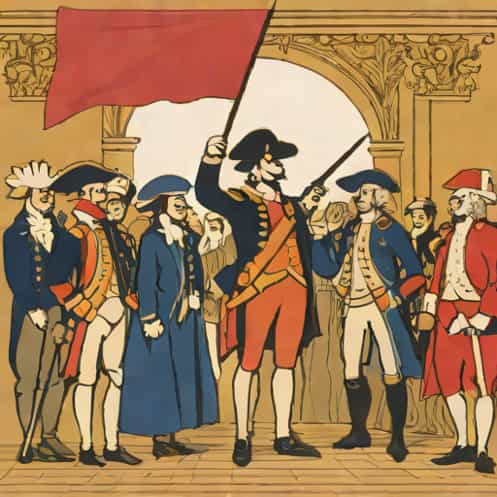
Absolutism, a system of government in which monarchs held supreme and unrestricted power, had profound effects on France leading up to the French Revolution. For decades, French kings such as Louis XIV, Louis XV, and Louis XVI ruled with centralized authority, making decisions without significant input from representative bodies. While this system allowed for political stability and efficient decision-making in some cases, it also created widespread social, economic, and political tensions. The concentration of power in the hands of the monarchy, combined with heavy taxation, social inequality, and economic mismanagement, contributed directly to the revolutionary fervor that would erupt in 1789. Examining how absolutism influenced the conditions in France reveals the complex interplay between authoritarian governance and revolutionary change.
The Nature of Absolutism in France
Absolutism in France reached its peak under Louis XIV, who famously declared, L’État, c’est moi or I am the state. Under this system, the king controlled all aspects of government, including lawmaking, taxation, and military decisions. The nobility and clergy were largely subordinate to royal authority, and representative institutions like the Estates General had little practical power. This centralization of authority allowed the monarchy to pursue ambitious projects, such as military campaigns and the construction of Versailles, but it also created resentment among those excluded from decision-making. The rigid hierarchy and lack of political participation sowed the seeds of discontent that would later fuel revolutionary movements.
Economic Consequences of Absolutism
One major factor linking absolutism to the French Revolution was the economic strain placed on the country. French monarchs maintained lavish courts and engaged in expensive wars, including conflicts like the Seven Years’ War and support for the American Revolution. These expenditures were primarily financed through taxation of the lower classes, as the nobility and clergy were often exempt. Peasants, urban workers, and the bourgeoisie bore the brunt of these fiscal policies, leading to widespread economic hardship. The absolutist system left little room for fiscal reform, as kings and their advisors were reluctant to share power or implement policies that would reduce royal authority.
Social Inequality Under Absolutism
Absolutism reinforced the rigid social hierarchy in France, dividing society into three estates. The First Estate consisted of the clergy, who enjoyed privileges and wealth. The Second Estate, the nobility, also benefited from exemptions and influence, while the Third Estate, encompassing peasants, artisans, and the bourgeoisie, carried the heaviest tax burden and had the least political power. This inequality created frustration and resentment, especially as economic conditions worsened. Absolutist policies that favored the upper estates over the common people made it difficult for the monarchy to respond effectively to social unrest, setting the stage for revolutionary agitation.
Political Exclusion and the Estates General
Although the Estates General existed as a representative body, it was rarely called and had limited authority under absolutism. The Third Estate, which represented the vast majority of the population, had little influence over decision-making. When financial crises forced Louis XVI to convene the Estates General in 1789, long-standing grievances about representation, taxation, and inequality erupted. Absolutism had created a political system where the monarchy ruled without accountability, leaving the population frustrated and increasingly willing to challenge royal authority.
Absolutism and Enlightenment Thought
The rise of Enlightenment ideas in the 18th century also contributed to the revolutionary climate in France. Thinkers like Voltaire, Rousseau, and Montesquieu criticized absolute monarchy, advocating for individual rights, separation of powers, and more equitable governance. The contrast between these ideas and the reality of absolute rule heightened public dissatisfaction. Many in the Third Estate, especially the educated bourgeoisie, were inspired by Enlightenment principles and began to question the legitimacy of the monarchy. Absolutism, by concentrating power in the hands of the king, inadvertently encouraged intellectual and political opposition that would help spark revolutionary movements.
Resistance and Early Protests
Absolutism also provoked smaller acts of resistance before the outbreak of revolution. Peasant uprisings, local protests over taxes, and criticism in pamphlets and salons demonstrated the growing frustration with authoritarian rule. While these actions were initially limited in scale, they reflected a broader dissatisfaction with the system and contributed to the revolutionary momentum. Absolutism, by leaving few channels for legitimate political expression, forced grievances to accumulate until they could no longer be contained.
Financial Crisis and the Monarchy’s Inflexibility
By the late 1780s, France faced a severe financial crisis exacerbated by absolutist governance. The monarchy’s reluctance to implement meaningful reforms, coupled with debt from wars and extravagant spending, left the state near bankruptcy. Attempts to introduce new taxes or redistribute the fiscal burden were blocked by the privileged estates, highlighting the rigidity of absolutist structures. Louis XVI’s indecisiveness and inability to balance royal prerogative with public necessity revealed the limitations of absolutism and contributed directly to revolutionary conditions. The financial crisis created both urgency and opportunity for political change.
Role of Leadership and Absolutist Policies
Leadership under absolutism also played a critical role in the lead-up to the revolution. Kings were expected to embody the state, maintain authority, and enforce social hierarchies. Louis XVI, however, struggled with indecision and failed to respond effectively to mounting pressures. Absolutist policies that prioritized royal authority over public welfare eroded trust and legitimacy. By failing to balance the demands of governance with social and economic realities, absolutist leadership inadvertently facilitated revolutionary sentiment.
Absolutism contributed to the French Revolution by centralizing power in the monarchy, exacerbating social inequality, and preventing meaningful political participation. The system created economic strain, concentrated privilege in the clergy and nobility, and alienated the Third Estate. Enlightenment ideas and the growing awareness of individual rights further highlighted the weaknesses of absolutist rule, while financial crises and leadership failures exposed the vulnerability of the monarchy. Ultimately, absolutism generated conditions of frustration, resentment, and intellectual opposition that culminated in the French Revolution. Understanding the role of absolutism provides insight into the complex causes of the revolution and the broader struggle for liberty and equality in French history.