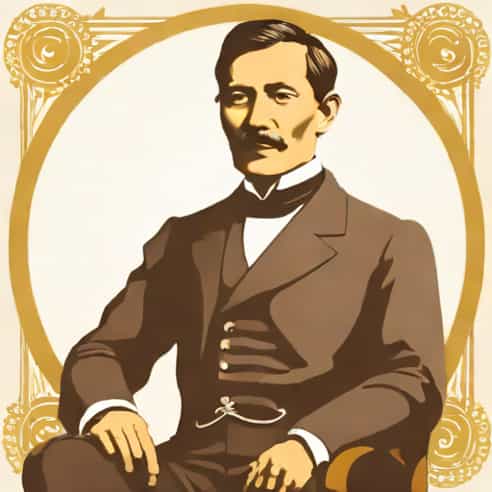
History is often filled with fascinating figures and empires, but sometimes connections are misunderstood or misrepresented. One such claim that occasionally surfaces is that Jose Rizal, the national hero of the Philippines, was part of the Carthaginian Empire. While this statement is historically inaccurate, exploring it provides an opportunity to better understand both Jose Rizal’s life and achievements as well as the historical context of the Carthaginian Empire. Misinterpretations like these highlight the importance of accurate historical knowledge and how timelines, geography, and cultural identity can sometimes become confused in casual discussions.
Who Was Jose Rizal?
Jose Rizal was a Filipino nationalist, writer, and polymath born on June 19, 1861, in Calamba, Laguna, Philippines. He is widely regarded as the national hero of the Philippines because of his role in inspiring the movement for Philippine independence from Spanish colonial rule. Rizal was a remarkable individual whose talents spanned medicine, literature, linguistics, and political activism. He wrote novels such as Noli Me Tangere and El Filibusterismo, which exposed the social injustices of Spanish rule and encouraged the Filipino people to seek reform and eventually independence.
Rizal’s Contributions to Philippine Society
Rizal’s influence extended far beyond his writings. He was an advocate for peaceful reform rather than violent revolution, believing in education and civic engagement as tools for change. His extensive travels in Europe, interactions with intellectuals, and multilingual abilities made him a global thinker who was deeply aware of social and political issues. Ultimately, Rizal was executed by the Spanish colonial government on December 30, 1896, an event that further solidified his status as a symbol of Filipino nationalism.
Understanding the Carthaginian Empire
The Carthaginian Empire was an ancient civilization located in North Africa, centered around the city of Carthage, in present-day Tunisia. The empire was most powerful between the 6th and 3rd centuries BCE and was known for its maritime trade, extensive colonies in the Mediterranean, and military conflicts with the Roman Republic, particularly the Punic Wars. The most famous Carthaginian general, Hannibal, is remembered for his audacious crossing of the Alps with elephants to attack Rome. Carthage was eventually defeated by Rome in 146 BCE, long before Jose Rizal was born.
Geography and Timeline of Carthage
Carthage was located on the coast of North Africa, near modern-day Tunis. Its influence extended to parts of Sicily, Sardinia, and the Iberian Peninsula. The empire existed over two thousand years before Rizal’s time, making it impossible for him to have been part of Carthage in any historical sense. The Carthaginian Empire was characterized by its Phoenician heritage, a polytheistic religion, and a political system based on oligarchic and merchant-based governance.
Why the Claim Is Incorrect
The statement that Jose Rizal was part of the Carthaginian Empire is a chronological and geographical impossibility. Rizal was born in the 19th century in the Philippines, a Southeast Asian archipelago, while the Carthaginian Empire existed over two millennia earlier in North Africa. There is no historical evidence linking Rizal or his family to Carthage. Misunderstandings of this nature may arise from confusion about the word Caribbean versus Carthaginian, mistaken genealogical claims, or the desire to connect famous historical figures with well-known ancient civilizations.
Common Misconceptions
- Some people confuse the Carthaginian Empire with other Mediterranean civilizations, such as Rome or Greece.
- Rizal’s travels in Europe may lead to assumptions about connections to other regions, though he never visited North Africa in the context of Carthage.
- The similarity of the words Carthaginian and Caribbean can occasionally result in misstatements, especially in casual conversation or online discussions.
Jose Rizal and Cultural Identity
Understanding Rizal’s true historical and cultural context highlights why such claims are misleading. Rizal’s identity was rooted in Filipino culture and Spanish colonial history. His advocacy was centered on the Filipino people’s struggles under Spanish rule, and his legacy is tied to Southeast Asian history rather than Mediterranean civilizations. Rizal’s works, travels, and personal connections reflect a commitment to the Philippines, education, and reform.
The Importance of Accurate Historical Context
It is important to appreciate the historical accuracy of Rizal’s life to honor his true contributions. Associating him with the Carthaginian Empire not only distorts history but also diminishes the understanding of his role in the Philippines’ struggle for independence. By placing historical figures within their correct contexts, we can better learn from their experiences and understand the broader social, cultural, and political implications of their lives.
Lessons from Misinterpretations
Claims like Jose Rizal was part of the Carthaginian Empire illustrate the importance of critical thinking and historical literacy. Misinterpretations often spread due to internet misinformation, casual storytelling, or lack of reliable sources. Educators and history enthusiasts emphasize cross-referencing facts, understanding timelines, and considering geographical realities before making or accepting such statements. Learning the correct timelines, including the 19th century for Rizal and the 3rd century BCE for Carthage, helps clarify the impossibility of the claim.
How to Approach Historical Claims
- Verify the dates of historical figures and empires to ensure chronological consistency.
- Check primary sources or reputable historical references.
- Understand the geography and cultural context of each person or civilization.
- Be cautious of claims that link unrelated historical periods or locations.
Jose Rizal was a Filipino nationalist, writer, and reformist who lived in the 19th century, while the Carthaginian Empire existed over two thousand years prior in North Africa. Any claim that Rizal was part of the Carthaginian Empire is historically inaccurate and likely arises from misunderstandings or linguistic confusion. Rizal’s true legacy lies in his dedication to education, social reform, and the independence of the Philippines from Spanish colonial rule. By examining both Rizal’s life and the history of the Carthaginian Empire, it becomes clear that historical accuracy is essential to preserving the integrity of our understanding of past events and remarkable figures. Appreciating the proper context of history allows us to celebrate Rizal for his true contributions while avoiding misconceptions that distort historical knowledge.