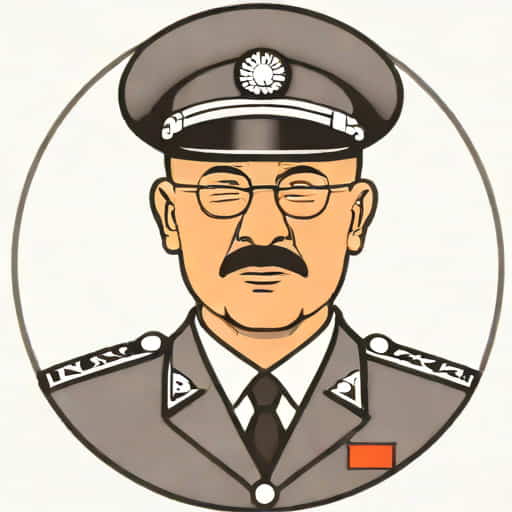
Felix Kersten, often referred to in French as le masseur de Himmler, was a Finnishborn physical therapist who became historically notable for serving as the personal masseur and physical doctor to Heinrich Himmler, one of the most powerful leaders of Nazi Germany. This role placed him in close daily contact with the head of the SS during World War II, a figure directly responsible for vast atrocities, including the Holocaust. Kersten’s story is remarkable because he claimed to have used his unique position not merely to treat a highranking Nazi official but to influence Himmler’s decisions in ways that saved many lives during one of history’s darkest chapters. His life and actions continue to provoke discussion among historians, raising questions about morality, wartime complicity, and the influence one person can have when placed at the heart of a brutal regime.
Who Was Felix Kersten?
Felix Kersten was born in 1898 in what is now Estonia. He later acquired Finnish citizenship and trained in physical therapy in Helsinki before advancing his studies in Berlin under a wellknown therapeutic masseur. His skills in massage and physical therapy became highly respected among European elites long before the Second World War began. Through his technique, he was reputed to relieve pain and ailments that others could not, and his reputation grew among aristocrats, industrialists, and influential political figures.
Meeting Heinrich Himmler
In 1939, Kersten was introduced to Heinrich Himmler, the ReichsführerSS, partly through mutual connections. Himmler suffered from chronic stomach pains that conventional medicine failed to alleviate. Kersten’s treatment appeared to provide relief, and Himmler soon became dependent on him for regular therapy. Although Kersten initially resisted becoming Himmler’s personal physician, the choice was ultimately made for him, and he accepted the position.
The Role of the Masseur in Nazi Germany
Being the personal masseur of one of the most ruthless leaders of the Nazi regime placed Kersten in an extraordinary, if morally complex, position. Heinreich Himmler was the architect of many of the regime’s darkest policies, overseeing the SS, the Gestapo, and the operation of concentration camps that executed millions.
An Influential but Dangerous Position
Kersten’s proximity to Himmler was unique. Through his therapy sessions, he became one of the few individuals who regularly saw-if not deeply understood-the private side of a man responsible for unimaginable suffering. Some historical accounts suggest that his influence may have extended beyond physical treatment into moments of negotiation, when he used Himmler’s gratitude to intervene in matters that affected prisoners and captives of the Nazi state.
Claims of Saving Lives
One of the most notable aspects of Kersten’s legacy is the claim that he used his relationship with Himmler to secure the release of large numbers of prisoners. According to various postwar accounts, Kersten would make conditional requests during treatment sessions, asking Himmler to authorize the freedom of individuals or groups in exchange for his services. Reports vary, but some historians and organizations have estimated that Kersten’s efforts may have contributed to saving tens of thousands of lives that otherwise would have been lost in concentration camps or through executions.
Examples of Humanitarian Interventions
- Kersten negotiated the release of political prisoners and forced laborers.
- He intervened in the cases of prisoners destined for concentration camps, securing their freedom in some instances.
- Late in the war, as Nazi Germany was collapsing, he reportedly influenced decisions affecting large groups of prisoners-some estimates suggest releases of thousands at a time.
Controversy and Historical Debate
Despite these claims, Kersten’s story is not without controversy. Some scholars question the extent of his influence and whether all of his claims were fully accurate. Critics argue that certain memoirs and accounts may have been embellished, and there is ongoing historical debate over how much Kersten’s presence genuinely changed Himmler’s policies or saved lives. Nevertheless, there is evidence that Kersten’s role provided him with opportunities unavailable to most people under the Nazi regime, and some governments honored him after the war for his humanitarian efforts.
PostWar Recognition and Defense
After World War II, Kersten faced accusations of collaboration because of his work with Himmler. However, he spent considerable effort defending himself against these charges and highlighting the lives he claimed to have saved. Governments in several European countries later recognized his wartime actions, with honors awarded for his alleged humanitarian contributions. These recognitions reflected the complex perception of Kersten’s legacy-simultaneously involving proximity to a major Nazi leader and efforts to mitigate the suffering caused by the regime.
Understanding the Context
To understand the significance of Kersten’s story, it is important to recognize the broader context of Nazi Germany during World War II. Heinrich Himmler was one of the most powerful figures in the regime, overseeing institutions and policies responsible for systematic genocide and widespread atrocities across Europe. His position gave him control over police forces, concentration camps, and vast bureaucratic systems that facilitated mass murder. That someone like Kersten could exist within this framework-using his personal skills to potentially influence decisions in favor of prisoners-is striking precisely because of how rigid, brutal, and uncompromising the Nazi hierarchy was.
The Moral Ambiguities
Kersten’s story raises difficult questions about moral choices in extreme circumstances. Should his willingness to engage with a figure like Himmler be seen as a form of collaboration, or as a strategic compromise to achieve humanitarian outcomes? Historians and ethicists often point to the complexity of such situations, noting that individuals in times of war may make choices that blur the lines between complicity and resistance. Whatever the interpretation, Kersten’s actions highlight the tensions between individual agency and the oppressive conditions of totalitarian systems.
The Legacy of Le Masseur de Himmler
Felix Kersten died in 1960, still remembered by some as an enigmatic healer who stood at the crossroads of privilege and peril. His life story continues to inspire debate among historians, moral philosophers, and students of World War II. Whether viewed as a humanitarian, a controversial figure, or a complex individual whose actions defy simple categorization, Kersten’s legacy is inseparable from one of the most tumultuous periods of modern history.
Reflections on History
The story of the masseur of Himmler reminds us that history is often shaped by individuals whose actions resist easy classification. Kersten’s proximity to a powerful and ruthless leader, combined with his claims of saving lives, presents a narrative that prompts reflection on human agency, moral compromise, and the capacity for good within systems designed for evil. As such, his life remains a subject of both admiration and scrutiny, reflecting the enduring complexity of World War II history.