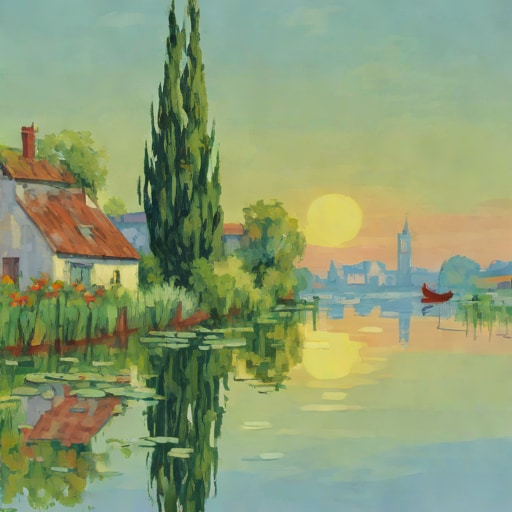
Claude Monet, a central figure in the Impressionist movement, is celebrated for his ability to capture light, color, and atmosphere in his paintings. His works continue to influence modern art and remain widely admired for their beauty and technical innovation. Monet’s approach to painting emphasized the effects of light on natural landscapes and urban scenes, often depicting the same subject at different times of day or in varying weather conditions. By focusing on perception rather than precise detail, Monet revolutionized the way artists approached composition and color. His famous paintings showcase the harmony between nature and artistic expression, making him one of the most renowned painters in history. This topic explores some of Claude Monet’s most famous paintings, their significance, and the impact they have had on art and culture.
Impression, Sunrise
One of Monet’s most iconic works is Impression, Sunrise, painted in 1872. This painting is particularly significant because it inspired the name of the Impressionist movement. Depicting the port of Le Havre at sunrise, the painting captures the vibrant reflections of light on water and the atmospheric haze of early morning. Monet’s loose brushstrokes and emphasis on light rather than detailed forms exemplify the core principles of Impressionism. The painting conveys a sense of movement and immediacy, encouraging viewers to experience the scene as it might appear in real life rather than as a meticulously crafted image.
Significance of Impression, Sunrise
- Symbolizes the birth of the Impressionist movement.
- Focuses on the effects of light and atmosphere rather than detailed realism.
- Demonstrates Monet’s innovative use of color and brushstroke technique.
- Encourages viewers to perceive the natural world in new and dynamic ways.
Water Lilies Series
Perhaps Monet’s most famous and extensive series of works is the Water Lilies paintings, created during the last thirty years of his life. Inspired by the gardens at his home in Giverny, these paintings depict the water lily ponds in various light conditions, times of day, and seasons. Monet’s focus on reflection, light, and color creates a meditative and immersive experience. The series demonstrates his mastery of capturing the ephemeral qualities of nature, with overlapping brushstrokes that blend water, foliage, and sky. The Water Lilies series has become synonymous with Monet’s legacy and continues to be celebrated in major art museums around the world.
Key Features of Water Lilies
- Explores the interplay of light, water, and color.
- Focuses on impressionistic techniques such as loose brushwork and color blending.
- Includes hundreds of variations, each reflecting different times and conditions.
- Creates a sense of tranquility and connection with nature.
Woman with a Parasol
Woman with a Parasol – Madame Monet and Her Son, painted in 1875, depicts Monet’s wife Camille and their son Jean on a windy summer’s day. The painting is celebrated for its dynamic composition and lively brushstrokes that convey movement in both the figures and the surrounding landscape. Monet’s use of color and light emphasizes the sunlit sky and the shadows cast by clouds, creating a vivid impression of an outdoor scene. This work exemplifies Monet’s interest in capturing transient moments and the effects of natural light on his subjects.
Importance of Woman with a Parasol
- Showcases Monet’s skill in portraying movement and wind effects.
- Highlights the use of color to depict light and shadow.
- Represents personal and intimate subjects, such as family members.
- Demonstrates Monet’s ongoing exploration of plein air painting techniques.
Rouen Cathedral Series
In the 1890s, Monet created a series of paintings depicting the facade of Rouen Cathedral at different times of day and under various lighting conditions. This series emphasizes the changing quality of light and its impact on color perception. Each painting in the series captures subtle variations in sunlight, shadow, and atmospheric effects, transforming the architectural structure into a study of light and color. The Rouen Cathedral series reflects Monet’s dedication to observation, meticulous planning, and experimentation with perception, further solidifying his status as a leading figure in Impressionism.
Highlights of Rouen Cathedral
- Explores the effects of light and atmosphere on architecture.
- Demonstrates Monet’s ability to depict the same subject with multiple variations.
- Captures the interplay of color, shadow, and reflection on stone surfaces.
- Shows Monet’s commitment to studying perception and the passage of time.
Haystacks Series
The Haystacks series, painted between 1890 and 1891, illustrates Monet’s fascination with seasonal changes and the effects of light on familiar landscapes. The series features rural haystacks at different times of day, weather conditions, and seasons, emphasizing the variations in color and light. By repeatedly painting the same subject, Monet was able to explore perception and the fleeting qualities of nature. The Haystacks series is considered a pivotal contribution to modern art, highlighting the shift from representational accuracy to impressionistic interpretation.
Significance of the Haystacks Series
- Examines light, shadow, and seasonal changes on a single subject.
- Demonstrates Monet’s dedication to repetition and observation.
- Highlights impressionistic techniques such as broken brushwork and color variation.
- Influenced later developments in abstract and modern art.
The Japanese Bridge at Giverny
Monet’s fascination with Japanese culture and garden design is evident in his paintings of the Japanese bridge at his Giverny garden. Painted multiple times, these works capture the reflections of water, the lush vegetation, and the bridge itself, emphasizing color and light interplay. The Japanese Bridge paintings reflect Monet’s ongoing interest in creating harmonious compositions that merge architecture, flora, and water into a cohesive visual experience. These works remain emblematic of his late-career mastery of color and technique.
Features of the Japanese Bridge Paintings
- Depict water reflections and natural scenery with impressionistic brushwork.
- Showcase Monet’s interest in Japanese-inspired garden design.
- Explore the harmony between man-made structures and natural surroundings.
- Emphasize color, light, and perspective in a balanced composition.
Legacy of Claude Monet’s Famous Paintings
Claude Monet’s famous paintings have left an indelible mark on art history, inspiring generations of artists and redefining visual perception. His works demonstrate that light, color, and atmosphere can be as important as line and form in conveying beauty and emotion. Monet’s dedication to observing nature and capturing fleeting moments continues to influence Impressionism, Post-Impressionism, and modern art. Museums around the world, including the Musée d’Orsay in Paris and the Metropolitan Museum of Art in New York, house his masterpieces, allowing audiences to experience the innovation and brilliance of Monet’s vision firsthand.
Impact on Modern Art
- Established new standards for capturing light and atmosphere in painting.
- Encouraged artists to experiment with color, brushstroke, and perspective.
- Influenced later movements, including abstract art and color theory studies.
- Contributed to the global appreciation of Impressionism as a revolutionary artistic style.
Claude Monet’s famous paintings, including Impression, Sunrise, Water Lilies, Woman with a Parasol, the Rouen Cathedral series, Haystacks, and the Japanese Bridge works, represent the pinnacle of Impressionist achievement. Each painting highlights his revolutionary approach to capturing light, color, and atmosphere, demonstrating how ordinary subjects can be transformed through observation and artistic technique. Monet’s legacy endures through his influence on modern art and the continued admiration of audiences worldwide. His paintings not only depict scenes of beauty but also invite viewers to engage with the transient qualities of nature, making Claude Monet one of the most celebrated and enduring figures in art history.