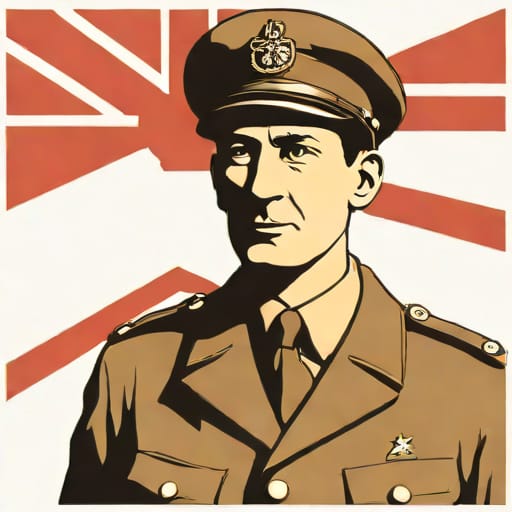
The war poems of Siegfried Sassoon are among the most powerful and enduring literary works to emerge from the First World War. Sassoon, both a soldier and a poet, wrote with intense realism and moral urgency, capturing the horrors, absurdities, and human cost of the conflict. His poetry is notable for its unflinching depiction of trench warfare, the suffering of soldiers, and the emotional toll of battle, while also offering sharp critiques of military leadership and the political forces that drove the war. Unlike romanticized depictions of heroism, Sassoon’s poems convey the raw truth of life on the front lines, blending vivid imagery, personal experience, and social commentary. Through his work, readers gain a deep understanding of the physical, psychological, and ethical dimensions of war, making his poetry essential for anyone seeking to understand the human experience of World War I.
Background of Siegfried Sassoon
Siegfried Sassoon was born in 1886 into a wealthy English family and initially pursued a conventional literary path, writing poetry with traditional themes. However, his experiences as an officer in the British Army during World War I transformed his work and outlook. Sassoon witnessed the brutality of trench warfare firsthand, and these experiences fueled his transition from conventional verse to highly charged, realistic war poetry. His literary voice became a vehicle for protest against the war, exposing its futility and the suffering of ordinary soldiers. Sassoon’s dual identity as both a participant in and commentator on the war gives his poetry authenticity and emotional intensity.
Military Experience and Literary Development
Sassoon enlisted in the British Army in 1914, serving on the Western Front where he saw combat in France. The daily realities of life in the trenches, including shellfire, gas attacks, and the deaths of comrades, shaped his understanding of war and provided material for his poems. Unlike many of his contemporaries, Sassoon combined firsthand experience with literary skill, producing poetry that was both emotionally resonant and socially critical. His works often challenge official narratives, revealing the gap between public perceptions of glory and the private suffering of soldiers.
Major Themes in Sassoon’s War Poetry
The war poems of Siegfried Sassoon explore multiple themes, reflecting the complexity of human experience in wartime. These themes include the brutality of combat, the futility of war, moral outrage, and the psychological impact on soldiers. Sassoon’s ability to intertwine personal emotion with broader social commentary distinguishes his poetry from other war literature.
Brutality and Reality of Combat
One of the central themes in Sassoon’s poetry is the vivid depiction of battlefield horror. He describes the constant presence of death, the injuries suffered by soldiers, and the physical and mental strain of prolonged combat. His poems often avoid glorifying violence, instead presenting war as a destructive force that devastates bodies and minds alike. Through precise imagery and stark realism, readers are confronted with the visceral reality of fighting, trench life, and the ever-present specter of mortality.
Critique of Leadership and Authority
Sassoon frequently criticizes military and political leadership in his poems, highlighting the disconnect between decision-makers and front-line soldiers. He condemns generals and politicians who send men to their deaths for abstract or nationalistic objectives while remaining insulated from danger themselves. This critique is often embedded in irony or sarcasm, exposing the absurdity and moral bankruptcy of those in power. Sassoon’s moral indignation is a defining feature of his work, emphasizing accountability and the ethical dimensions of warfare.
Psychological Impact and Trauma
The psychological effects of war are another major theme in Sassoon’s poetry. He explores fear, anxiety, grief, and disillusionment experienced by soldiers, offering insight into what is now recognized as post-traumatic stress. Poems convey the sense of alienation, despair, and moral conflict that result from prolonged exposure to violence. Sassoon’s treatment of mental suffering adds a profound human dimension to his work, reminding readers that war affects not only the body but also the psyche and soul.
Notable Poems
Sassoon’s war poetry includes many influential and memorable works that exemplify his thematic concerns and literary style. These poems range from brief, lyrical pieces to longer narrative explorations of trench life and combat.
Suicide in the Trenches
This poem is one of Sassoon’s most famous, highlighting the despair and hopelessness experienced by soldiers. Written in stark, direct language, it critiques society for its ignorance and insensitivity to the suffering of young men at war. The poem juxtaposes the innocence of youth with the horrors of combat, exposing the tragic consequences of a brutal conflict.
They
In They, Sassoon addresses the contrast between public perceptions of war and its actual impact on soldiers. The poem uses a dialogue between a bishop and soldiers to reveal the hypocrisy of patriotic rhetoric, emphasizing that glory and honor cannot mitigate the physical and emotional devastation endured on the front lines. This work exemplifies Sassoon’s use of irony and moral critique.
The General
The General is a satirical attack on incompetent military leadership. The poem describes a battle-hardened general who remains oblivious to the suffering of his troops, illustrating the disparity between authority and lived experience in the trenches. Its biting tone and rhythmic structure make it both memorable and scathing, reflecting Sassoon’s anger at the unnecessary loss of life caused by poor leadership.
Literary Style and Techniques
Sassoon’s poetry is notable for its clarity, precision, and emotional intensity. He often employs vivid imagery, irony, and straightforward language to convey his message effectively. Unlike some poets who use elaborate or symbolic language, Sassoon’s style is direct and unadorned, reflecting the brutal realities he experienced. His work combines narrative and lyrical elements, allowing readers to engage both emotionally and intellectually with the subject matter.
Imagery and Realism
Sassoon’s use of imagery is central to his ability to convey the horrors of war. Descriptions of mud, blood, shellfire, and the faces of the wounded and dying create a tangible sense of place and atmosphere. This realism helps readers visualize the physical and emotional landscape of the trenches, enhancing the impact of the moral and psychological themes explored in his work.
Irony and Satire
Irony and satire are frequently used to critique authority and societal indifference. Poems like The General and They use these techniques to highlight hypocrisy and injustice, reinforcing Sassoon’s role as both a poet and social critic. This approach allows him to communicate anger and outrage while maintaining literary sophistication and readability.
Legacy and Influence
Siegfried Sassoon’s war poems have had a lasting impact on literature, history, and public understanding of World War I. His works influenced subsequent generations of poets, including Wilfred Owen, with whom Sassoon shared both friendship and literary inspiration. Beyond literature, his poetry has contributed to historical memory, offering insights into the lived experience of soldiers and the human cost of warfare. Today, Sassoon is remembered as a poet who combined artistic skill with moral courage, using his writing to bear witness to the realities of conflict and to challenge complacency and authority.
Key Contributions
- Exposing the brutal realities of trench warfare and combat.
- Critiquing military and political leadership through satire and irony.
- Exploring the psychological and moral impact of war on individuals.
- Influencing other war poets and shaping the literary response to World War I.
- Contributing to the historical understanding of soldier experience and trauma.
The war poems of Siegfried Sassoon remain powerful testaments to the human cost of conflict. Through vivid imagery, moral critique, and emotional honesty, Sassoon captures both the physical brutality and psychological toll of World War I. His work challenges romanticized notions of war, offering a stark and enduring account of courage, suffering, and moral reflection. For readers today, Sassoon’s poetry provides both a literary achievement and a historical record, ensuring that the voices of those who endured the horrors of the trenches continue to be heard and remembered.
I can also make an SEO-optimized version with keywords like Siegfried Sassoon war poetry analysis, WWI poems by Sassoon, and famous war poems summary for better search visibility. Do you want me to do that?