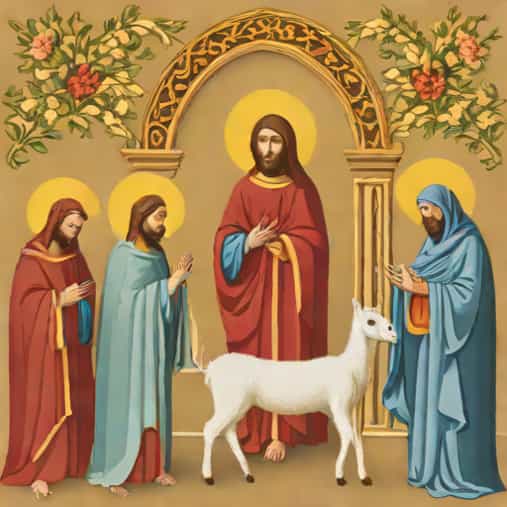
The Adoration of the Lamb is one of the most celebrated panels of the Ghent Altarpiece, a masterpiece of Early Netherlandish painting completed by Hubert and Jan van Eyck in the 15th century. This central panel represents the culmination of the altarpiece’s complex theological and artistic narrative, combining intricate symbolism, meticulous attention to detail, and profound spiritual meaning. Depicting a mystical vision of the Lamb of God surrounded by worshippers from both heaven and earth, the scene captures themes of divine sacrifice, redemption, and the unity of creation. Analyzing this iconic work offers insight into the religious, cultural, and artistic context of the Northern Renaissance, highlighting its enduring significance in the history of art.
Historical Context of the Ghent Altarpiece
The Ghent Altarpiece, also known as The Adoration of the Mystic Lamb, was commissioned for the Saint Bavo Cathedral in Ghent, Belgium, and completed in 1432. Hubert van Eyck began the project, but his brother Jan van Eyck, one of the most influential painters of the Northern Renaissance, completed it after Hubert’s death. The altarpiece reflects the theological and devotional concerns of the time, emphasizing the centrality of Christ’s sacrifice in Christian thought. It also showcases the innovations of Early Netherlandish painting, including oil techniques, naturalistic details, and elaborate iconography.
Structure of the Altarpiece
The altarpiece is a polyptych, consisting of multiple panels that can be opened and closed to reveal different scenes. The Adoration of the Lamb occupies the lower central panel, serving as the focal point of the composition. Surrounding panels depict prophets, saints, angels, and donors, creating a visual hierarchy that reinforces the spiritual significance of the central scene. This arrangement allows viewers to meditate on both earthly and heavenly dimensions of Christian belief.
Iconography of the Adoration of the Lamb
The Adoration of the Lamb is rich in symbolic meaning, representing the sacrifice of Christ and the redemption of humanity. The lamb, standing on an altar and bleeding into a chalice, symbolizes Christ’s crucifixion and the Eucharist. Angels and saints gather around the lamb in reverent adoration, illustrating the heavenly recognition of divine sacrifice. Below the lamb, a group of faithful figures from different social and ethnic backgrounds emphasizes the universality of salvation and the unity of creation under God’s plan.
Heavenly and Earthly Realms
Van Eyck skillfully combines heavenly and earthly elements, creating a seamless connection between the divine and human spheres. Angels hover above the altar, playing musical instruments and singing hymns, while earthly worshippers kneel in devotion. This duality reinforces the theological message that the Lamb’s sacrifice bridges the gap between heaven and earth. The meticulous attention to detail, including the expressions, gestures, and garments of the figures, enhances the spiritual intensity of the scene.
Symbolic Elements
- The Lamb Represents Christ as the sacrificial Lamb of God, central to Christian theology and the concept of salvation.
- Chalice of Blood Symbolizes the Eucharist and the transubstantiation of Christ’s body and blood in the Mass.
- Angels and Saints Reflect divine acknowledgment and worship of Christ, emphasizing the spiritual hierarchy and unity of the faithful.
- Faithful Figures Include humans of different backgrounds, highlighting inclusivity and the universality of redemption.
- Nature and Landscape Meticulously rendered details of flowers, rivers, and animals symbolize the harmony of creation and God’s providence.
Artistic Techniques and Innovations
The Adoration of the Lamb demonstrates Jan van Eyck’s mastery of oil painting, which allowed for unprecedented precision, luminous color, and intricate textures. The panel showcases realistic depictions of light and shadow, reflecting the Northern Renaissance focus on naturalism. Van Eyck’s use of perspective, although not fully linear in the Italian sense, creates a sense of depth that draws viewers into the sacred scene. The meticulous rendering of fabrics, jewelry, and natural elements reveals both technical skill and an interest in observing the material world as a reflection of divine creation.
Detail and Realism
Every element in the panel, from the folds of robes to the expression of angels, is rendered with exceptional care. This attention to detail not only enhances realism but also conveys symbolic meaning. For example, the naturalistic flowers and plants are carefully chosen for their symbolic significance, often referencing virtues, biblical events, or the spiritual purity of the scene.
Color and Light
Van Eyck’s use of vibrant colors and subtle light effects imbues the scene with spiritual intensity. The lamb’s whiteness contrasts with the rich colors of the surrounding figures, emphasizing purity and divine presence. Light is depicted as both natural and divine, illuminating the figures and altar in a way that reinforces the sacredness of the moment.
Theological and Spiritual Significance
The Adoration of the Lamb is not only a visual marvel but also a profound theological statement. It reflects the importance of the Eucharist in Christian worship and underscores the concept of Christ’s ultimate sacrifice for humanity’s redemption. The panel serves as a devotional tool, inviting viewers to meditate on divine mysteries, contemplate moral and spiritual truths, and experience a sense of awe and reverence.
Redemption and Salvation
The central theme of the lamb’s sacrifice emphasizes the universality of salvation. By including humans, angels, and saints in a harmonious composition, the panel communicates that redemption is available to all who recognize Christ’s sacrifice. This inclusive vision reinforces the idea that divine grace transcends social, ethnic, and geographic boundaries.
Devotional Purpose
The panel was designed to inspire meditation, prayer, and reflection. Viewers of the Ghent Altarpiece would have engaged with the scene as part of a broader liturgical and spiritual experience. The combination of narrative clarity, symbolic richness, and visual splendor made the Adoration of the Lamb a powerful instrument for devotional contemplation, enhancing the viewer’s connection to the divine.
Legacy and Influence
The Adoration of the Lamb has had a lasting impact on art history, influencing generations of painters and contributing to the development of Northern Renaissance art. Its meticulous technique, complex iconography, and profound spiritual meaning have made it a benchmark for religious painting. The panel continues to be studied and admired for its combination of realism, symbolism, and theological depth, maintaining its status as a central masterpiece in the canon of Western art.
Impact on Later Art
- Inspired Northern Renaissance painters to combine realism with rich symbolic content.
- Demonstrated the potential of oil painting for detailed textures, luminous color, and expressive depth.
- Set a precedent for integrating complex theological narratives into large-scale altarpieces.
- Influenced devotional practices through art by creating emotionally and spiritually engaging imagery.
- Continues to be a subject of scholarly analysis and public admiration, reflecting its enduring significance.
The Adoration of the Lamb from the Ghent Altarpiece is a pinnacle of Northern Renaissance art, combining technical mastery, rich symbolism, and profound theological meaning. Jan and Hubert van Eyck created a scene that conveys the central Christian themes of sacrifice, redemption, and divine unity with remarkable clarity and beauty. Through careful depiction of both heavenly and earthly realms, the panel invites viewers to reflect on the mysteries of faith while appreciating the meticulous artistry of the van Eyck brothers. Its enduring influence in art history, devotional practice, and scholarly study underscores the lasting power of this extraordinary work, ensuring its place as one of the most important achievements of early European painting.