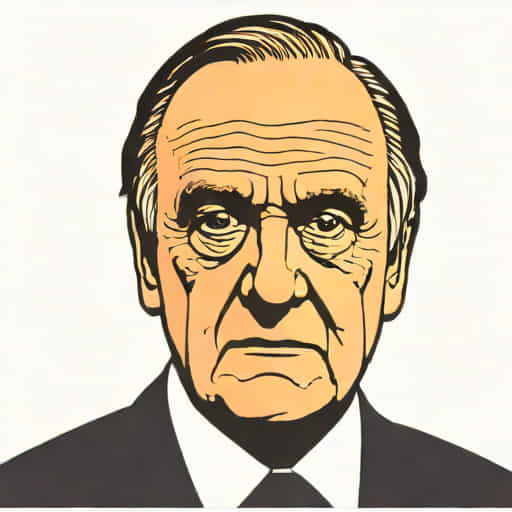
Bruno Ganz was a Swiss actor whose portrayal of complex and intense characters earned him international recognition and admiration, particularly for his performance in the 2004 film Downfall (original German title Der Untergang). Ganz’s depiction of Adolf Hitler in the final days of World War II became one of the most memorable roles of his long career, capturing both historical nuance and raw emotional power. While the movie Downfall itself focuses on the collapse of Nazi Germany and the chaos in Hitler’s bunker, discussions about Bruno Ganz’s career often reflect on how this powerful performance shaped public perception of him as an actor and his lasting legacy in cinema and theatre. His nuanced portrayal elevated Downfall into a critical and cultural touchstone, and it remains a major part of his body of work.
Bruno Ganz Early Life and Career Beginnings
Bruno Ganz was born on March 22, 1941, in Zurich, Switzerland, to a Swiss father and an Italian mother. He began his acting career in the early 1960s with roles on stage, gradually building a reputation for versatility and depth. Ganz worked extensively in Germanlanguage theatre and film, collaborating with influential directors and performing in both classic and modern plays. He appeared in numerous productions of Shakespeare, Ibsen, and Brecht, among others, showcasing a wide range that would later serve him well in film roles. Over nearly six decades, he appeared in more than 80 films and television productions, earning respect from critics and audiences alike.
A Versatile Performer
Before his iconic role in Downfall, Ganz appeared in a number of notable films that demonstrated his range. In Werner Herzog’s Nosferatu the Vampyre (1979), he played Jonathan Harker opposite Klaus Kinski’s vampire, while in Wim Wenders’ Wings of Desire (1987), he portrayed an angel longing to experience human life. These roles, among others, highlighted Ganz’s ability to inhabit deeply human characters with sensitivity and emotional resonance.
Downfall A Pivotal Role
Released in 2004 and directed by Oliver Hirschbiegel, Downfall depicts the final weeks of Adolf Hitler’s life in his Berlin bunker as the Third Reich collapses under the advance of Allied forces. Bruno Ganz’s performance as Hitler is widely regarded as one of the most powerful and disturbing portrayals of the dictator on screen. Ganz brought a carefully researched physical and emotional intensity to the role, portraying Hitler not as a caricature, but as a deeply flawed, frightened, and volatile human being.
Critical Acclaim and Cultural Impact
Though not without controversy, Ganz’s portrayal received praise from critics who noted his ability to balance historical accuracy with dramatic depth. Downfall was nominated for Best Foreign Language Film at the Academy Awards, and Ganz’s performance became a defining highlight of the movie. In the years following its release, the infamous bunker scene in which Hitler lashes out at his generals became widely shared on the internet with humorous captioned subtitles unrelated to World War II, turning portions of the performance into cultural memes. This phenomenon, while not planned by the filmmakers, contributed to the film’s presence in global pop culture.
Challenges and Discussions Around the Role
Playing a historical figure like Adolf Hitler posed particular challenges for Ganz, both as an artist and in terms of public reception. Some critics argued that humanizing Hitler could be problematic or insensitive, while others praised the portrayal for exposing the psychological unraveling of a dictator in his final moments. Ganz himself spoke about the complexity of portraying such a figure, emphasizing that deep research and understanding of historical context were necessary to avoid glorification or oversimplification.
Balancing Art and History
The film Downfall was set during a critical moment in world history, depicting the collapse of the Nazi government and the devastation of Germany at the end of World War II. Ganz’s Hitler is shown as increasingly isolated, desperate, and unhinged, which reinforced the historical narrative of downfall and defeat rather than empowerment. The emotional weight of the role required him to explore themes of power, desperation, and human frailty, making his performance both challenging and unforgettable.
Legacy Beyond Downfall
While Downfall brought Bruno Ganz international fame, his career encompassed a broad spectrum of artistic achievements. In addition to his acclaimed film work, Ganz remained active in theatre and continued to take on diverse roles throughout his career. He appeared in Englishlanguage films such as The Reader (2008) and The Manchurian Candidate (2004), showcasing his ability to cross cultural and linguistic barriers as an actor.
A Career of Depth and Variety
Other notable performances in Ganz’s career included roles in The Boys from Brazil (1978) and later films like The House That Jack Built (2018), in which he played Sigmund Freud. His work earned him numerous accolades, including prestigious awards and honors recognizing his contributions to the performing arts. His dedication to complex character portrayals and willingness to explore emotionally difficult roles solidified his reputation as one of the most respected actors of his generation.
Later Years and Death
In the final years of his life, Bruno Ganz continued working up until his health declined. In early 2018, he was diagnosed with colon cancer and began treatment. He died at his home in Zurich on February 16, 2019, at the age of 77. His death was widely mourned by colleagues, fans, and the film community around the world. Tributes highlighted not only his memorable performance in Downfall, but also his extensive contributions to theatre and film over nearly six decades.
Remembering a Versatile Artist
Bruno Ganz’s legacy continues to inspire actors and audiences alike. His work in Downfall remains a defining moment in cinematic history, but it is just one part of a rich and varied career. From angelic figures to historical leaders, Ganz’s ability to bring humanity to complex characters has left a lasting impact on global cinema. His dedication to his craft and his willingness to tackle challenging roles ensured that his performances resonated long after the credits rolled.
Bruno Ganz’s performance in Downfall and his broader career reflect the depth of his talent and the enduring legacy he has left on the film and theatre world. While Downfall brought him international acclaim and a form of cultural immortality through both serious appraisal and internet memes, it was his broader body of work that defined his contribution to acting. Ganz is remembered not only for his portrayal of one of history’s most infamous figures, but also for his rich repertoire of characters that captured the imagination and admiration of audiences around the world. His work stands as a testament to the power of committed performance and continues to be studied and appreciated by film lovers and performers alike.