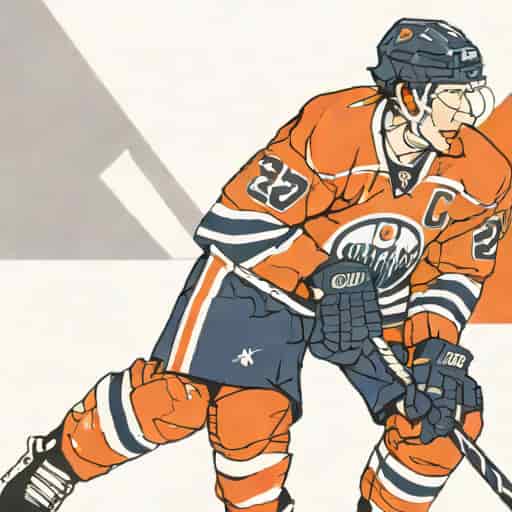
Connor McDavid, widely regarded as one of the best hockey players in the world, has become a household name in the National Hockey League (NHL) due to his speed, skill, and offensive talent. While McDavid is celebrated for his scoring and playmaking abilities, like any player in professional hockey, he has occasionally been involved in penalties, including the infraction known as a crosscheck. A crosscheck occurs when a player uses the shaft of their stick with both hands to forcefully hit an opponent, which is against the rules and can result in minor, major, or misconduct penalties. Understanding Connor McDavid’s involvement in crosschecks, the rules surrounding this penalty, and its implications helps fans better appreciate the nuances of the game and the challenges even elite players face on the ice.
What Is a Crosscheck in Hockey?
A crosscheck in hockey is a specific type of penalty defined by the NHL rules. It happens when a player uses the two-handed shaft of their stick to check an opponent illegally. Unlike body checks or shoulder checks, a crosscheck involves contact with the stick, and the force and location of the contact determine the severity of the penalty. Crosschecking is considered dangerous as it can cause injury to the opponent, particularly when directed at the upper body, neck, or head.
Minor, Major, and Misconduct Penalties
The severity of a crosscheck penalty depends on the intent, force, and result of the contact. A minor penalty usually results in a two-minute penalty, allowing the opposing team to play with a one-man advantage. A major penalty, often assessed for more forceful or reckless crosschecks, results in a five-minute penalty and can have a significant impact on the outcome of a game. Misconduct penalties may also be assessed if the crosscheck is deemed excessively aggressive or unsportsmanlike. In rare cases, crosschecks causing injury may lead to supplementary discipline, including fines or suspensions.
Connor McDavid and Crosscheck Penalties
Connor McDavid is known for his finesse, speed, and ability to avoid contact when possible, which has allowed him to stay relatively clean in terms of penalties. However, as with all NHL players, there have been moments in his career where he has been assessed a crosscheck penalty. These instances are notable because McDavid is not typically an aggressive or overly physical player, which makes any crosscheck involving him stand out in games and highlights.
High-Profile Incidents
Some crosscheck penalties involving Connor McDavid have gained attention in sports media due to their timing or context. For example, crosschecks that occur during high-stakes games, playoff matches, or when McDavid is engaged with a physical opponent can spark discussions among fans and analysts. These incidents are often reviewed in replays to determine whether the contact was incidental, a result of competitive play, or a clear violation deserving of penalty enforcement.
Impact on the Game
While a crosscheck penalty may seem minor in isolation, it can influence the momentum of a game. When McDavid, a key offensive player, is sent to the penalty box, his team loses a valuable scoring threat, and the opposing team gains a power-play opportunity. This dynamic underscores how even the most skilled players must balance aggression with discipline, especially in critical situations where a crosscheck could shift the game’s outcome.
Rules and Enforcement
The NHL has clear rules for crosschecking, and referees are trained to assess these penalties with consistency. The rulebook specifies the types of contact that constitute a crosscheck, the allowable level of force, and the circumstances under which additional discipline may be applied. Video review and in-game judgment are also part of enforcing the rules, ensuring that penalties are fair and that players like Connor McDavid are held accountable when infractions occur.
Interpretation by Referees
Referees evaluate several factors when determining if a crosscheck penalty should be called. These include the point of contact, the force used, the result of the action, and whether the action was deliberate or incidental. In McDavid’s case, referees may consider his playing style, which tends to avoid unnecessary physicality, while still enforcing the rules when a crosscheck occurs. Understanding this interpretation helps fans see that penalties are not just arbitrary but based on established criteria.
Supplementary Discipline
When a crosscheck results in injury or is deemed particularly reckless, the NHL’s Department of Player Safety may issue supplementary discipline. This can include fines, game suspensions, or both. While Connor McDavid has rarely been the subject of severe disciplinary action for crosschecks, the potential consequences illustrate the seriousness of the penalty and the importance of maintaining safe play at the professional level.
Crosschecks in the Context of McDavid’s Career
Throughout Connor McDavid’s career, his ability to combine speed, agility, and skill has minimized his involvement in high-contact penalties like crosschecks. This approach aligns with his overall playing philosophy, which emphasizes evasion, precision, and strategic play rather than physical confrontation. As a result, crosscheck penalties are infrequent in his career statistics but remain a relevant part of discussions when they do occur.
Learning and Adaptation
Elite players like McDavid continuously adapt their style to avoid penalties and maintain effectiveness. Training focuses not only on skill development but also on understanding the rules, anticipating opponents’ actions, and avoiding unnecessary infractions. This approach helps minimize the risk of crosschecks and other penalties that could hinder team performance or result in disciplinary action.
Fan and Media Attention
When a crosscheck involving McDavid happens, it often becomes a talking point in sports media due to his prominence in the league. Analysts examine whether the penalty was justified, accidental, or a result of aggressive play by opponents. These discussions provide insights into the game’s physicality and highlight the challenges even elite athletes face in maintaining clean play.
Connor McDavid’s involvement in crosscheck penalties is relatively rare but significant when it occurs, highlighting the balance between competitive play and adherence to NHL rules. A crosscheck can impact the game, affect team strategy, and attract media attention, particularly when it involves a player of McDavid’s caliber. Understanding the rules, enforcement, and implications of crosschecks allows fans to appreciate the nuances of hockey and the skill required to play at the highest level. While McDavid’s speed and finesse often keep him clear of penalties, moments involving crosschecks serve as reminders of the physical demands of professional hockey and the importance of discipline and safe play on the ice.