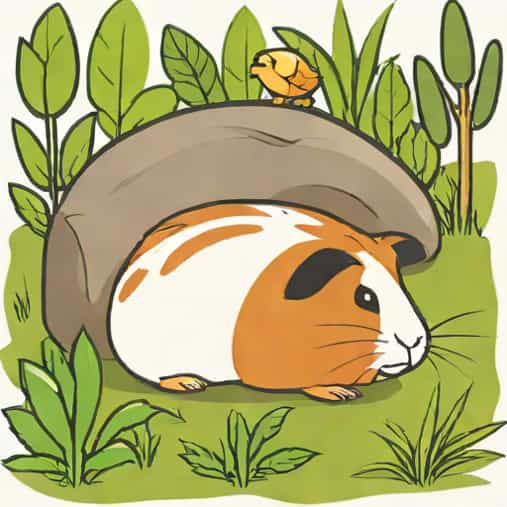
Guinea pigs are widely known as gentle, social pets that live comfortably in homes around the world. Many people associate them with cages, hay, and quiet squeaks rather than forests or open landscapes. This often leads to a common and interesting question do guinea pigs live in the wild? The answer is more nuanced than a simple yes or no. Understanding the natural history of guinea pigs helps explain how they evolved, where they came from, and why modern guinea pigs depend so heavily on humans for survival.
The Origins of Guinea Pigs
Guinea pigs, also known scientifically asCavia porcellus, originated in South America. Their ancestors lived in regions that include present-day Peru, Bolivia, Ecuador, and parts of Colombia. These areas offered a mix of grasslands, rocky terrain, and shrub-covered landscapes that suited small grazing animals.
Unlike many animals that exist in both wild and domesticated forms, guinea pigs are unique. The guinea pigs commonly kept as pets today do not exist naturally in the wild. Instead, they are fully domesticated animals that descended from wild relatives thousands of years ago.
Wild Relatives of Guinea Pigs
While domesticated guinea pigs do not live in the wild, several wild species closely related to them still do. These animals belong to the same genus,Cavia, and share many physical and behavioral traits.
Wild cavies are generally smaller, leaner, and more alert than pet guinea pigs. Their fur colors are usually brown, gray, or mottled, helping them blend into their surroundings and avoid predators.
Examples of Wild Cavies
- Cavia aperea, commonly found in grasslands and savannas
- Cavia tschudii, believed to be one of the main ancestors of domesticated guinea pigs
- Cavia fulgida, native to parts of Brazil
Do Domesticated Guinea Pigs Live in the Wild?
Domesticated guinea pigs do not naturally live in the wild. They have been bred by humans for thousands of years and lack many survival skills needed to thrive independently. Their calm temperament, slower reactions, and varied coat colors make them easy targets for predators.
If a pet guinea pig is released into the wild, its chances of survival are very low. It may struggle to find safe shelter, recognize predators, or locate appropriate food consistently.
How Domestication Changed Guinea Pigs
Domestication has significantly altered guinea pigs over time. Ancient civilizations in South America first domesticated them for food and cultural purposes. Selective breeding favored traits such as docility, larger size, and varied coat patterns.
As a result, modern guinea pigs differ from their wild relatives in several key ways. These changes explain why they are no longer suited for wild living.
Key Differences Between Wild and Domesticated Guinea Pigs
- Reduced ability to escape predators
- Greater dependence on constant food sources
- Less effective camouflage
- More social reliance on stable groups
Natural Habitats of Wild Cavies
Wild cavies live in environments that provide both food and protection. They typically inhabit open areas with dense ground cover, such as tall grasses or low shrubs. These environments allow them to graze while staying hidden from predators.
Rather than digging complex burrows, wild cavies often use existing shelters. These may include rock crevices, abandoned burrows from other animals, or thick vegetation.
Diet in the Wild
In the wild, guinea pig relatives are herbivores. Their diet consists mainly of grasses, leaves, seeds, and other plant material. They spend a large portion of their day foraging and grazing.
This constant eating is necessary because their digestive systems are designed for processing fibrous plant matter. Like domesticated guinea pigs, wild cavies rely on a steady intake of food to maintain gut health.
Social Behavior in Natural Settings
Wild cavies are social animals and usually live in small groups. These groups offer safety in numbers, as multiple individuals can watch for predators while others eat.
Communication plays an important role in their survival. High-pitched calls and body movements help warn others of danger. This social structure is similar to that of pet guinea pigs, which also thrive on companionship.
Predators and Survival Challenges
Life in the wild presents many dangers for guinea pig relatives. Common predators include birds of prey, foxes, wild cats, and snakes. Because cavies are small and lack strong defenses, survival depends on alertness and quick escape.
Wild cavies are naturally cautious and tend to freeze or dart into cover at the first sign of danger. This instinct is much weaker in domesticated guinea pigs, further explaining why they cannot survive well outside human care.
Why Guinea Pigs Are Not Found Wild Outside South America
Unlike animals such as rabbits or feral cats, guinea pigs have not established wild populations in other parts of the world. Their limited survival skills and specific environmental needs make it difficult for them to adapt to unfamiliar ecosystems.
Even in regions with suitable climates, escaped guinea pigs usually do not survive long enough to reproduce and form stable populations.
Common Myths About Guinea Pigs in the Wild
One common myth is that guinea pigs are originally wild animals that can easily return to nature. In reality, domesticated guinea pigs are far removed from their wild ancestors.
Another misconception is that guinea pigs live like rats or mice in urban environments. Guinea pigs do not scavenge or adapt to human waste in the same way, making urban survival extremely unlikely.
Why This Knowledge Matters for Pet Owners
Understanding that guinea pigs do not live in the wild helps reinforce responsible pet ownership. Guinea pigs rely entirely on humans for food, shelter, and medical care.
This knowledge also highlights the importance of never releasing pet guinea pigs outdoors. Even with good intentions, doing so places the animal at serious risk.
So, do guinea pigs live in the wild? Domesticated guinea pigs do not, but their wild relatives still inhabit parts of South America. Over thousands of years, domestication transformed guinea pigs into gentle, dependent animals that thrive under human care.
By understanding their origins and limitations, people can better appreciate guinea pigs not just as pets, but as animals shaped by a long shared history with humans. This awareness encourages compassion, responsibility, and a deeper respect for the unique place guinea pigs hold in both nature and our homes.