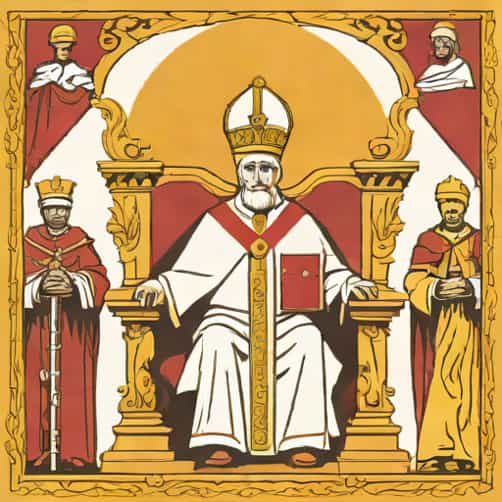
The doctrine of papal supremacy has been a central and sometimes controversial concept within the history of the Roman Catholic Church. It asserts that the Pope, as the Bishop of Rome and successor of Saint Peter, holds supreme authority over the entire Church. This doctrine has shaped the organizational structure, theological teachings, and political influence of the Catholic Church for centuries. Understanding papal supremacy involves examining its biblical foundations, historical development, theological implications, and the debates it has sparked both within and outside the Church.
Historical Origins of Papal Supremacy
The origins of papal supremacy can be traced back to the early centuries of Christianity. According to Catholic tradition, Jesus Christ appointed Saint Peter as the leader of his disciples, giving him a unique role among the apostles. The Gospel of Matthew (1618-19) describes Jesus saying to Peter, You are Peter, and on this rock I will build my Church, granting him the keys of the kingdom of heaven. Over time, this passage was interpreted by Church leaders as establishing Peter’s authority over the entire Christian community.
After Peter’s death, the bishops of Rome began to be recognized as his successors. By the 4th and 5th centuries, as the Roman Empire declined, the Pope’s authority grew not only in spiritual matters but also in temporal affairs. Popes such as Leo I and Gregory I played crucial roles in consolidating ecclesiastical power, asserting that the Pope could intervene in matters concerning bishops and kings alike.
Theological Basis of Papal Supremacy
Papal supremacy is grounded in both scripture and tradition. Catholics believe that Christ endowed Peter with a unique role, which has been passed down through apostolic succession. The Pope, therefore, is seen as the visible head of the Church on Earth, guiding the faithful and safeguarding doctrine. This authority is believed to extend to doctrinal, disciplinary, and administrative matters.
The First Vatican Council (1869-1870) formally defined the doctrine of papal supremacy in the documentPastor Aeternus. It declared that the Pope possesses full and supreme power over the whole Church, a power that is immediate and universal. According to this teaching, the Pope’s decisions are binding on all members of the Church, though they must align with divine law and Scripture.
Development and Expansion of Papal Authority
During the Middle Ages, papal supremacy became a defining feature of European Christianity. Popes frequently asserted their authority over secular rulers, sometimes leading to conflicts with kings and emperors. The Investiture Controversy of the 11th century, for example, revolved around whether the Pope or the Holy Roman Emperor had the authority to appoint bishops. The resolution reinforced the notion that spiritual authority ultimately rested with the papacy.
The Renaissance and Reformation periods brought further challenges. Reformers like Martin Luther rejected papal supremacy, arguing that Scripture alone should guide Christian faith and practice. This criticism prompted the Catholic Church to respond with the Counter-Reformation, reaffirming the Pope’s authority and emphasizing the importance of obedience to the Church hierarchy.
Papal Supremacy in Modern Times
In the contemporary Church, papal supremacy continues to play a vital role. The Pope acts as the final arbiter in doctrinal disputes and provides guidance on moral and social issues. Encyclicals, apostolic letters, and other papal documents carry significant authority and are used to clarify Church teachings. Moreover, the Pope represents the Church in international affairs, serving as a moral and spiritual leader recognized worldwide.
Criticisms and Challenges
Despite its importance within Catholicism, the doctrine of papal supremacy has faced criticism both historically and in modern contexts. Many Protestant denominations reject the idea of a single supreme earthly authority, emphasizing instead the priesthood of all believers and the primacy of Scripture. Critics argue that papal supremacy can lead to centralized power and reduce the role of local churches in decision-making.
Even within the Catholic Church, there have been debates about the scope and limits of papal authority. Some theologians suggest that while the Pope has primacy, he should exercise it in consultation with bishops and councils to maintain a balance between authority and collegiality. The Second Vatican Council (1962-1965) highlighted the importance of bishops’ collaboration with the Pope, emphasizing that while papal authority remains supreme, it should function in harmony with the broader Church hierarchy.
Global Impact of Papal Supremacy
Papal supremacy has not only shaped religious life but also influenced global history. The Pope’s pronouncements have affected political decisions, social reforms, and international relations. For instance, papal encyclicals addressing issues like war, poverty, and human rights have carried moral weight across the world, demonstrating the reach of papal authority beyond strictly ecclesiastical matters.
Additionally, the papacy has often served as a unifying symbol for Catholics worldwide. In regions where local churches face oppression or division, the Pope’s guidance is seen as a source of stability and spiritual direction. This global aspect of papal supremacy reinforces the centrality of the Pope in maintaining unity and continuity within the Church.
The doctrine of papal supremacy remains a cornerstone of Roman Catholic identity, shaping the Church’s structure, theology, and influence. Rooted in biblical tradition and developed over centuries, it establishes the Pope as the supreme authority in matters of faith and morals. While it has faced criticism and debate, papal supremacy continues to play a crucial role in guiding the Catholic Church through contemporary challenges, ensuring continuity, unity, and doctrinal integrity.
Understanding the doctrine of papal supremacy provides insight into how the Catholic Church functions, how it interacts with the broader world, and how its leaders interpret their spiritual responsibilities. It remains a topic of theological reflection, historical analysis, and ongoing discussion, reflecting the enduring significance of the papacy in shaping Christian thought and global religious culture.
This topic is structured for SEO with relevant keywords like papal supremacy, pope, Catholic Church, doctrine, and authority spread naturally throughout the content.