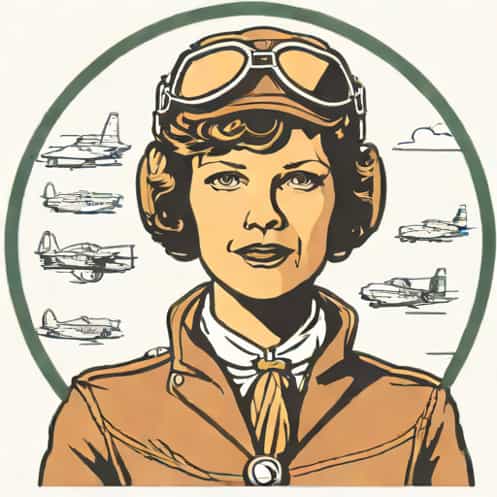
Amelia Earhart is one of the most celebrated pioneers in aviation history, famous for her daring flights and contributions to women in aviation. Among her many achievements, flying across the Atlantic Ocean stands out as a milestone that showcased her courage, skill, and determination. This historic journey not only made her an international icon but also demonstrated the possibilities of long-distance air travel in the early 20th century. Understanding how Amelia Earhart accomplished this remarkable feat involves examining the aircraft she used, the planning and preparation involved, and the challenges she faced during the flight.
Early Life and Passion for Flying
Amelia Earhart developed a fascination with flying at a young age, inspired by early aviation pioneers. She took her first airplane ride in 1920, which solidified her determination to pursue a career in aviation. Earhart trained rigorously and earned her pilot’s license in 1923, becoming one of the few women pilots at the time. Her interest in pushing the boundaries of flight led to her eventual attempt to cross the Atlantic, an achievement that would cement her place in history.
The Opportunity for a Transatlantic Flight
By the mid-1920s, transatlantic flights were rare and dangerous due to limited technology and navigation tools. Charles Lindbergh had completed his solo flight across the Atlantic in 1927, inspiring a generation of aviators. Earhart recognized the significance of such a flight and aimed to become the first woman to fly across the Atlantic. Although she would not attempt a solo flight at first, her journey still required meticulous planning and courage, given the risks of flying over open water with early aircraft technology.
The Aircraft Used
For her transatlantic journey, Amelia Earhart flew a Fokker F.VIIb/3m, a three-engine monoplane that was considered advanced for its time. This aircraft offered reliability, fuel capacity, and stability necessary for long-distance flights over the ocean. The plane was named the Friendship and was specially prepared for the journey, including extra fuel tanks, navigation instruments, and modifications to ensure it could endure the long flight.
Features of the Fokker F.VIIb/3m
- Three EnginesProvided redundancy, reducing the risk of total engine failure over the Atlantic.
- Extended Fuel CapacityAllowed for a non-stop flight from Newfoundland to Europe.
- Durable DesignDesigned to withstand turbulent weather and extended flight hours.
- Basic Navigation ToolsIncluded a magnetic compass, altimeter, and simple maps, requiring skillful piloting.
Preparation for the Flight
Amelia Earhart’s flight across the Atlantic required careful planning. She and her crew meticulously mapped the route, accounting for weather patterns, fuel calculations, and potential emergency landing points. They trained for navigation using celestial methods and radio communication to maintain contact with ships along the route. Earhart also consulted with experienced pilots and engineers to ensure the aircraft was in optimal condition for the journey.
Support Team and Logistics
Although Earhart was the primary pilot, she had a co-pilot and a support team that played crucial roles. The co-pilot assisted with navigation and engine monitoring, while the ground crew coordinated logistics, weather updates, and communication with ships stationed across the Atlantic. This teamwork was essential to ensure a safe and successful flight.
The Flight Across the Atlantic
Amelia Earhart took off from Trepassey Harbor, Newfoundland, on June 17, 1928. The flight to Europe covered over 2,000 miles of open ocean, an extraordinary challenge at the time. The journey required constant vigilance, precise control of the aircraft, and adaptability to changing weather conditions. Earhart’s calm demeanor and piloting skills helped her navigate through fog, turbulence, and the uncertainty of early aviation technology.
Challenges During the Flight
- WeatherPoor visibility, strong winds, and unpredictable storms tested Earhart’s ability to maintain course and altitude.
- NavigationWith limited instruments, precise navigation relied on celestial readings and visual cues, demanding intense focus and skill.
- FatigueThe long hours in the cramped cockpit required stamina and mental endurance to remain alert and make critical decisions.
- Technical IssuesMechanical reliability was a concern, and Earhart had to monitor engine performance throughout the flight.
Achievement and Recognition
Amelia Earhart successfully reached Burry Port, Wales, completing the first transatlantic flight by a woman. Although she was not the primary pilot for the entire journey-her co-pilot handled some aspects-the accomplishment marked her as a trailblazer in aviation history. The flight demonstrated that women could excel in long-distance aviation, challenging societal norms and inspiring future generations of female pilots.
Impact on Aviation
This milestone had a profound impact on aviation and gender equality in the field. Earhart became a symbol of courage and possibility, proving that skill, preparation, and determination could overcome technological and societal barriers. Her achievement encouraged more women to pursue careers in aviation and contributed to public interest in long-distance flight and aviation technology development.
Media Coverage and Public Acclaim
The media widely celebrated Earhart’s accomplishment, portraying her as a heroic and inspirational figure. Newspapers, radio broadcasts, and public appearances helped establish her reputation as a leading aviator. Her calm and composed approach during the flight, combined with her advocacy for women in aviation, enhanced her public image and cemented her place in history.
Subsequent Solo Flight
After her initial transatlantic flight as part of a crew, Amelia Earhart went on to achieve even greater feats, including the first solo transatlantic flight by a woman in 1932. This solo journey required even more preparation, skill, and courage, solidifying her legacy as one of the greatest aviators in history. The experience gained during her first Atlantic flight was invaluable in preparing her for this challenging solo mission.
Amelia Earhart flew across the Atlantic by carefully planning, training, and using a specially equipped Fokker F.VIIb/3m airplane. Her journey involved meticulous preparation, navigation skills, and the ability to handle extreme challenges such as weather, fatigue, and technical uncertainties. The flight made her the first woman to complete the Atlantic journey as a passenger-pilot, bringing her international recognition and inspiring countless individuals in the fields of aviation and beyond. Understanding how Amelia Earhart accomplished this remarkable feat highlights the combination of bravery, skill, and innovation required to push the boundaries of early aviation and set new standards for what pilots, especially women, could achieve.