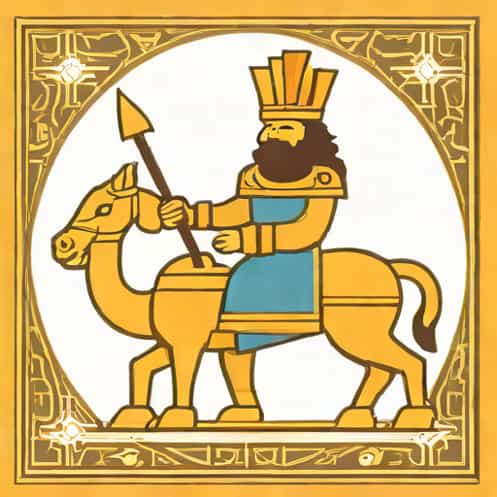
The name Ashurbanipal may sound complex at first, but it holds deep historical and linguistic significance. Pronouncing it correctly is not only a matter of phonetics but also a way to honor one of the most powerful kings of ancient Assyria. Many people who encounter the name for the first time-whether in a history class, a museum, or while reading about Mesopotamia-wonder how to say Ashurbanipal properly. Understanding its pronunciation and meaning provides insight into the legacy of a ruler who left a lasting mark on human civilization.
Understanding the Name Ashurbanipal
Before learning how to pronounce Ashurbanipal, it helps to know what the name means. Ashurbanipal was an Assyrian king who ruled during the 7th century BCE, and his name originates from the Akkadian language, one of the ancient tongues of Mesopotamia. The name can be broken down into parts that reflect both religious and royal significance.
- Ashurrefers to the chief god of the Assyrians, the deity who symbolized power and protection.
- Banitranslates roughly to has made or has created.
- PalorApalcan mean son or heir.
So, the full name Ashurbanipal can be interpreted as Ashur has created a son or the heir of Ashur. This meaning reflects the deep connection between Assyrian kingship and divine right, suggesting that the king was chosen and blessed by the god Ashur himself.
How to Pronounce Ashurbanipal
The correct pronunciation of Ashurbanipal can vary slightly depending on accent or linguistic background, but the most widely accepted English pronunciation is
ah-shoor-BAH-nee-pal
Here’s a breakdown of how to pronounce each syllable
- Ah-shoor– The first part sounds like ah-shoor, with ah as in father and shoor rhyming with sure.
- Bah– The second syllable is short and open, similar to the ba in bachelor.
- Nee-pal– The final syllables are pronounced together, with nee sounding like knee and pal as in pal (a friend).
When spoken smoothly, the name has a rhythmic and powerful sound, befitting a great king. Stress is usually placed on the second syllable ah-shoor-BAH-nee-pal.
Common Mispronunciations
Because Ashurbanipal is an ancient and uncommon name, it is often mispronounced. Some common mistakes include
- Ash-ur-ban-i-pal – Adding an extra i sound that breaks the natural rhythm.
- Ash-ur-bahn-uh-pal – Overemphasizing the middle syllable with an unnecessary uh.
- Ash-ur-bin-apal – Replacing the bah with bin, which changes the phonetic flow.
While these versions are understandable, they lose some of the original grace of the name. Taking the time to learn the correct pronunciation can make historical discussions more accurate and respectful.
Why Pronunciation Matters
Learning how to say Ashurbanipal correctly is about more than just language-it is a form of cultural respect. Names from ancient civilizations carry the weight of history, identity, and meaning. When we pronounce them correctly, we acknowledge the people, traditions, and achievements associated with them.
In academic discussions, correct pronunciation also helps maintain clarity. Many ancient names sound similar, and mispronouncing one could lead to confusion between different rulers or historical periods. For example, mixing up Ashurbanipal with Ashurnasirpal (another Assyrian king) could create misunderstandings, as they ruled during different times and achieved different things.
Who Was Ashurbanipal?
Understanding who Ashurbanipal was makes his name even more meaningful. He was one of the last great kings of the Neo-Assyrian Empire, ruling from approximately 668 to 627 BCE. His reign is remembered for its power, cultural achievements, and intellectual advancements.
Ashurbanipal is often celebrated as one of the most learned kings in history. He could read and write in multiple languages, including Akkadian and Sumerian, and he founded what is considered the world’s first systematically organized library-the Library of Ashurbanipal in Nineveh. This vast collection of clay tablets preserved countless works of literature, science, and law, including the famous Epic of Gilgamesh.
Achievements of Ashurbanipal
- He strengthened the Assyrian Empire, maintaining control over Egypt, Babylon, and Elam.
- He promoted the arts and scholarship, valuing knowledge as a tool of governance.
- He supported the collection and preservation of texts that would later help scholars understand Mesopotamian culture.
- He built magnificent palaces and monuments that displayed the power and wealth of Assyria.
His reign marked the height of Assyrian dominance, but after his death, the empire began to decline. Nevertheless, his contributions ensured that the legacy of Mesopotamian civilization would endure for millennia.
The Legacy of the Name Ashurbanipal
Even centuries after his reign, the name Ashurbanipal continues to hold symbolic value. It represents leadership, wisdom, and the pursuit of knowledge. In modern times, archaeologists, historians, and linguists often use his name as a reference point when studying the Assyrian Empire or ancient Near Eastern culture.
His library, discovered in the 19th century by British archaeologist Austen Henry Layard, provided the world with one of the greatest treasures of ancient literature. Many of the texts found there gave scholars the first insights into Sumerian myths, Babylonian astronomy, and Assyrian administration.
How to Remember the Pronunciation
If you find Ashurbanipal challenging to pronounce, a few tricks can help you remember it
- Break it into parts Ashur – Bah – Nee – Pal.
- Say it slowly at first, focusing on the rhythm of the syllables.
- Associate Ashur with the god’s name, and pal with the word palace, both linked to kingship.
- Listen to historians or documentaries pronouncing the name to reinforce the sound.
With repetition, the pronunciation becomes natural and fluid. The goal is to keep the stress on BAH while maintaining the smooth flow of the entire name.
Use of the Name in Modern Contexts
Today, the name Ashurbanipal appears in museums, archaeological sites, and educational materials. His likeness can be seen in sculptures, bas-reliefs, and historical exhibitions around the world. One of the most famous representations is the statue of Ashurbanipal located in San Francisco, which commemorates his contributions to human knowledge.
In literature and academic writing, the name symbolizes wisdom, empire, and historical preservation. When scholars discuss the early origins of libraries or the intellectual history of Mesopotamia, Ashurbanipal’s name is often at the center of the conversation.
Pronunciation in Different Languages
Although Ashurbanipal is typically pronounced the same way in English, minor variations occur in other languages due to different phonetic systems
- In French A-shur-ba-nee-pal, with a softer r.
- In Spanish Ah-shur-bah-nee-pal, with clear vowel sounds.
- In Italian A-shur-ba-nee-pal, with emphasis on even syllables.
Despite these small differences, the core pronunciation remains recognizable, ensuring that the name’s integrity is preserved across linguistic boundaries.
Learning how to say Ashurbanipal correctly-ah-shoor-BAH-nee-pal-is more than a matter of language. It is a way of connecting with history and acknowledging a figure whose influence shaped the course of civilization. The name carries echoes of ancient temples, royal decrees, and the world’s first library, reminding us of humanity’s long pursuit of knowledge and culture. Whether spoken in a classroom, a museum, or in conversation, pronouncing Ashurbanipal with care keeps alive the legacy of one of history’s most remarkable rulers.