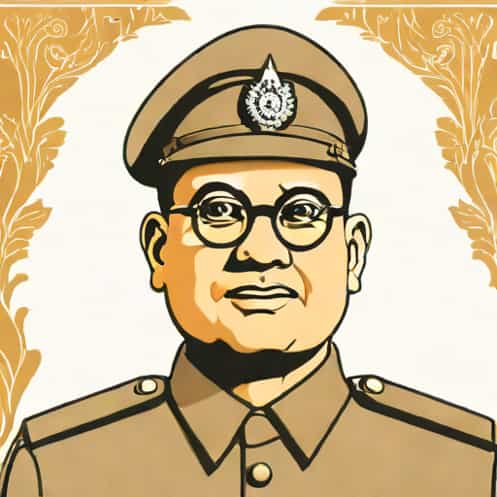
Subhash Chandra Bose is widely remembered as one of India’s most prominent freedom fighters, whose leadership and dedication to the cause of independence left an indelible mark on the country’s history. Known for his fearless approach and charismatic leadership, Bose challenged colonial rule with a unique vision, inspiring millions of Indians to rally for freedom. Unlike many of his contemporaries, Bose was not only politically active but also strategically innovative, organizing armed resistance through the Indian National Army (INA) and advocating for complete independence rather than incremental reforms. Understanding who Subhash Chandra Bose is requires a deep exploration of his early life, political journey, contributions to India’s independence movement, and his enduring legacy in modern India.
Early Life and Education
Subhash Chandra Bose was born on January 23, 1897, in Cuttack, Odisha, into a well-to-do Bengali family. From a young age, Bose demonstrated exceptional intelligence and a strong sense of justice, traits that would later define his political career. He pursued higher education at the University of Calcutta, excelling in philosophy and political thought. Bose also traveled to England to prepare for the Indian Civil Services (ICS) examination, which he passed with distinction. However, despite his academic achievements, he was increasingly drawn to the idea of serving India directly rather than working within the colonial administrative system. This decision marked the beginning of his lifelong dedication to the cause of Indian independence.
Political Awakening
Bose’s political journey began in earnest when he joined the Indian National Congress in the 1920s. Initially inspired by leaders like Mahatma Gandhi and Jawaharlal Nehru, Bose soon became known for his more radical views on achieving independence. While Gandhi promoted nonviolent civil disobedience, Bose believed that a more assertive approach was necessary to challenge British rule. He advocated for complete independence rather than gradual reforms, which often put him at odds with the more moderate leaders of the Congress. Despite these differences, Bose’s commitment to India’s freedom never wavered, and he quickly emerged as a prominent and influential figure within the nationalist movement.
Leadership and the Indian National Army
Subhash Chandra Bose’s most significant contribution to India’s freedom struggle was his leadership of the Indian National Army (INA). During World War II, Bose sought support from foreign powers opposed to Britain, including Germany and Japan, to liberate India through military means. In Southeast Asia, he reorganized the INA, rallying Indian prisoners of war and expatriates to fight against the British colonial forces. Bose’s charismatic speeches and inspirational leadership motivated thousands of soldiers to join the INA, emphasizing loyalty to India and the vision of an independent nation. His famous slogan, Give me blood, and I shall give you freedom, captured the spirit of his revolutionary approach and became a rallying cry for Indians both in India and abroad.
Strategies and Military Campaigns
Under Bose’s leadership, the INA collaborated with Japanese forces to advance into British-controlled territories in India. Though the military campaigns ultimately did not succeed in liberating India directly, they had a profound psychological impact on both the British authorities and the Indian population. The INA’s efforts demonstrated that Indian soldiers were willing to fight for their country, challenging the notion that Indians were loyal only to the colonial regime. Bose’s military strategies were notable for their organization, discipline, and emphasis on morale, reflecting his deep understanding of leadership and the importance of national unity.
Philosophy and Ideology
Subhash Chandra Bose’s political ideology was centered on complete independence, self-reliance, and national unity. Unlike some leaders who emphasized negotiation with colonial powers, Bose believed that India could not achieve true freedom without direct action. He was also a strong proponent of modernizing India, advocating for industrial development, social reform, and education to strengthen the nation. Bose’s vision extended beyond political freedom to the creation of a self-sufficient and empowered India, where citizens were active participants in shaping the country’s future. His writings and speeches continue to inspire leaders and citizens, emphasizing courage, determination, and patriotism.
- Belief in complete independence rather than incremental reform
- Advocacy for armed resistance when necessary
- Emphasis on national unity and loyalty to India
- Vision for a modern, industrial, and self-sufficient nation
Mysterious Death and Legacy
The circumstances of Subhash Chandra Bose’s death remain a topic of debate and speculation. Officially, he is said to have died in a plane crash in Taiwan on August 18, 1945. However, multiple theories and accounts have questioned the details of his death, leading to enduring fascination and mystery surrounding his final days. Regardless of the exact circumstances, Bose’s legacy as a freedom fighter and visionary leader is firmly established. His leadership of the INA, unwavering commitment to independence, and ability to inspire millions of Indians have secured his place in history as one of India’s most revered national figures.
Influence on Modern India
Subhash Chandra Bose’s impact on modern India extends beyond his lifetime. Monuments, institutions, and annual commemorations honor his contributions, reflecting his enduring importance in the national consciousness. Educational programs emphasize his revolutionary approach to leadership and his commitment to the welfare of the nation. Political movements and leaders continue to draw inspiration from Bose’s ideals, particularly his emphasis on courage, self-reliance, and the importance of taking decisive action for the nation’s welfare. By studying Bose’s life and philosophy, modern Indians gain insight into the sacrifices, strategies, and vision required to achieve and maintain national independence.
Lessons from Subhash Chandra Bose
The life of Subhash Chandra Bose offers several valuable lessons for contemporary readers and leaders. First, his unwavering commitment to principles demonstrates the importance of dedication and integrity in leadership. Second, Bose’s ability to organize, motivate, and lead people highlights the power of vision and charisma in effecting change. Third, his approach underscores the significance of courage and resilience in the face of adversity, particularly when confronting powerful opponents. Finally, Bose’s focus on national development and self-reliance emphasizes that freedom is not only political but also social, economic, and cultural. These lessons continue to resonate in the context of modern India and the broader global landscape.
Subhash Chandra Bose remains one of the most iconic figures in India’s struggle for independence. From his early life in Odisha to his revolutionary leadership of the Indian National Army, Bose’s dedication, courage, and vision shaped the course of Indian history. His ideology of complete independence, national unity, and modernization continues to inspire generations of Indians and global observers. Understanding who Subhash Chandra Bose is requires not only a study of his actions and achievements but also an appreciation of his philosophy and the challenges he faced. Bose’s enduring legacy serves as a reminder of the power of determination, leadership, and patriotism in the pursuit of justice and freedom.